
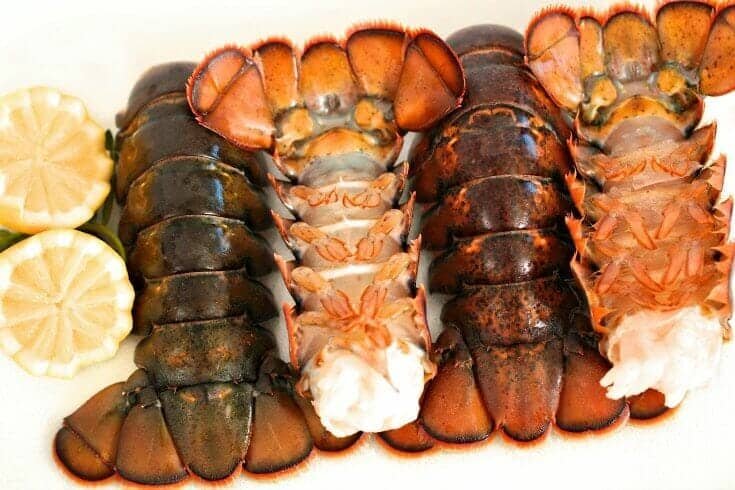
Whole Lobster vs Lobster Tails: Which Format Is Better for Wholesale Buyers?
When buying lobster in commercial quantities, one of the most important decisions is choosing between whole lobster and lobster tails.
Both formats have strong demand in international seafood markets, but they serve different business needs. Restaurants, hotels, seafood distributors, supermarkets, wholesalers and foodservice companies may prefer one format over the other depending on their customers, menu requirements, labor costs, storage capacity and target selling price.
For wholesale buyers, the decision should not be based solely on the price per kilogram.
A lower purchase price for whole lobster does not necessarily mean a lower usable cost. Likewise, lobster tails may have a higher price per kilogram but provide greater convenience, easier portion control and potentially more efficient utilization.
This guide explains the differences between whole frozen lobster and frozen lobster tails, including product format, yield, presentation, processing, packaging, logistics, storage, pricing and commercial applications.
Whole Lobster vs Lobster Tails: Quick Comparison
| Factor | Whole Lobster | Lobster Tails |
|---|---|---|
| Product format | Complete lobster | Tail only |
| Shell | Shell and body retained | Tail shell retained, depending on specification |
| Presentation | Premium whole-lobster presentation | Premium portion presentation |
| Preparation | More preparation required | Easier preparation |
| Portion control | Less standardized | More standardized |
| Storage efficiency | Depends on packing | Often easier to portion and handle |
| Foodservice convenience | Moderate | High |
| Retail suitability | Market dependent | Strong |
| Processing cost | Lower processing intensity | Higher processing intensity |
| Usable yield | Depends on species and preparation | Higher usable proportion for tail-focused applications |
| Premium menu applications | Excellent | Excellent |
| Best for | Whole-lobster dishes, seafood displays | Restaurants, foodservice, premium retail |
There is no universal winner.
The better format depends on how you plan to sell and use the lobster.
What Is Whole Lobster?
Whole lobster is supplied with the major body components intact.
Depending on the species and commercial specification, this can include:
- Head/body
- Claws where applicable
- Carapace
- Tail
- Legs
- Shell
Whole lobster may be supplied:
- Frozen
- Live
- Cooked and frozen
- Raw frozen
- Individually frozen
- Block frozen
- Other market-specific formats
For international wholesale trade, the exact product specification should always be confirmed with the supplier.
What Are Lobster Tails?
Lobster tails are separated from the rest of the lobster and supplied as a dedicated tail product.
Depending on the species and specification, tails may be available:
- Raw frozen
- Cooked frozen
- Shell-on
- Split
- Whole tail
- Individually frozen
- IQF
- Other processed formats
Lobster tails are particularly attractive to commercial buyers who want a premium seafood portion without purchasing the complete lobster.
Why Wholesale Buyers Need to Compare the Formats
The price difference between whole lobster and lobster tails can initially appear straightforward.
For example:
Whole lobster: €X/kg
Lobster tails: €Y/kg
But this does not tell the complete commercial story.
A buyer must also consider:
- Edible yield
- Processing labor
- Waste
- Storage
- Portion size
- Packaging
- Customer demand
- Transportation
- Selling price
- Preparation time
The right calculation is therefore based on cost per usable portion, not simply purchase price per kilogram.
Whole Lobster: Main Advantages
1. Premium Presentation
Whole lobster creates a strong visual presentation.
It can be particularly suitable for:
- Seafood restaurants
- Hotels
- Fine dining
- Seafood platters
- Premium seafood counters
- Special events
A complete lobster can provide a traditional premium seafood presentation that tail-only products cannot fully replicate.
2. Multiple Usable Components
Whole lobster provides more than just the tail.
Depending on species and preparation, customers may utilize:
- Tail meat
- Claw meat
- Knuckle meat
- Other edible portions
This can make whole lobster attractive to businesses that know how to maximize product utilization.
3. Menu Flexibility
Whole lobster can be used in different presentations.
It may be:
- Served whole
- Split
- Grilled
- Boiled
- Baked
- Used in seafood platters
- Processed into other dishes
4. Strong Seafood Display Appeal
For seafood retailers and restaurants, whole lobster can create an attractive premium display.
This can support higher-value positioning when the product is properly marketed and handled.
Whole Lobster: Potential Disadvantages
1. More Preparation
Whole lobster requires more preparation than tail-only products.
The buyer or end customer may need to:
- Handle the shell
- Separate portions
- Extract meat
- Manage waste
This can increase labor requirements.
2. More Storage Considerations
Because the entire lobster is purchased, the buyer is storing components that may not all be equally valuable to the final customer.
For businesses with limited freezer capacity, this should be considered carefully.
3. Portion Control Can Be More Difficult
Whole lobster naturally varies in:
- Weight
- Tail size
- Meat yield
- Claw size
Restaurants requiring highly standardized portions may therefore prefer lobster tails.
Lobster Tails: Main Advantages
1. Convenient Portioning
Lobster tails are particularly useful for businesses that sell individual portions.
Restaurants can build dishes around a defined tail size.
This can make menu costing easier.
2. Reduced Preparation
The buyer receives the primary portion of interest already separated from the rest of the lobster.
This can reduce preparation requirements and kitchen labor.
3. Strong Foodservice Application
Lobster tails can be used for:
- Grilling
- Broiling
- Baking
- Seafood platters
- Premium restaurant dishes
- Hotel foodservice
- Catering
- Retail seafood products
4. Premium Positioning
Lobster tails are commonly associated with premium seafood dishes.
For restaurants, a standardized tail can make it easier to create consistent menu presentations.
Lobster Tails: Potential Disadvantages
1. Higher Price Per Kilogram
Lobster tails can have a higher purchase price per kilogram because processing removes other portions of the lobster and adds processing costs.
Therefore, buyers should compare the usable cost, not only the invoice price.
2. Less Whole-Lobster Presentation
A tail does not provide the same visual impact as a complete lobster.
For businesses selling whole-lobster meals or seafood displays, this may be a disadvantage.
3. Specification Is Critical
Tail products can vary significantly according to:
- Species
- Tail size
- Shell condition
- Processing
- Glazing
- Freezing method
- Packaging
- Yield
A buyer should therefore request a detailed product specification.
Whole Lobster vs Lobster Tails: Yield
Yield is one of the most important factors for wholesale buyers.
Suppose a restaurant buys whole lobster.
The total purchase weight includes the shell and other components that may not become part of the final plated portion.
With lobster tails, the purchased product is more directly focused on the tail portion.
However, actual edible yield varies significantly by lobster species, size, processing method and preparation.
Therefore, buyers should request reliable product-specific yield information rather than using a generic percentage.
How to Calculate the Real Cost
Instead of asking:
“Which product has the cheaper price per kilogram?”
ask:
“What is my cost per kilogram of usable lobster meat or cost per serving?”
A simplified formula is:
Usable Cost = Purchase Cost ÷ Usable Yield
For example, if a product costs:
€20/kg
and the usable yield is:
50%
then:
€20 ÷ 0.50 = €40/kg usable product
This is only an illustrative calculation. Actual yield must be determined from the specific product.
Whole Lobster vs Lobster Tails for Restaurants
Restaurants should consider:
Whole Lobster
Best suited to restaurants that emphasize:
- Whole-lobster presentation
- Seafood platters
- Premium dining
- Traditional lobster dishes
- Customer experience
Lobster Tails
Often suitable for restaurants that prioritize:
- Portion control
- Kitchen efficiency
- Consistent presentation
- Reduced preparation
- Menu costing
For many foodservice operations, lobster tails can simplify kitchen management.
Whole Lobster vs Lobster Tails for Hotels
Hotels often need products that can be used consistently across large numbers of meals.
Lobster tails can offer:
- Portion consistency
- Easier preparation
- Faster kitchen handling
- Simplified menu costing
However, whole lobster may be preferred for:
- Seafood buffets
- Premium events
- Special menus
- Seafood displays
The right choice depends on the hotel’s operating model.
Whole Lobster vs Lobster Tails for Supermarkets
Retail buyers need to consider:
- Consumer preferences
- Packaging
- Shelf presentation
- Labeling
- Portion size
- Price point
- Freezer space
Whole lobster can be attractive for premium seasonal promotions.
Lobster tails can be easier for consumers who want a convenient premium seafood portion.
Whole Lobster vs Lobster Tails for Seafood Wholesalers
Wholesalers may benefit from carrying both formats.
A diversified product range allows the wholesaler to supply:
- Restaurants
- Hotels
- Retailers
- Catering companies
- Foodservice distributors
- Seafood shops
A wholesale lobster portfolio can therefore include:
Whole lobster + lobster tails + different sizes + different packaging formats
This can increase market flexibility.
How Lobster Size Affects Wholesale Purchasing
Lobster size is another important specification.
The buyer should clearly define the required size range.
For example:
- Small
- Medium
- Large
- Extra large
Exact commercial size ranges vary by species and supplier.
For lobster tails, buyers should specify the required tail weight range rather than simply requesting “large tails.”
For example, a professional RFQ should state the desired tail weight range and packaging format.
Lobster Tail Specifications Buyers Should Confirm
When purchasing lobster tails, ask for:
- Species
- Origin
- Tail weight
- Raw/cooked
- Shell-on/shell-off
- Whole/split
- IQF/block
- Glazing percentage
- Net weight
- Gross weight
- Packaging
- Carton configuration
- Production date
- Shelf life
- Storage requirements
- Certifications
- Health documentation
- MOQ
A specification such as:
Frozen lobster tails, specific species, raw, shell-on, IQF, specified tail weight, agreed glazing, specified carton configuration, specified origin
is much more useful than simply requesting “frozen lobster tails.”
Whole Lobster Specifications Buyers Should Confirm
For whole lobster, confirm:
- Species
- Origin
- Size/weight
- Raw/cooked
- Frozen/live
- IQF/block
- Glazing where applicable
- Net weight
- Packaging
- Carton configuration
- Pallet configuration
- Shelf life
- Storage conditions
- Certification
- MOQ
- Shipping requirements
IQF Lobster vs Block Frozen Lobster
Freezing method can influence handling and inventory management.
IQF
Individually frozen products are separated from each other.
Potential advantages include:
- Easier portioning
- Better inventory flexibility
- Convenient handling
- Reduced need to thaw an entire carton
Block Frozen
Products are frozen together.
This can be suitable for certain wholesale or industrial applications.
The correct freezing method depends on the buyer’s intended use.
Understanding Lobster Glazing
Some frozen lobster products may be glazed with a protective layer of ice.
Glazing can help protect frozen seafood from dehydration and freezer-related quality deterioration.
However, wholesale buyers should establish:
- Glazing percentage
- Net weight
- Gross weight
- Weight tolerance
- Product specification
This is important when comparing quotations.
For example, two suppliers may quote the same carton weight but provide different net product weights.
The buyer should therefore compare net product cost.
Packaging Considerations
Packaging should be selected according to the target market.
Wholesale lobster may be supplied in:
- Bulk cartons
- Individual bags
- Retail-ready boxes
- Foodservice packs
- Private-label packaging
Ask the supplier for:
- Net carton weight
- Gross carton weight
- Carton dimensions
- Bags per carton
- Cartons per pallet
- Pallet dimensions
- Total container loading
Whole Lobster vs Lobster Tails: Reefer Shipping
International frozen lobster shipments generally require temperature-controlled logistics.
For containerized ocean freight, buyers may use reefer containers.
Important considerations include:
- Container size
- Product weight
- Carton dimensions
- Pallet configuration
- Loading plan
- Temperature requirements
- Transit time
- Destination port
- Customs clearance
- Cold storage
The actual container capacity depends on the product and packing configuration.
Always request a supplier loading plan before confirming a full-container order.
How to Compare Wholesale Lobster Prices
Do not compare prices without comparing specifications.
Example
| Specification | Supplier A | Supplier B |
|---|---|---|
| Product | Whole lobster | Lobster tails |
| Species | Confirmed | Confirmed |
| Origin | Confirmed | Confirmed |
| Size | Specified | Specified |
| State | Raw frozen | Raw frozen |
| Freezing | IQF | IQF |
| Glazing | Agreed | Agreed |
| Packing | 10 kg/carton | 10 kg/carton |
| Incoterm | CIF | CIF |
| Price | €X/kg | €Y/kg |
The higher-priced tail product may still offer better economics if it produces a lower cost per usable portion.
Landed Cost for Imported Lobster
Wholesale buyers should calculate the complete landed cost.
A basic formula is:
Landed Cost = Product Cost + Ocean Freight + Insurance + Port Charges + Customs Duties + Taxes + Clearance + Inland Transportation + Other Applicable Costs
For example:
Product cost: €18/kg
International freight: €1.00/kg
Port and import costs: €0.75/kg
Other costs: €0.25/kg
Estimated landed cost:
€20/kg
This should then be compared with the expected wholesale selling price.
How to Choose Between Whole Lobster and Lobster Tails
Use the following decision framework.
Choose Whole Lobster If:
- Presentation is important.
- Customers want complete lobster.
- You operate a premium seafood restaurant.
- You sell seafood platters.
- You operate a seafood display.
- You can efficiently utilize different lobster components.
- Your customers value whole-lobster presentation.
Choose Lobster Tails If:
- Portion control is important.
- Kitchen labor needs to be minimized.
- You need standardized portions.
- Your menu focuses on tail meat.
- You want convenient foodservice preparation.
- You sell premium individual portions.
- You need flexible inventory management.
Consider Buying Both If:
You operate a seafood distribution business serving multiple customer segments.
A combination of whole lobster and lobster tails can allow you to serve both:
Premium presentation customers
and
convenience-focused foodservice customers.
Questions to Ask Your Lobster Supplier
Before ordering, ask:
Product
- What species is the lobster?
- What is the country of origin?
- What sizes are available?
- Is the product raw or cooked?
- Is it whole lobster or tail?
- What is the average weight?
- What is the freezing method?
- Is glazing applied?
Packaging
- What is the net carton weight?
- What is the gross carton weight?
- How many cartons fit on a pallet?
- How many pallets fit in the proposed container?
Quality
- What is the production date?
- What is the shelf life?
- What storage conditions are required?
- What quality-control procedures are applied?
Documentation
- What export documents are available?
- Can the supplier provide the required health certificate?
- Is the processing establishment eligible for the destination market?
- What certifications apply to the product?
Commercial
- What is the MOQ?
- What is the price per kilogram?
- Is the price FOB or CIF?
- What payment terms are available?
- What is the expected loading date?
Wholesale Lobster Buying Checklist
Before confirming an order:
☐ Species confirmed
☐ Country of origin confirmed
☐ Whole or tail format confirmed
☐ Size/weight confirmed
☐ Raw/cooked confirmed
☐ Shell specification confirmed
☐ Freezing method confirmed
☐ Glazing confirmed
☐ Net weight confirmed
☐ Gross weight confirmed
☐ Packaging confirmed
☐ Pallet configuration confirmed
☐ Shelf life confirmed
☐ Storage requirements confirmed
☐ Certifications verified
☐ Export documents confirmed
☐ Import requirements checked
☐ MOQ confirmed
☐ Container loading plan confirmed
☐ Incoterm confirmed
☐ Freight confirmed
☐ Landed cost calculated
Common Mistakes When Buying Wholesale Lobster
Mistake 1: Comparing Only Price Per Kilogram
The lowest price may not provide the lowest usable cost.
Mistake 2: Ignoring Yield
Whole lobster includes portions that may not be used in the final application.
Mistake 3: Not Defining Tail Size
“Lobster tails” is not a sufficient specification.
Mistake 4: Ignoring Glazing
Always understand net versus gross weight.
Mistake 5: Not Checking Origin
Origin can influence regulations, availability, logistics and market positioning.
Mistake 6: Buying Without a Loading Plan
Container capacity depends on the actual product and packaging.
Mistake 7: Ignoring Shelf Life
International transportation reduces remaining shelf life.
Mistake 8: Not Checking Import Requirements
Confirm eligibility and documentation before shipment.
Whole Lobster vs Lobster Tails: Which Is More Profitable?
Neither format is automatically more profitable.
Profitability depends on:
Purchase price + yield + labor + waste + freight + storage + selling price + customer demand
For a restaurant selling whole lobster meals, whole lobster may generate stronger customer value.
For a foodservice distributor supplying restaurants with standardized portions, lobster tails may provide better operational efficiency.
For a seafood wholesaler, stocking both formats can provide greater flexibility.
The most profitable specification is the one that matches your market.
How to Build a Wholesale Lobster Buying Strategy
Professional lobster buyers should start with their customers rather than the supplier’s available stock.
Step 1
Identify customer demand.
Step 2
Determine required portion sizes.
Step 3
Select whole lobster or tails.
Step 4
Define species and origin.
Step 5
Define size and weight.
Step 6
Select freezing and packaging format.
Step 7
Request comparable quotations.
Step 8
Calculate landed cost.
Step 9
Calculate usable cost and expected margin.
Step 10
Confirm documentation and import compliance.
Step 11
Arrange reefer logistics and frozen storage.
Step 12
Establish recurring supply if the product performs well.
Why Buy Wholesale Lobster from Villena Seafood?
Villena Seafood supplies frozen seafood for international B2B customers, including:
- Seafood importers
- Wholesalers
- Distributors
- Restaurants
- Hotels
- Foodservice companies
- Supermarket suppliers
- Commercial seafood buyers
Our seafood sourcing approach focuses on matching product specifications with buyer requirements.
Depending on availability and the agreed supply program, buyers can request lobster products according to:
- Species
- Origin
- Size
- Product format
- Packaging
- Quantity
- Destination
- Incoterm
- Documentation requirements
For buyers comparing whole lobster vs lobster tails, the objective should be to identify the format that best matches the customer’s market and commercial requirements.
How to Request a Wholesale Lobster Quote
For an accurate quotation, provide:
Product: Whole Lobster / Lobster Tails
Species:
Origin:
Size/Weight:
Raw/Cooked:
Freezing: IQF/Block
Glazing:
Packing:
Quantity:
Destination Port:
Incoterm:
Required Certifications:
Required Shelf Life:
For example:
We are looking for frozen lobster tails, specified species and origin, raw shell-on, IQF, specific tail weight range, agreed glazing, 10 kg cartons, quantity 1 × 40ft reefer, CIF [destination port]. Please provide your best wholesale quotation, full product specification, packing details, shelf life, available certificates and loading schedule.
This format allows the supplier to provide a much more accurate commercial offer.
Frequently Asked Questions
Is whole lobster cheaper than lobster tails?
Whole lobster may have a lower purchase price per kilogram, but that does not automatically mean a lower usable cost. Yield, preparation and labor should be considered.
Are lobster tails better for restaurants?
Lobster tails can be particularly convenient for restaurants because they offer easier preparation and portion control. However, restaurants focused on whole-lobster presentation may prefer complete lobster.
Which lobster format is better for supermarkets?
Both formats can work. Whole lobster can provide premium visual appeal, while lobster tails can offer convenience and easier portioning.
Are lobster tails easier to ship?
Lobster tails may offer different packing and handling efficiencies compared with whole lobster, but actual container utilization depends on the packaging, carton dimensions, palletization and product weight.
How should wholesale lobster be stored?
Frozen lobster should be stored according to the product specification and applicable food-safety requirements, with a continuous controlled frozen cold chain.
What should I include in a lobster RFQ?
Specify species, origin, whole/tail format, size, raw/cooked state, freezing method, glazing, packaging, quantity, destination port and Incoterm.
How do I compare lobster suppliers?
Compare suppliers on a like-for-like basis, including product specification, origin, net weight, glazing, packaging, documentation, Incoterm, freight and total landed cost.
Final Verdict: Whole Lobster or Lobster Tails?
The answer depends on your business.
Whole lobster is often the better choice when presentation, complete-lobster dining and maximum product variety are important.
Lobster tails are often the better choice when portion control, preparation efficiency and tail-focused dishes are the priority.
For wholesale buyers, the best purchasing decision should be based on:
customer demand + product specification + usable yield + landed cost + selling price + operational efficiency.
Rather than asking which format is universally better, ask:
Which lobster format delivers the best commercial value for my customers and my market?
That is the question that leads to a stronger wholesale purchasing decision.
Villena Seafood — Wholesale Frozen Seafood Supply for Global Buyers.