
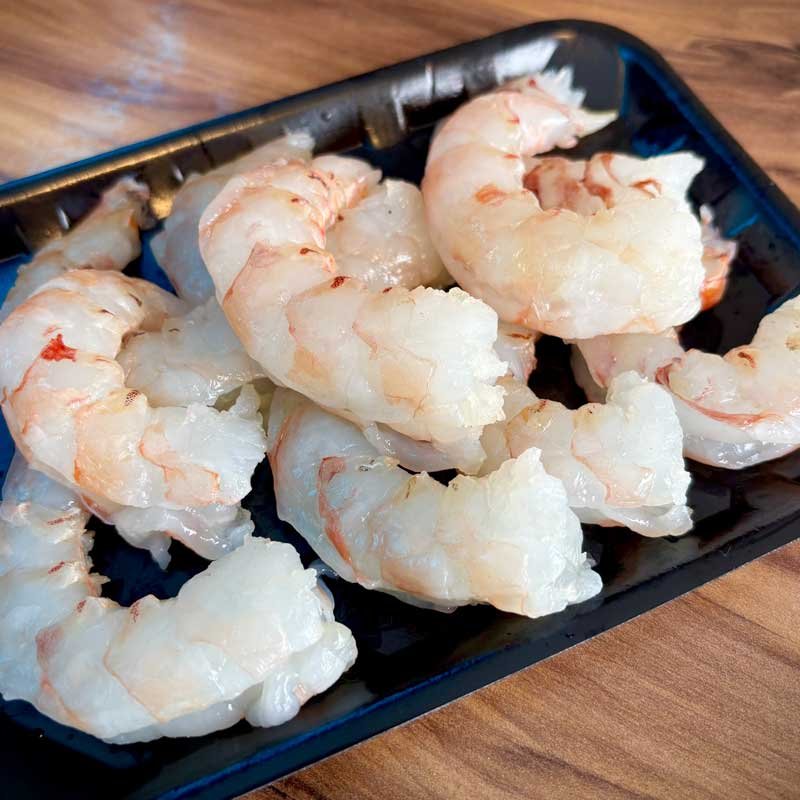
How to Choose the Right Frozen Shrimp Specification for Wholesale Import
Choosing the right frozen shrimp specification is one of the most important decisions for seafood importers, wholesalers, distributors, supermarkets, restaurants, foodservice companies and food manufacturers.
Two frozen shrimp products may look similar but have significantly different commercial values depending on their species, size, product form, processing method, glazing, packaging, origin, freezing method, quality grade and yield.
For international buyers, selecting the correct specification can directly affect the purchase price, landed cost, usable yield, storage requirements, selling price and overall profit margin.
This guide explains how to choose the right frozen shrimp specification for wholesale import, including Vannamei shrimp, Black Tiger shrimp and other commercially traded shrimp products.
Whether you are purchasing one reefer container or establishing a recurring seafood supply program, understanding shrimp specifications before requesting a quotation can help you make better purchasing decisions.
What Is a Frozen Shrimp Specification?
A frozen shrimp specification is the detailed description of the product being purchased.
A professional wholesale specification can include:
- Shrimp species
- Country of origin
- Product form
- Size/count
- Raw or cooked
- Head-on or headless
- Shell-on or peeled
- Deveined or undeveined
- Tail-on or tail-off
- Freezing method
- Glazing percentage
- Net weight
- Gross weight
- Packaging
- Carton configuration
- Product grade
- Production date
- Shelf life
- Storage temperature
- Certifications
- Traceability information
A quotation without a clearly defined specification can make it difficult to compare suppliers accurately.
For example:
Frozen shrimp — €X/kg
does not provide enough information for a professional importer.
A better quotation might specify:
Frozen Vannamei Shrimp, HLSO, Raw, IQF, Size 16/20, specified glazing, 10 × 1 kg/carton, specified origin, CIF destination port.
This gives the buyer a much clearer basis for comparison.
Why Frozen Shrimp Specifications Matter
The specification determines how the shrimp can be used and how much usable product the buyer ultimately receives.
For example, a restaurant may prefer peeled and deveined shrimp because it reduces kitchen preparation.
A processor may prefer shell-on shrimp because it has a different cost structure and processing requirement.
A supermarket may require retail-ready packaging and specific labeling.
A seafood distributor may prefer bulk cartons to supply multiple customers.
Therefore, the “best” frozen shrimp specification depends on the buyer’s business model.
Step 1: Choose the Right Shrimp Species
The first decision is the species.
Two of the most commercially important farmed shrimp varieties are:
Vannamei Shrimp
Often known as:
- Whiteleg shrimp
- Pacific white shrimp
- Litopenaeus vannamei
Vannamei shrimp are widely traded internationally and are available in numerous sizes and processing formats.
They can be supplied as:
- HOSO
- HLSO
- PUD
- P&D
- PDTO
- Cooked
- Raw
- IQF
- Block frozen
Black Tiger Shrimp
Commonly associated with:
- Penaeus monodon
- Black Tiger shrimp
- Tiger prawns
Black Tiger shrimp are valued in many markets for their appearance, texture and distinctive characteristics.
The choice between Vannamei and Black Tiger depends on:
- Target market
- Customer preference
- Price positioning
- Product application
- Availability
- Required size
- Processing format
- Margin
Vannamei vs Black Tiger Shrimp
| Specification | Vannamei Shrimp | Black Tiger Shrimp |
|---|---|---|
| Common name | Whiteleg shrimp | Black Tiger shrimp |
| Scientific name | Litopenaeus vannamei | Penaeus monodon |
| Market position | Broad commercial market | Premium/segmented markets |
| Availability | Generally broad | More limited depending on origin |
| Formats | Many processing options | Multiple commercial formats |
| Size options | Wide range | Wide range |
| Typical applications | Retail, foodservice, wholesale, processing | Retail, foodservice, premium menus |
| Buyer priority | Value, consistency, versatility | Appearance, texture, market positioning |
The best choice depends on your customers rather than simply choosing the species with the lowest price.
Step 2: Select the Product Form
Product form is one of the most important factors in frozen shrimp purchasing.
Common specifications include:
HOSO — Head-On Shell-On
The shrimp retains both the head and shell.
This format may be suitable for:
- Traditional seafood markets
- Whole-shrimp dishes
- Certain Asian markets
- Restaurants
- Premium presentations
Because the head and shell remain, the purchase price should not be evaluated in the same way as peeled shrimp.
HLSO — Headless Shell-On
The head is removed while the shell remains.
HLSO shrimp are commonly used in:
- Restaurants
- Foodservice
- Retail
- Wholesale distribution
- Cooking applications
HLSO can provide a balance between presentation, protection and preparation convenience.
PUD — Peeled Undeveined
The shell is removed while the digestive tract remains.
This format can be suitable for customers who want peeled shrimp but perform additional preparation themselves.
P&D — Peeled and Deveined
The shrimp is peeled and deveined.
P&D shrimp are often attractive to:
- Restaurants
- Catering businesses
- Foodservice distributors
- Retailers
- Food manufacturers
The major advantage is preparation convenience.
However, peeled and deveined shrimp normally have a different processing cost than shell-on products.
PDTO — Peeled, Deveined, Tail-On
PDTO shrimp are peeled and deveined while retaining the tail.
This specification can be popular for:
- Restaurant dishes
- Appetizers
- Premium foodservice
- Retail presentations
The tail can provide visual presentation while the peeled body reduces preparation work.
Cooked vs Raw Frozen Shrimp
Another important decision is whether you require raw or cooked shrimp.
Raw Frozen Shrimp
Raw shrimp are commonly used for:
- Restaurants
- Food manufacturers
- Cooking applications
- Further processing
- Wholesale seafood distribution
Cooked Frozen Shrimp
Cooked shrimp can be suitable for:
- Ready-to-eat applications
- Salads
- Cold dishes
- Retail products
- Catering
- Foodservice
Always specify whether the product should be raw or cooked when requesting a quotation.
Step 3: Understand Shrimp Size and Count
Shrimp size is one of the most important purchasing specifications.
Commercial shrimp sizes are often expressed using count ranges such as:
- 8/12
- 13/15
- 16/20
- 21/25
- 26/30
- 31/40
- 41/50
- 51/60
- 61/70
- 71/90
- 91/110
The exact available ranges vary by species, product form and supplier.
Generally, a lower numerical count represents larger shrimp.
For example:
16/20 shrimp are larger than 41/50 shrimp.
Frozen Shrimp Size Chart
| Size | General Positioning | Typical Applications |
|---|---|---|
| 8/12 | Very large | Premium restaurants |
| 13/15 | Large | Premium foodservice |
| 16/20 | Large | Restaurants, foodservice |
| 21/25 | Medium-large | Foodservice, retail |
| 26/30 | Medium | Restaurants, retail |
| 31/40 | Medium-small | Foodservice, processing |
| 41/50 | Small-medium | Restaurants, processing |
| 51/60 | Small | Foodservice, prepared foods |
| 61/70 | Small | Processing, prepared foods |
| 71/90 | Small | Industrial applications |
| 91/110 | Very small | Processing and value-added products |
These ranges are general commercial references. Always confirm the actual count specification with the supplier because terminology and count tolerances can vary.
How to Choose the Correct Shrimp Size
Your target customer should determine the size.
Restaurants
Restaurants may prefer medium to large shrimp depending on the dish.
Common considerations include:
- Plate presentation
- Portion size
- Cost per serving
- Cooking method
Supermarkets
Retailers may require specific sizes based on consumer demand and packaging.
Food Manufacturers
Processors may prioritize consistent count, yield and cost rather than visual size.
Seafood Distributors
Distributors often require multiple sizes to serve different customer segments.
Step 4: Consider Shrimp Yield
One of the biggest mistakes new importers make is comparing shrimp prices without considering yield.
A shell-on shrimp product and a peeled shrimp product cannot be evaluated solely by the quoted kilogram price.
For example:
Product A: €5.00/kg shell-on
Product B: €6.50/kg peeled and deveined
At first glance, Product A appears cheaper.
But if the customer requires peeled shrimp, the shell-on product requires additional processing and creates additional waste.
Therefore, buyers should calculate the usable cost per kilogram.
A Simple Yield Calculation
Suppose:
Purchase price = €5.00/kg
and the estimated usable yield after processing is:
70%
Then:
€5.00 ÷ 0.70 = €7.14/kg usable product
This illustrates why a higher-priced processed product can sometimes be commercially competitive.
Actual yield varies according to the specific product form, processing requirements and customer application.
Step 5: Understand Glazing
Glazing is another important specification.
A frozen shrimp product may have a protective layer of ice applied to the surface.
Glazing can help protect frozen seafood against:
- Dehydration
- Oxidation
- Freezer burn
- Surface damage
However, buyers need to understand whether the quoted weight is:
Net product weight
or
Gross weight including glaze.
The agreed glazing percentage should be clearly documented where applicable.
Why Glazing Matters to Importers
Suppose a carton has:
10 kg gross weight
with:
10% glaze
The net product weight would be approximately:
9 kg
Therefore, the buyer should not compare two products solely on their carton gross weight.
A professional purchase specification should clearly define:
- Net weight
- Gross weight
- Glazing percentage
- Carton weight
- Tolerance where applicable
Step 6: Choose IQF or Block Frozen
Freezing method can significantly affect how the product is handled.
IQF Frozen Shrimp
IQF means Individually Quick Frozen.
Individual shrimp remain separated after freezing.
Advantages can include:
- Easy portion control
- Convenient handling
- Reduced need to thaw the entire carton
- Suitable for foodservice
- Flexible inventory management
IQF shrimp can be particularly useful for restaurants and distributors supplying customers with different portion requirements.
Block Frozen Shrimp
Shrimp are frozen together in a block.
Block freezing can be suitable for:
- Industrial processing
- Certain wholesale applications
- Large-volume users
- Specific retail formats
The appropriate freezing method depends on how the buyer intends to use and distribute the product.
IQF vs Block Frozen Shrimp
| Factor | IQF | Block Frozen |
|---|---|---|
| Individual pieces | Separated | Frozen together |
| Portion control | Excellent | More limited |
| Convenience | High | Moderate |
| Foodservice | Very suitable | Application dependent |
| Processing | Convenient | Application dependent |
| Handling | Flexible | Bulk-oriented |
| Cost | May be higher | May be more economical depending on product |
Step 7: Specify Packaging
Packaging affects transportation, storage and selling format.
Common wholesale packaging can include:
- Bulk cartons
- 1 kg bags
- 2 kg bags
- 5 kg bags
- 10 × 1 kg cartons
- Retail-ready packaging
- Custom private-label packaging
When requesting a quotation, specify:
Bag weight + bags per carton + carton weight + pallet configuration.
For example:
10 × 1 kg bags per carton, 10 kg net/carton.
Step 8: Consider Private Label Packaging
Importers selling directly to supermarkets or retail customers may require private-label frozen shrimp.
A private-label specification can include:
- Brand name
- Custom artwork
- Product description
- Net weight
- Country of origin
- Nutrition information where required
- Storage instructions
- Barcode
- Lot/batch information
- Best-before date
- Regulatory labeling
Labeling requirements vary by destination market.
Before printing packaging, confirm the requirements of the destination country.
Step 9: Select the Right Country of Origin
Origin can influence:
- Price
- Supply availability
- Consumer perception
- Import requirements
- Freight
- Tariffs
- Certifications
- Market positioning
For Vannamei shrimp, different producing regions may serve different international markets.
When selecting origin, buyers should consider the complete commercial picture rather than simply choosing the lowest quotation.
Step 10: Confirm Food-Safety Requirements
Frozen shrimp is a food product, so food-safety compliance should be treated as a fundamental purchasing requirement.
Depending on the origin and destination, buyers may need to consider:
- Approved establishment requirements
- Health certificates
- HACCP-based food-safety systems
- Traceability
- Microbiological requirements
- Residue requirements
- Labeling
- Import controls
- Official inspections
For European Union imports, official controls apply to food entering the EU, and applicable requirements depend on the product and origin.
Never assume that a certificate or certification automatically means that a particular shipment is eligible for a specific destination market.
Step 11: Check Certifications
Depending on the target market and customer requirements, buyers may request certifications such as:
- HACCP
- BRCGS
- ISO 22000
- ASC
- BAP
- Halal
- Other applicable standards
However, certification claims must be verified against the specific facility, product and supply chain.
If sustainability certification is important to your customers, confirm whether the particular shrimp product is actually covered by the relevant certification.
Step 12: Confirm Shelf Life
Frozen shrimp can have a significant commercial shelf life, but the exact period depends on the product, processing, packaging, storage conditions and supplier specification.
Request:
- Production date
- Packing date
- Best-before date
- Total shelf life
- Minimum remaining shelf life at shipment
For international imports, remaining shelf life is particularly important because transportation and customs clearance can consume considerable time.
Step 13: Confirm Storage Requirements
Frozen shrimp must be stored according to the manufacturer’s specification and applicable food-safety requirements.
Commercial buyers should have suitable frozen storage available before receiving a reefer container.
Important considerations include:
- Storage temperature
- Warehouse capacity
- Stock rotation
- Pallet arrangement
- Temperature monitoring
- Inventory management
- Product traceability
Step 14: Calculate Container Requirements
Before placing a large order, determine how much product can realistically be loaded into the selected reefer container.
Consider:
- Carton dimensions
- Carton weight
- Pallet configuration
- Net weight
- Gross weight
- Container payload
- Shipping-line restrictions
- Destination transport restrictions
A supplier should provide a loading plan showing:
Cartons → pallets → net weight → gross weight → container type
Never assume a fixed tonnage without confirming the actual product and packing configuration.
Step 15: Understand MOQ
Minimum Order Quantity, or MOQ, is important for wholesale importers.
A supplier may require:
- 1 pallet
- Several pallets
- 1 × 20ft reefer
- 1 × 40ft reefer
- Larger recurring volumes
For a first shipment, some buyers may prefer a smaller trial order if commercially available.
For established distributors, full-container purchasing can offer better logistics efficiency.
Step 16: Calculate the Landed Cost
The supplier’s quoted shrimp price is not your final cost.
Calculate:
Landed Cost = Product Price + Freight + Insurance + Port Charges + Customs Duties + Taxes + Clearance + Inland Transport + Other Applicable Costs
For example:
Product: €5.50/kg
Freight and logistics: €0.40/kg
Import charges: €0.25/kg
Other costs: €0.15/kg
Estimated landed cost:
€6.30/kg
This figure should be compared with your expected wholesale selling price.
Step 17: Compare Suppliers on a Like-for-Like Basis
When comparing quotations, use the same specification.
Example
| Specification | Supplier A | Supplier B |
|---|---|---|
| Species | Vannamei | Vannamei |
| Product form | HLSO | HLSO |
| Size | 16/20 | 16/20 |
| State | Raw | Raw |
| Freezing | IQF | IQF |
| Glazing | Agreed % | Agreed % |
| Packing | 10 kg | 10 kg |
| Origin | Specified | Specified |
| Incoterm | CIF | CIF |
| Price | €X/kg | €Y/kg |
This creates a meaningful comparison.
Comparing:
HOSO 21/25 FOB
with:
P&D 16/20 CIF
does not provide a meaningful price comparison.
Step 18: Consider Your Customer’s Portion Requirements
Restaurant and foodservice buyers should calculate cost per serving.
For example:
If a dish requires:
150 g of usable shrimp
the buyer should calculate the cost based on usable product rather than the original gross purchase weight.
This is another reason why product form and yield matter.
Step 19: Match Shrimp Specification to Your Market
There is no universal “best” frozen shrimp specification.
For Restaurants
Consider:
- P&D
- PDTO
- IQF
- Medium-large sizes
- Consistent count
- Easy portioning
For Supermarkets
Consider:
- Retail-ready packaging
- Consumer-friendly sizes
- Attractive presentation
- Label compliance
- Consistent supply
For Foodservice Distributors
Consider:
- Bulk cartons
- Multiple sizes
- IQF
- Consistent specifications
- Competitive landed cost
For Food Manufacturers
Consider:
- Yield
- Cost
- Consistency
- Processing format
- Volume
- Technical specification
For Seafood Wholesalers
Consider:
- Market demand
- Multiple sizes
- Flexible packaging
- Competitive landed cost
- Reliable supply
Frozen Shrimp Specification Checklist
Before confirming your order, make sure you have answered the following:
☐ Species
☐ Country of origin
☐ Product form
☐ Size/count
☐ Raw or cooked
☐ Head-on or headless
☐ Shell-on or peeled
☐ Deveined or undeveined
☐ Tail-on or tail-off
☐ IQF or block frozen
☐ Glazing percentage
☐ Net weight
☐ Gross weight
☐ Packaging
☐ Carton configuration
☐ Pallet configuration
☐ Production date
☐ Shelf life
☐ Storage requirements
☐ Required certifications
☐ Health documentation
☐ Import eligibility
☐ MOQ
☐ Container type
☐ Incoterm
☐ Destination port
☐ Freight cost
☐ Landed cost
Example Wholesale Frozen Shrimp Specification
A professional specification could look like this:
| Specification | Requirement |
|---|---|
| Product | Frozen Vannamei Shrimp |
| Scientific name | Litopenaeus vannamei |
| State | Raw |
| Form | HLSO |
| Size | 16/20 |
| Freezing | IQF |
| Glazing | Agreed specification |
| Packing | 10 × 1 kg/carton |
| Net weight | 10 kg/carton |
| Storage | Frozen according to product specification |
| Shelf life | As agreed |
| Origin | Confirmed country of origin |
| Certification | As required by buyer/market |
| MOQ | As agreed |
| Container | 20ft/40ft reefer |
| Incoterm | FOB/CIF/etc. |
| Destination | Buyer’s nominated port |
The final specification should always be confirmed between buyer and supplier before shipment.
Questions to Ask a Frozen Shrimp Supplier
Before placing an order, ask:
Product
- What species is the shrimp?
- What is the country of origin?
- What size/count is available?
- Is it raw or cooked?
- Is it HOSO, HLSO, PUD, P&D or PDTO?
- Is it IQF or block frozen?
- What is the glazing percentage?
- What is the net weight per carton?
Quality
- What is the production date?
- What is the shelf life?
- What storage temperature is required?
- What quality-control procedures are used?
Documentation
- What export documents are available?
- Can you provide a health certificate where required?
- Is the establishment eligible for the destination market?
- Which certifications apply to this specific product?
Logistics
- How many cartons fit in a 20ft reefer?
- How many cartons fit in a 40ft reefer?
- What is the total net weight?
- What is the total gross weight?
- What is the estimated production lead time?
Commercial
- What is the MOQ?
- What is the price per kilogram?
- Is the price FOB or CIF?
- What payment terms are available?
The Most Important Rule: Specify Before You Compare Price
One of the biggest mistakes in frozen shrimp importing is asking several suppliers:
“What is your price for frozen shrimp?”
Instead, send the exact same specification to every supplier.
For example:
Frozen Vannamei Shrimp – HLSO – Raw – IQF – Size 16/20 – specified glazing – 10 kg/carton – specified origin – 1 × 40ft reefer – CIF [destination port].
Now the quotations can be compared much more accurately.
Why Buyers Choose Villena Seafood
Villena Seafood supplies frozen seafood to international B2B buyers, including seafood importers, distributors, wholesalers, foodservice businesses and commercial customers.
Our product portfolio includes multiple seafood categories and specifications, including frozen shrimp and other frozen seafood products.
For buyers sourcing shrimp, the appropriate specification can be developed around:
- Species
- Size
- Product form
- Packaging
- Quantity
- Origin
- Destination market
- Reefer logistics
- Commercial requirements
The objective is to help buyers source a specification that fits their market demand, customer requirements and purchasing strategy, rather than simply offering the lowest possible price.
How to Request a Frozen Shrimp Wholesale Quote
When contacting Villena Seafood, provide as much information as possible:
Product:
Species:
Size:
Product form:
Raw/Cooked:
Freezing method:
Glazing:
Packaging:
Quantity:
Origin preference:
Destination port:
Incoterm:
Required certifications:
Required shelf life:
For example:
We are looking to purchase frozen Vannamei shrimp, HLSO, raw IQF, size 16/20, with agreed glazing, 10 kg cartons, for 1 × 40ft reefer, CIF [destination port]. Please provide your best wholesale quotation, product specification, packing details, shelf life, available documentation and estimated loading schedule.
Providing a detailed specification allows the supplier to prepare a more accurate commercial offer.
Conclusion
Choosing the right frozen shrimp specification is essential for successful international seafood importing.
The correct specification depends on much more than price.
Professional buyers should evaluate species, origin, size, product form, raw or cooked state, shell configuration, processing, freezing method, glazing, packaging, shelf life, certifications, logistics and landed cost.
A restaurant may benefit from peeled and deveined IQF shrimp, while a processor may prefer shell-on products. A supermarket may require retail-ready packaging, while a distributor may prioritize bulk cartons and multiple sizes.
The key is to start with the requirements of your customers and work backward to the most commercially suitable specification.
Before requesting prices, define exactly what you need. Then compare suppliers on a like-for-like basis.
For international seafood buyers, a well-defined specification can improve purchasing transparency, simplify supplier comparisons, reduce misunderstandings and help build a more reliable frozen seafood supply chain.
Villena Seafood — Wholesale Frozen Seafood Supply for International Buyers.