
How to Choose a Reliable Frozen Seafood Supplier for Your Business
Choosing the right frozen seafood supplier is one of the most important decisions for seafood importers, wholesalers, supermarket chains, restaurants, foodservice distributors and seafood processors. The supplier you select can directly affect product quality, customer satisfaction, regulatory compliance, delivery reliability and your overall purchasing costs.
A competitive price is important, but it should never be the only factor when comparing seafood suppliers. A professional supplier should be able to provide clear product specifications, appropriate documentation, reliable cold-chain handling, consistent packaging and transparent communication.
For frozen seafood buyers, quality needs to be verifiable rather than simply promised. Seafood quality depends on factors throughout the supply chain, from sourcing and processing to freezing, storage, transportation and final delivery. NOAA Fisheries similarly recommends buying seafood from knowledgeable, reputable dealers with proper handling practices and notes that frozen products should remain properly frozen and free from signs of thawing and refreezing.
This guide explains the most important factors to consider when choosing a reliable wholesale frozen seafood supplier.
1. Define Your Seafood Requirements Before Contacting Suppliers
Before requesting quotations, prepare a detailed product specification.
Simply asking for “frozen shrimp” or “frozen fish” is usually not enough for an international wholesale transaction. Different suppliers may quote completely different products under the same general description.
Your specification should ideally identify:
- Species
- Scientific name where relevant
- Wild-caught or farmed
- Country or fishing area of origin
- Product form
- Size or grade
- Whole, HGT, fillet, steak or portion
- Raw or cooked
- IQF or block frozen
- Glazing percentage
- Net weight
- Gross weight
- Packaging format
- Carton dimensions
- Shelf life
- Storage temperature
- Labeling requirements
- Required certifications
- Estimated order quantity
- Destination country and port
A detailed specification makes supplier quotations easier to compare and reduces the possibility of receiving a product that does not match your market requirements.
Example
Instead of requesting:
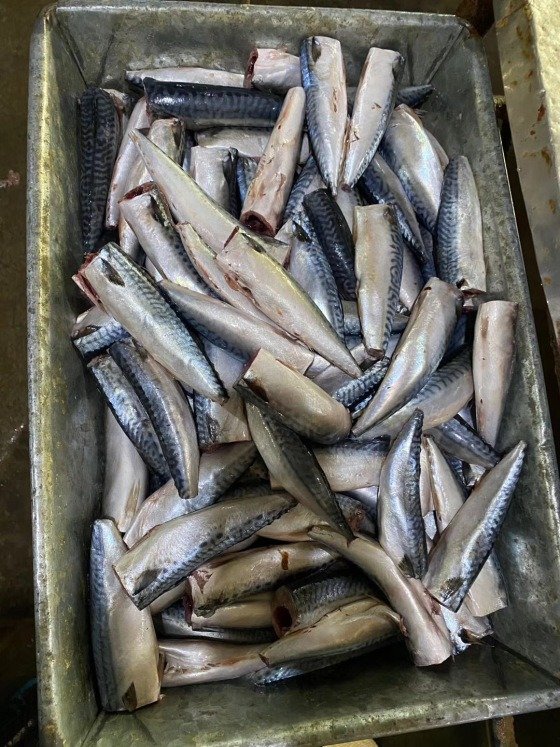
“Frozen mackerel”
a professional buyer could specify:
“Frozen HGT mackerel, agreed size range, specified origin, export carton, defined net weight, agreed glazing percentage, frozen storage specification and destination-market labeling.”
This gives both buyer and supplier a much clearer commercial framework.
2. Verify the Supplier’s Business Information
Before placing a significant order, verify who you are actually buying from.
A professional frozen seafood supplier should be able to provide appropriate company and commercial information, such as:
- Registered company name
- Business address
- Contact information
- Export experience
- Product categories
- Processing or sourcing information
- Applicable facility information
- Quality-management information
- Export markets
- Commercial references where appropriate
It is also useful to understand the supplier’s role in the supply chain.
Are they:
- A seafood processor?
- A fishing company?
- A farm?
- An exporter?
- A trading company?
- An integrated seafood supplier?
There is no single business model that is automatically best. What matters is that responsibilities are clearly established.
You should understand who is responsible for:
- Product sourcing
- Processing
- Quality control
- Packaging
- Documentation
- Inspection
- Cold storage
- Shipment coordination
- Handling quality claims
This clarity becomes particularly important when purchasing full-container quantities.
3. Check Product Specifications Carefully
One of the most common mistakes in wholesale seafood purchasing is comparing prices before comparing specifications.
Two quotations can appear similar while representing substantially different products.
For example, differences can occur in:
- Fish size
- Shrimp count
- Product form
- Glazing
- Net weight
- Packaging
- Freezing method
- Species
- Origin
- Processing grade
Therefore, always request a written product specification before making a purchasing decision.
A proper specification sheet should allow you to answer:
What exactly am I buying?
How is it processed?
How is it packed?
How much actual net product am I receiving?
How will the product be stored and transported?
4. Evaluate Freezing and Cold-Chain Management
Cold-chain management is fundamental to frozen seafood quality.
The supply chain can include:
Processing → Freezing → Cold Storage → Loading → Port → Ocean Transport → Destination Port → Importer Cold Storage
Every stage should be appropriately managed.
Ask the supplier about:
- Freezing method
- Storage temperature
- Cold-storage facilities
- Reefer container procedures
- Temperature monitoring
- Loading procedures
- Shipment handling
- Temperature records where applicable
Frozen seafood should remain properly frozen throughout storage and transportation. NOAA’s guidance notes that excessive frost, ice crystals, liquid inside packaging and other signs of thawing and refreezing can indicate problems with frozen seafood handling.
For commercial buyers, this means cold-chain management should be treated as a supplier-selection criterion rather than simply a logistics detail.
5. Ask About Traceability
A reliable seafood supplier should have appropriate systems for tracing products through the supply chain.
Traceability may connect information such as:
Source → Processing Facility → Production Batch → Packaging → Cold Storage → Shipment → Buyer
Traceability is important because it allows businesses to identify the origin and movement of a specific product or batch if a quality or food-safety issue occurs. FAO identifies traceability as an important component of seafood quality and safety assurance.
Depending on the product, documentation may include:
- Batch number
- Production date
- Processing information
- Origin
- Fishing area
- Farm information
- Vessel information where applicable
- Packaging date
- Lot number
Ask your supplier how product batches are identified and documented.
6. Verify Certifications and Regulatory Compliance
Certifications can be important when purchasing seafood for international markets.
Depending on the product and destination, buyers may require documentation or certification related to:
- HACCP
- BRCGS
- ISO 22000
- EU approval
- FDA requirements
- Halal
- MSC
- ASC
- BAP
- Health certification
- Catch documentation
- Other destination-specific requirements
However, do not assume that every certification applies to every product a company sells.
Always confirm:
Does this certificate apply to the specific processing facility and product being supplied?
Where relevant, verify certificates with the issuing organization or appropriate authority.
For international seafood imports, regulatory requirements can vary considerably between destination markets, so buyers should establish their specific requirements before placing an order.
7. Request Samples Before Large Orders
For a new supplier relationship, product samples can be an effective way to evaluate quality before committing to a large shipment.
Depending on the product, evaluate:
- Appearance
- Color
- Odor
- Texture
- Product size
- Packaging
- Glazing
- Net weight
- Cooking performance
- Yield
- Labeling
For processed products, you may also assess:
- Portion consistency
- Cutting accuracy
- Breaded coating
- Cooking loss
- Taste
- Texture
A sample should represent the product you expect to receive commercially.
If the final shipment specification differs from the sample, the buyer should clarify the agreed specification in writing before ordering.
8. Examine Packaging and Labeling
Packaging protects frozen seafood during handling, transportation and storage.
Ask your supplier to confirm:
- Inner packaging
- Outer carton
- Net weight
- Gross weight
- Carton dimensions
- Units per carton
- Cartons per pallet
- Pallet configuration
- Retail labeling
- Bulk packaging options
- Private-label availability
Labeling requirements vary by destination market.
Depending on the product and country, labels may need information such as:
- Product name
- Species
- Net weight
- Country of origin
- Production information
- Batch/lot number
- Storage instructions
- Best-before information
- Importer information
- Applicable certifications
- Allergen information
Always confirm local requirements before printing final labels.
9. Compare Minimum Order Quantities
Not every supplier operates with the same minimum order quantity.
A supplier may offer:
- Trial quantities
- Pallet orders
- LCL shipments
- 20-foot containers
- 40-foot containers
- Recurring monthly programs
Your ideal supplier should be able to accommodate your purchasing model where commercially feasible.
For example, a supermarket distributor may require recurring full-container shipments, while a smaller wholesaler may initially require pallet quantities.
When requesting a quotation, specify your anticipated volume and purchasing frequency.
10. Evaluate Pricing Beyond the Unit Price
The cheapest quotation is not necessarily the cheapest shipment.
When comparing suppliers, consider the total landed cost.
This can include:
- Product price
- Packaging
- Glazing
- Inland transportation
- Port charges
- Freight
- Insurance
- Customs duties
- Inspection costs
- Documentation
- Destination charges
- Storage
- Potential quality losses
For example, a lower-priced seafood product with significantly higher glazing or a different net weight may not represent a better commercial value.
Compare equivalent specifications before making a price decision.
11. Understand the Incoterm
International seafood quotations may be offered under different Incoterms, such as:
- EXW
- FCA
- FOB
- CFR
- CIF
- DAP
- DDP
The Incoterm determines important responsibilities relating to transportation, costs and risk.
For example, a FOB quotation and a CIF quotation should not be compared simply by looking at the quoted price because they cover different cost and responsibility structures.
Always establish:
- Loading port
- Destination port
- Freight responsibility
- Insurance responsibility
- Export clearance
- Import clearance
- Delivery responsibility
If you are unsure which Incoterm is appropriate, discuss it with your logistics provider or trade adviser.
12. Evaluate Communication and Responsiveness
Communication is often overlooked when choosing a supplier.
However, international seafood transactions can involve:
- Product specifications
- Production schedules
- Inspection
- Packaging approvals
- Shipping dates
- Documentation
- Customs requirements
- Payment
- Delivery coordination
A supplier that communicates clearly and promptly during the quotation stage is easier to work with throughout the order process.
Look for:
- Clear quotations
- Accurate product information
- Prompt responses
- Written confirmation
- Transparent documentation
- Realistic delivery schedules
Good communication is especially important for recurring supply contracts.
13. Ask About Pre-Shipment Inspection
For large seafood transactions, buyers may consider independent inspection before shipment.
Depending on the transaction, inspection can verify:
- Quantity
- Product specification
- Packaging
- Labeling
- Net weight
- Physical condition
- Container condition
Third-party inspection companies may be used where commercially agreed.
The inspection scope should be defined in advance so that both buyer and seller understand what will be inspected and according to which specification.
14. Look for Long-Term Supply Capability
A reliable seafood supplier should be able to explain how it handles recurring orders.
Ask:
- Can you supply the same specification repeatedly?
- What are typical lead times?
- How is stock managed?
- Can you support monthly shipments?
- Can you maintain agreed packaging?
- Can you support private-label requirements?
- What happens if production is delayed?
Consistency is particularly important for supermarket chains, foodservice distributors and food manufacturers.
A supplier relationship should ideally provide more than a single shipment.
15. Watch for Warning Signs
Before entering a large seafood transaction, be cautious if a supplier:
- Refuses to provide basic company information
- Cannot explain the product specification
- Provides inconsistent product descriptions
- Makes unsupported certification claims
- Avoids written specifications
- Cannot explain the origin of the product
- Offers unexplained prices far below the market
- Refuses reasonable inspection arrangements
- Provides unclear shipping terms
- Changes specifications after quotation
- Cannot explain packaging or net weight
These issues do not automatically prove that a supplier is unreliable, but they justify additional verification.
Frozen Seafood Supplier Evaluation Checklist
Use this checklist before placing a wholesale order:
| Evaluation Area | What to Verify |
|---|---|
| Company | Legal name and business information |
| Product | Exact species and product form |
| Origin | Country/fishing area/farming origin where applicable |
| Size | Agreed size or grade |
| Processing | HGT, fillet, whole, P&D, cooked, etc. |
| Freezing | IQF, block or other agreed method |
| Glazing | Agreed percentage where applicable |
| Packaging | Inner and outer packaging |
| Net Weight | Confirmed commercial weight |
| Shelf Life | Manufacturer/product specification |
| Storage | Required frozen storage conditions |
| Traceability | Batch/lot identification |
| Certifications | Applicable and verifiable certificates |
| Samples | Product evaluation before bulk purchase |
| Inspection | Third-party inspection if agreed |
| Documents | Health, origin, commercial and other required documents |
| Logistics | Reefer transportation and loading arrangements |
| Incoterm | FOB, CIF, CFR, etc. |
| MOQ | Minimum order quantity |
| Lead Time | Production and shipping schedule |
| Communication | Responsiveness and documentation |
| After-Sales | Claims and quality issue procedures |
Why Product Quality Should Come Before Price
Price is naturally important in wholesale seafood procurement. However, purchasing decisions based exclusively on the lowest quotation can create additional risks.
A cheaper product may have:
- Different specifications
- Smaller sizes
- Higher glazing
- Different packaging
- Shorter shelf life
- Different origin
- Different processing standards
The correct approach is to compare like-for-like specifications.
The best supplier is not necessarily the one offering the lowest initial price. It is the supplier capable of delivering the required product consistently, legally, safely and commercially at an acceptable total cost.
Questions to Ask a Frozen Seafood Supplier
Before requesting a Proforma Invoice, consider asking:
- What is the exact species?
- What is the country of origin?
- What is the product form?
- What sizes are available?
- What is the freezing method?
- What is the glazing percentage?
- What is the net weight per carton?
- How many cartons are loaded per container?
- What is the shelf life?
- What storage temperature is required?
- Which certifications apply to the product?
- Can you provide product specifications?
- Can you provide samples?
- Can independent inspection be arranged?
- What export documents are supplied?
- Which loading port will be used?
- What Incoterms are available?
- What is the minimum order quantity?
- What is the production lead time?
- Can you support recurring shipments?
A professional supplier should be able to address these questions clearly.
Why Choose Villena Seafood?
For international buyers looking for a dependable frozen seafood supplier, Villena Seafood focuses on professional sourcing, product specifications, cold-chain logistics and export support.
Our approach is designed around the needs of:
- Seafood importers
- Wholesale distributors
- Supermarket chains
- Restaurants
- Hotels
- Foodservice companies
- Seafood processors
- International trading companies
We understand that every market has different requirements. Product size, packaging, labeling, certifications, documentation and logistics can therefore be discussed according to the buyer’s destination and intended application.
For each order, product-specific information should be confirmed before commercial contracting so that buyers and suppliers have a clear understanding of what will be supplied.
Final Checklist: How to Choose the Right Frozen Seafood Supplier
Before committing to a new supplier, make sure you have verified:
✓ Company information
✓ Exact product specification
✓ Product origin
✓ Size and grade
✓ Freezing method
✓ Glazing and net weight
✓ Packaging
✓ Shelf life
✓ Cold-chain procedures
✓ Traceability
✓ Applicable certifications
✓ Samples
✓ Inspection arrangements
✓ Export documentation
✓ Shipping terms
✓ Lead time
✓ Total landed cost
✓ Long-term supply capability
Choosing a reliable frozen seafood supplier is ultimately about reducing risk while creating a consistent supply chain. Buyers who clearly define their requirements, verify suppliers, inspect products, confirm documentation and establish written specifications are better positioned to build successful long-term seafood procurement relationships.
For international buyers seeking wholesale frozen seafood, Villena Seafood can discuss available products, specifications, packaging, quantities, shipping arrangements and destination-market requirements.
Ready to source frozen seafood? Contact Villena Seafood to discuss your product requirements and request a commercial quotation.