
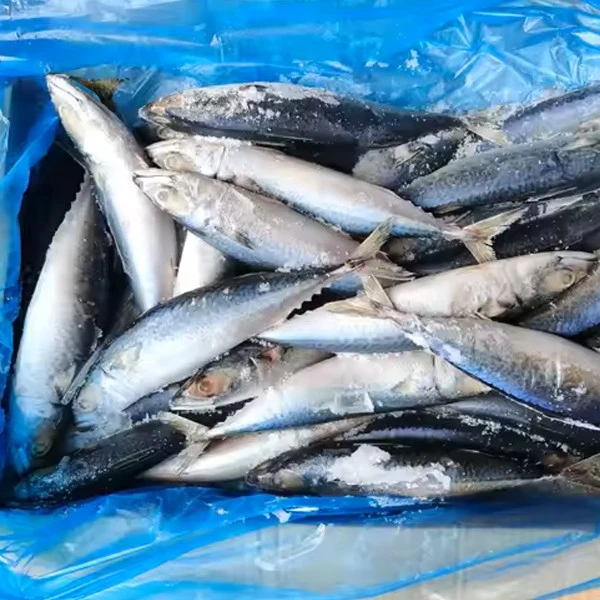
When sourcing frozen mackerel wholesale, importers often need to choose between whole round mackerel and HGT mackerel. Both formats are commercially important, but they serve different purchasing, processing and distribution requirements.
The right choice depends on several factors, including your target market, processing capacity, labor requirements, product yield, packaging, logistics and final application.
HGT generally refers to headed, gutted and tail-off mackerel, although buyers should always confirm the exact processing specification with their supplier because terminology can vary. Villena Seafood’s own seafood import guide identifies whole round and HGT as common seafood product forms and notes that different forms can have different pricing, yields and end-use applications.
Villena Seafood currently offers whole frozen mackerel, Atlantic mackerel, H&G mackerel, fillets, butterfly cuts, portions, IQF mackerel and bulk frozen mackerel for international buyers.
So, which format is better?
The answer is simple:
Whole mackerel is generally better when maximum processing flexibility and lower initial processing costs are priorities. HGT mackerel is generally better when convenience, reduced preparation and processing efficiency are priorities.
What Is Whole Frozen Mackerel?
Whole round mackerel is supplied in a relatively unprocessed form, with the head and internal organs retained.
This format gives importers maximum flexibility because the fish can subsequently be processed according to the requirements of the destination market.
Whole frozen mackerel can be suitable for:
- Seafood wholesalers
- Fish markets
- Seafood processors
- Smoking facilities
- Canning operations
- Foodservice distributors
- Restaurants
- Retail markets
- Further-processing companies
Villena Seafood specifically identifies whole frozen mackerel as suitable for seafood wholesalers, importers, traditional seafood markets and processing companies. Its stated advantages include natural presentation and flexible processing options.
What Is HGT Mackerel?
HGT stands for:
H — Headed
G — Gutted
T — Tail-off
HGT therefore provides a more processed product than whole round mackerel.
The head and internal organs are removed, and the tail is removed according to the HGT specification.
This can reduce the amount of preparation required after the product reaches the importer.
HGT is particularly useful for buyers supplying:
- Foodservice
- Restaurants
- Seafood processors
- Retailers
- Food manufacturers
- Further-processing operations
Commercial seafood specifications also demonstrate that HGT can be supplied in different size grades and packaging configurations.
Important: Buyers should always have the exact definition of HGT written into the purchase specification, including whether the tail is removed, because H&G and HGT are not necessarily interchangeable terms.
HGT vs Whole Mackerel: Quick Comparison
| Specification | HGT Mackerel | Whole Round Mackerel |
|---|---|---|
| Head | Removed | Retained |
| Guts | Removed | Retained |
| Tail | Removed | Retained |
| Processing Level | Higher | Lower |
| Buyer Preparation | Reduced | Greater |
| Processing Flexibility | Moderate | High |
| Handling Convenience | High | Moderate |
| Primary Processing Required | Lower | Higher |
| Suitable for Foodservice | Excellent | Good |
| Suitable for Processing Plants | Excellent | Excellent |
| Whole-Fish Retail | Limited | Excellent |
| Processing Control | Moderate | Maximum |
| Initial Product Cost | Typically higher | Typically lower |
| Best Use | Convenience & efficiency | Flexibility & processing |
Actual pricing, yield and specifications depend on species, size, origin, processing requirements, packaging and supplier terms.
1. Processing Requirements
The biggest difference between HGT and whole mackerel is the amount of processing already completed.
With whole mackerel, the buyer may need to carry out:
- Heading
- Gutting
- Cleaning
- Trimming
- Further cutting
- Filleting
- Portioning
With HGT, several primary-processing steps have already been completed.
This can be especially valuable for companies that do not operate a large fish-processing facility.
For importers purchasing substantial volumes, reducing processing requirements can improve workflow and reduce handling.
2. Purchase Price vs Total Cost
A common mistake is to compare only the supplier’s price per kilogram.
Whole mackerel can have a lower purchase price because less processing has been carried out.
HGT mackerel can have a higher price because additional processing has already been performed.
However, the buyer should calculate the total cost of ownership.
Whole Mackerel
Product cost + labor + processing + waste + handling
HGT Mackerel
Product cost + reduced processing + reduced labor + handling
The cheapest price per kilogram does not necessarily produce the lowest final cost.
Villena Seafood’s import guidance emphasizes that different product forms can have different pricing, yield rates and end-use applications.
3. Labor Requirements
Labor can become an important cost when importing large volumes.
Whole mackerel requires more primary preparation before it can be used in some applications.
HGT reduces this requirement.
This can be advantageous for:
- Foodservice distributors
- Restaurant suppliers
- Retail packers
- Processing companies
- Ready-to-cook manufacturers
For businesses operating their own efficient processing lines, however, whole mackerel may remain attractive because the buyer retains control over the processing operation.
4. Yield Considerations
Importers should not compare whole and HGT products using price alone.
The physical weight of a whole fish includes components that may subsequently be removed during processing.
Therefore, buyers should calculate:
Cost per kilogram of purchased product
and also:
Cost per kilogram of usable product.
The final yield depends on:
- Species
- Fish size
- Processing specification
- Cutting method
- Trim requirements
- Final product
For this reason, a buyer should request the supplier’s exact specification and, where necessary, conduct a commercial yield assessment.
5. Which Is Better for Foodservice?
For many foodservice applications, HGT can offer a practical advantage.
Restaurants and professional kitchens may prefer seafood that requires less primary preparation.
HGT mackerel can therefore help simplify:
- Kitchen preparation
- Portioning
- Handling
- Storage
- Production planning
Whole mackerel may still be preferable where the visual presentation of an intact fish is important.
6. Which Is Better for Supermarkets?
The answer depends on the retail market.
Whole mackerel can be attractive for:
- Traditional fish counters
- Whole-fish markets
- Fresh/frozen seafood displays
- Markets where consumers prefer whole fish
HGT can be better suited to:
- Convenience-focused retail
- Ready-to-cook products
- Pre-cleaned seafood
- Further retail processing
Packaging and labeling should also be considered when selecting the format.
Villena Seafood offers flexible packaging solutions for its frozen mackerel range, including retail and bulk formats, with private-label options available according to requirements.
7. Which Is Better for Seafood Processors?
This depends largely on the processor’s equipment.
A fully equipped processing plant may prefer whole round mackerel because it can control every processing stage.
A company focused on downstream processing may prefer HGT because the primary preparation has already been completed.
For example:
Whole Mackerel → Heading → Gutting → Cutting → Filleting → Packaging
versus:
HGT Mackerel → Cutting → Filleting → Packaging
The second workflow may reduce certain processing requirements.
8. HGT Mackerel for Smoking
Mackerel is widely used in smoked seafood production.
Processing specifications for smoked mackerel can include whole gutted fish, headed and gutted fish and fillets. FAO’s mackerel processing guidance describes several of these commercial preparations.
HGT can therefore be suitable for processors that want a cleaned raw material before further processing.
The ideal format depends on the smoking plant’s equipment, production process and finished-product specification.
9. Whole Mackerel Offers Maximum Flexibility
One of the strongest advantages of whole mackerel is flexibility.
The buyer can determine how the fish will be processed after arrival.
For example:
Whole Mackerel
→ Gutting
→ Smoking
or
Whole Mackerel
→ Heading & Gutting
→ Filleting
→ Portioning
or
Whole Mackerel
→ Steaking
→ Retail Packaging
This can be particularly useful for processors serving several different markets.
10. HGT Offers Processing Convenience
HGT transfers some of the preparation work from the buyer to the supplier.
This may be valuable when:
- Labor is expensive
- Processing capacity is limited
- The buyer wants standardized raw material
- The product is going directly into foodservice
- The importer wants to reduce preparation time
The additional supplier processing should nevertheless be reflected in the agreed specification and commercial price.
11. Cold-Chain and Storage
Regardless of whether you choose whole or HGT, frozen mackerel requires appropriate temperature-controlled handling.
Villena Seafood states that its frozen mackerel is maintained under cold-chain procedures and lists storage at -18°C or below in its product specifications.
Importers should confirm:
- Freezing method
- Storage temperature
- Shelf life
- Production date
- Packaging
- Reefer requirements
- Temperature monitoring
- Loading arrangements
A good product specification should establish these details before shipment.
12. Packaging and Logistics
Both whole and HGT mackerel can be supplied in different packaging formats depending on the supplier and buyer requirements.
Possible options include:
- Bulk cartons
- IQF bags
- Block-frozen cartons
- Retail packaging
- Vacuum packaging
- Private-label packaging
Villena Seafood states that its mackerel range can be supplied in customized packaging and that OEM/private-label solutions are available.
For containerized imports, buyers should compare:
- Net weight
- Gross weight
- Carton dimensions
- Cartons per pallet
- Pallets per container
- Reefer capacity
- Destination port
13. Which Format Is Better for African Markets?
Market requirements vary by country and buyer.
Villena Seafood identifies mackerel as one of the key frozen fish products supplied to African markets, alongside sardines, tilapia, carp and herring, and notes support for high-volume container programs to African ports.
For traditional wholesale markets, whole mackerel can provide flexibility and competitive economics.
For processors and foodservice businesses, HGT can reduce preparation requirements.
Therefore, African importers should evaluate their customer preferences, processing facilities and distribution model before choosing between the two formats.
HGT vs Whole Mackerel: Which One Should You Choose?
Choose HGT Mackerel if you:
- Want less primary processing.
- Need easier handling.
- Have limited processing capacity.
- Supply foodservice customers.
- Want a cleaned fish format.
- Prioritize operational efficiency.
- Require a standardized processing format.
Choose Whole Mackerel if you:
- Have your own processing facility.
- Need maximum flexibility.
- Want control over processing.
- Supply traditional whole-fish markets.
- Produce several different finished products.
- Want to minimize upstream processing costs.
Buyer Decision Table
| Buyer Type | Recommended Format | Main Advantage |
|---|---|---|
| Seafood Importer | HGT / Whole | Depends on destination market |
| Seafood Processor | Whole / HGT | Processing flexibility |
| Restaurant Supplier | HGT | Reduced preparation |
| Supermarket | HGT / Whole | Depends on retail format |
| Traditional Fish Market | Whole | Whole-fish presentation |
| Smoking Facility | HGT / Whole | Depends on production line |
| Food Manufacturer | HGT | Processing efficiency |
| Canning Operation | Whole / HGT | Factory-specific |
| Foodservice Distributor | HGT | Easier handling |
| Private-Label Brand | HGT / Fillet | Convenience and presentation |
What Should Importers Ask Before Ordering?
Before purchasing either format, ask your supplier to confirm:
- Exact mackerel species
- Country of origin
- Fishing area where applicable
- Whole, H&G or HGT presentation
- Exact HGT definition
- Size range
- Freezing method
- Glazing percentage
- Net weight
- Gross weight
- Packaging
- Shelf life
- Storage temperature
- Production date
- Labeling requirements
- Certifications
- Inspection arrangements
- Loading port
- Minimum order quantity
- Incoterm
Villena Seafood’s existing mackerel specification lists Norway origin, Atlantic mackerel, whole/HGT/fillet/butterfly/portion/IQF formats, customized size grades, export packaging, private label and international reefer shipping. Buyers should confirm the current specification and availability for each individual quotation.
Why Source Wholesale Mackerel from Villena Seafood?
Villena Seafood supplies frozen mackerel solutions for international:
- Importers
- Wholesalers
- Distributors
- Supermarkets
- Restaurants
- Hotels
- Foodservice companies
- Seafood processors
- Frozen-food manufacturers
The current Villena Seafood mackerel range includes whole frozen mackerel, Atlantic mackerel, H&G, fillets, butterfly cuts, portions, IQF and bulk formats.
The company also provides customized product specifications, packaging options, OEM/private-label services and export documentation according to buyer requirements.
For international buyers, the exact product form, size, packaging, origin, quantity, storage conditions and shipping terms should be agreed before the order is finalized.
Final Verdict
There is no single format that is best for every importer.
HGT mackerel is generally the stronger choice for buyers seeking convenience, reduced preparation and efficient downstream processing.
Whole round mackerel is generally the stronger choice for buyers seeking maximum flexibility, processing control and whole-fish presentation.
The most important consideration is not simply the quoted price per kilogram. Importers should evaluate the complete commercial equation:
Product Price + Freight + Processing + Labor + Waste + Storage + Final Yield = True Cost
By comparing these factors alongside customer requirements, importers can select the mackerel format that best fits their business.
Villena Seafood can support international buyers seeking wholesale frozen mackerel in different commercial formats and specifications, subject to current availability and destination requirements.