
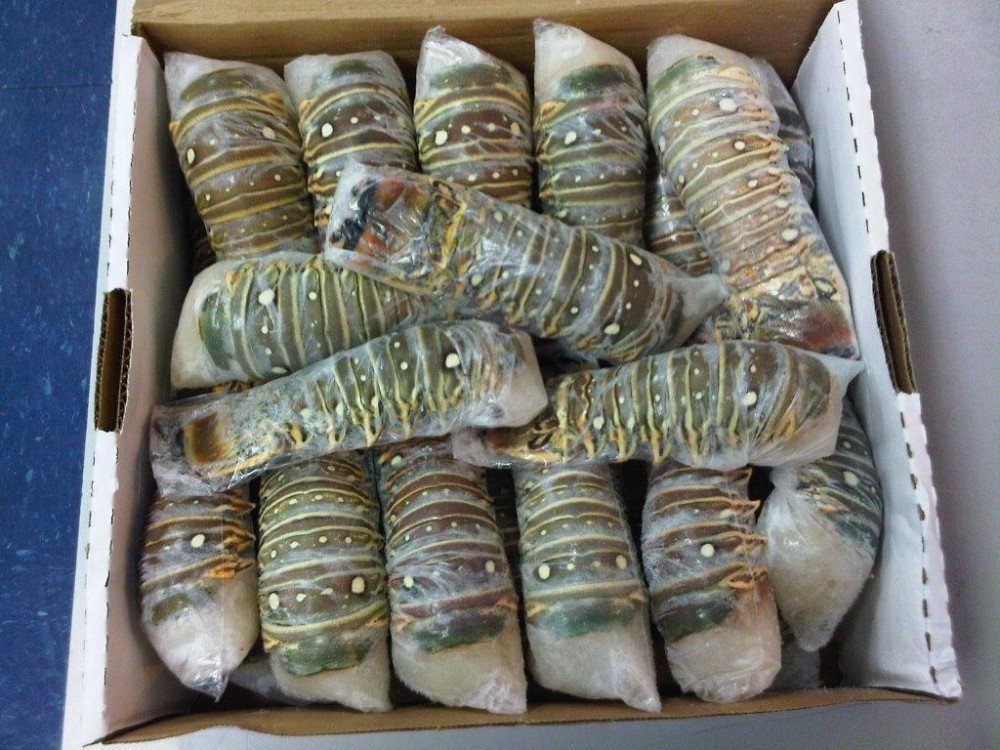
Frozen Lobster Tails Wholesale: Complete Buyer Guide
Buying frozen lobster tails wholesale requires much more than comparing the price per kilogram.
For international seafood importers, wholesalers, distributors, restaurants, hotels, supermarkets, foodservice companies and seafood processors, the right purchasing decision depends on several factors, including lobster species, origin, tail size, processing method, freezing technology, glazing, packaging, shelf life, documentation, logistics and total landed cost.
Frozen lobster tails are particularly attractive to commercial buyers because they provide convenient portioning, flexible inventory management and international shipping options without requiring the infrastructure associated with transporting live lobster.
However, not all frozen lobster tails are the same.
Two suppliers may quote “frozen lobster tails” while offering products with completely different species, sizes, origins, freezing methods, glazing percentages and packaging specifications.
This makes a clear product specification essential.
This complete guide explains what international buyers should know before purchasing wholesale frozen lobster tails.
What Are Frozen Lobster Tails?
Frozen lobster tails are lobster tails that have been separated from the whole lobster and frozen for storage, transportation and later preparation.
Depending on species and supplier, lobster tails may be sold:
- Raw
- Cooked
- Whole tail
- Split tail
- Shell-on
- Other processed formats
- IQF
- Block frozen
The exact specification should always be confirmed with the supplier.
For wholesale purchasing, buyers should identify the species and scientific name, rather than relying solely on the commercial term “lobster.”
Why Buy Frozen Lobster Tails Wholesale?
Frozen lobster tails offer several advantages for international B2B buyers.
1. Easier Inventory Management
Unlike live lobster, frozen tails can be stored in suitable frozen facilities and distributed according to customer demand.
This can make inventory planning easier for:
- Restaurants
- Hotels
- Supermarkets
- Foodservice distributors
- Seafood wholesalers
- Catering companies
- Food processors
2. Convenient Portioning
Individual lobster tails can provide a standardized portion for commercial kitchens.
This can help restaurants calculate:
- Portion cost
- Menu pricing
- Food cost
- Inventory requirements
3. International Distribution
Frozen products can be transported through temperature-controlled logistics, including refrigerated sea freight for suitable volumes and routes.
4. Flexible Processing
Depending on the specification, frozen lobster tails can be used for:
- Grilling
- Baking
- Broiling
- Foodservice
- Retail
- Catering
- Premium seafood menus
- Further processing
Frozen Lobster Tails vs Whole Lobster
For many commercial buyers, the choice between whole lobster and lobster tails depends on the intended application.
| Factor | Whole Lobster | Frozen Lobster Tails |
|---|---|---|
| Product form | Complete lobster | Tail only |
| Storage | Live or frozen | Frozen |
| Portioning | Less standardized | Convenient |
| Kitchen preparation | More preparation | Less preparation |
| Inventory flexibility | Depends on condition | High when frozen |
| Transportation | Live/frozen options | Temperature-controlled |
| Restaurant use | Presentation-focused | Portion-focused |
| Processing | Whole-lobster applications | Tail-meat applications |
Frozen lobster tails can be particularly useful where the customer wants a premium lobster portion without purchasing the entire lobster.
Step 1: Identify the Lobster Species
This is one of the most important purchasing decisions.
“Lobster” is not a single species.
Commercial lobster products can include different species with different characteristics, origins, market positions and product formats.
Examples include:
- American lobster (Homarus americanus)
- European lobster (Homarus gammarus)
- Caribbean spiny lobster
- Other spiny lobster species
- Slipper lobster species
Clawed lobsters and spiny lobsters are commercially different products.
Spiny lobsters, for example, do not have the large front claws characteristic of American and European lobsters.
For this reason, a professional purchase specification should identify:
Commercial name + scientific name + origin + product form.
Step 2: Determine Warm-Water or Cold-Water Origin
Lobster tail characteristics can vary according to species and origin.
Commercial buyers may encounter products from different geographical regions and fisheries.
The appropriate product depends on:
- Target market
- Customer expectations
- Species preference
- Texture
- Flavor
- Price positioning
- Availability
- Regulatory requirements
Do not compare products solely by the phrase “lobster tail.”
Instead, compare the exact species and origin.
Step 3: Choose the Right Lobster Tail Size
Size is one of the most important specifications for wholesale buyers.
Frozen lobster tails are commonly sold according to individual tail weight, frequently expressed in ounces.
Commercial size ranges can include:
| Tail Size | General Commercial Category |
|---|---|
| 3–4 oz | Small |
| 4–5 oz | Small-medium |
| 5–6 oz | Medium |
| 6–8 oz | Medium-large |
| 8 oz+ | Large |
These ranges are examples rather than a universal grading standard. Actual available sizes depend on the species, origin, processor and current supply.
Always ask the supplier to confirm the exact size specification and applicable tolerance.
Why Lobster Tail Size Matters
Tail size influences:
- Portion control
- Menu presentation
- Cooking requirements
- Customer expectations
- Selling price
- Carton configuration
- Processing yield
- Freight calculations
A restaurant serving individual lobster tails may prefer consistent medium or large sizes.
A supermarket may require several size grades.
A distributor may purchase multiple sizes to serve different customer segments.
How to Choose the Right Lobster Tail Size for Your Market
Restaurants
Restaurants often prioritize:
- Consistent individual size
- Attractive presentation
- Portion control
- Reliable availability
- Predictable food cost
Premium restaurants may prefer larger tails for individual entrée presentations.
Hotels
Hotels and resorts may require multiple sizes depending on:
- Buffet service
- À la carte menus
- Events
- Catering
- Banqueting
Supermarkets
Retail buyers may focus on:
- Standardized sizes
- Packaging
- Labeling
- Consumer presentation
- Shelf life
- Price point
Foodservice Distributors
Distributors may benefit from multiple size grades to supply different restaurant customers.
Processors
Processors should focus heavily on:
- Yield
- Tail size
- Meat quality
- Consistency
- Processing suitability
- Cost per usable kilogram
Step 4: Choose Raw or Cooked Lobster Tails
Frozen lobster tails can be supplied in different processing conditions.
Raw Frozen Lobster Tails
Raw tails are intended for cooking by the buyer.
They can be suitable for:
- Restaurants
- Hotels
- Catering
- Foodservice
- Retail consumers
- Further processing
Cooked Frozen Lobster Tails
Cooked products may provide convenience for certain foodservice and retail applications.
The buyer should clearly specify:
Raw or cooked
when requesting a quotation.
Never assume that “frozen lobster tail” automatically means raw product.
Step 5: Choose IQF or Block Frozen
Freezing method can have a major impact on handling.
What Does IQF Mean?
IQF means Individually Quick Frozen.
Each lobster tail is frozen separately rather than being frozen together in one solid block.
This can provide:
- Easier handling
- Individual portion control
- Flexible inventory management
- Convenient order preparation
- Reduced need to thaw an entire case
For restaurants and foodservice operators, IQF can be particularly convenient because individual portions can be taken from frozen storage as required.
Block Frozen Lobster Tails
Block-frozen products are frozen together according to the agreed packing specification.
This can be suitable for:
- Industrial processing
- Bulk applications
- Certain food manufacturing operations
The preferred format depends on the buyer’s production system.
IQF vs Block Frozen Lobster Tails
| Feature | IQF | Block Frozen |
|---|---|---|
| Individual pieces | Separated | Frozen together |
| Portioning | Easy | Less flexible |
| Inventory control | Flexible | Bulk-oriented |
| Foodservice | Convenient | Application dependent |
| Processing | Convenient | Application dependent |
| Handling | Easy | Bulk handling |
| Cost | Specification dependent | Specification dependent |
Step 6: Understand Glazing
Glazing is a protective layer of ice applied to some frozen seafood products.
It can help protect the product surface during frozen storage and transportation.
For wholesale buyers, glazing is important because it can affect the relationship between:
Gross weight + net product weight + actual seafood quantity.
Always request the glazing specification.
For example:
Glazing: ___%
Also confirm how net weight is declared.
Why Net Weight Matters
Imagine two suppliers quote similar carton prices.
Supplier A:
10 kg gross carton
Supplier B:
10 kg gross carton
If their glazing and packaging specifications differ, the actual quantity of lobster product may not be identical.
Therefore:
Compare the net product quantity, not simply the gross carton weight.
This is essential when evaluating wholesale lobster tail prices.
Step 7: Check the Packaging
Packaging should be included in the purchasing specification.
Ask for:
- Net weight per carton
- Gross weight
- Tail size
- Number of pieces where applicable
- Inner packaging
- Outer carton
- Glazing
- Labeling
- Carton dimensions
- Pallet configuration
For retail programs, additional requirements may include:
- Barcode
- Nutrition information
- Country-of-origin labeling
- Private labeling
- Consumer packaging
Step 8: Confirm Shelf Life
Frozen lobster tails should have a clearly defined shelf life.
Ask the supplier for:
- Production date
- Freezing date where applicable
- Best-before date
- Total shelf life
- Minimum remaining shelf life at shipment
This is especially important for international shipments because transportation and customs clearance consume part of the available shelf life.
Step 9: Verify Frozen Storage Requirements
A frozen lobster tail purchasing program requires appropriate cold storage.
The buyer should confirm:
- Recommended storage temperature
- Temperature monitoring
- Storage capacity
- Stock rotation
- Pallet configuration
- Cold-chain procedures
The cold chain should remain controlled during:
Processing → cold storage → loading → reefer transportation → port → customs → destination warehouse.
Step 10: Consider Origin
Origin can affect:
- Species
- Fisheries
- Availability
- Seasonality
- Pricing
- Documentation
- Import eligibility
- Customer preferences
If your customers specifically require Norwegian, European, Caribbean, North American or another origin, this should be stated in the RFQ.
Origin should never be assumed from the supplier’s company location.
Step 11: Verify Traceability
International seafood buyers should consider traceability an essential part of procurement.
Depending on the product and destination, documentation may identify:
- Species
- Fishing area
- Catch information
- Processing establishment
- Production lot
- Product quantity
- Country of origin
Traceability can help importers manage:
- Customs
- Regulatory compliance
- Product recalls
- Customer requirements
- Internal inventory management
Step 12: Check Import Requirements
Import regulations differ between countries.
Depending on the destination, buyers may need to consider:
- Import permits
- Approved establishments
- Health certificates
- Sanitary documentation
- Catch documentation
- IUU-related requirements
- Customs classification
- Labeling requirements
- Food safety regulations
- Veterinary controls where applicable
Before placing an international order, confirm the destination-market requirements for the exact lobster species and product form.
Step 13: Compare Wholesale Lobster Tail Prices Correctly
One of the biggest mistakes buyers make is comparing prices without comparing specifications.
For example:
Supplier A: €18/kg CIF
Supplier B: €16/kg FOB
The second quotation may initially appear cheaper.
But freight, insurance, destination charges and other costs may make the final landed cost higher.
A better comparison is:
Product + freight + insurance where applicable + duties + port charges + customs + inland transportation + cold storage
What Determines Frozen Lobster Tail Wholesale Prices?
Prices can vary according to:
1. Species
Different lobster species have different supply and market values.
2. Tail Size
Larger or specific premium grades can command different prices.
3. Origin
Fishing area and origin can affect availability and market demand.
4. Season
Supply conditions can influence market pricing.
5. Processing
Raw, cooked, IQF and other specifications can have different costs.
6. Glazing
Glazing specifications affect the net product quantity.
7. Packaging
Customized packaging can affect production costs.
8. Order Quantity
Larger wholesale orders may have different commercial pricing.
9. Destination
Freight and logistics can significantly affect landed cost.
10. Market Demand
Premium seafood prices can change according to international market conditions.
Therefore, there is no single permanent wholesale price for frozen lobster tails.
For an accurate quotation, provide the exact product specification and destination.
How to Calculate Landed Cost
A simple formula is:
Landed Cost = Product Cost + Export Costs + Freight + Insurance Where Applicable + Import Duties + Port Charges + Customs Clearance + Inland Transport + Cold Storage
For example:
Product: €20.00/kg
Freight: €1.20/kg
Port and clearance: €0.60/kg
Other costs: €0.40/kg
Estimated landed cost:
€22.20/kg
This is an illustrative calculation only.
Actual costs depend on the shipment and destination.
Why Cost Per Usable Kilogram Matters
Processors should not focus exclusively on the quoted purchase price.
Instead, calculate:
Landed Cost ÷ Usable Yield = Cost per Usable Kilogram
For example:
Landed cost:
€22/kg
Assumed usable yield:
80%
Illustrative usable cost:
€22 ÷ 0.80 = €27.50/kg
Actual yield will depend on the specific product and processing method.
Frozen Lobster Tail Quality Checklist
Before confirming a purchase, check:
☐ Species
☐ Scientific name
☐ Origin
☐ Fishing area where applicable
☐ Raw or cooked
☐ Tail size
☐ Size tolerance
☐ IQF or block frozen
☐ Glazing percentage
☐ Net weight
☐ Gross weight
☐ Packaging
☐ Carton dimensions
☐ Pallet configuration
☐ Production date
☐ Shelf life
☐ Storage requirements
☐ Traceability
☐ Certifications
☐ Health documentation
☐ Import eligibility
☐ MOQ
☐ Incoterm
☐ Destination port
☐ Freight
☐ Total landed cost
How to Write a Professional Frozen Lobster Tail RFQ
Instead of sending:
“Please give me your best price for lobster tails.”
provide a detailed specification.
Example Wholesale RFQ
Product: Frozen Lobster Tails
Species: [Exact species]
Origin: [Required origin]
Condition: Raw / Cooked
Size: 5–6 oz
Freezing: IQF
Glazing: As agreed
Packing: Export carton
Net Weight: [Required]
Quantity: [MT/cartons]
Destination: [Port/country]
Incoterm: FOB / CIF
Shelf Life: [Required]
Documentation: As required by destination market
This gives the supplier enough information to provide a meaningful commercial quotation.
Wholesale Frozen Lobster Tails for Restaurants
Restaurants purchasing lobster tails wholesale should prioritize:
Consistent Size
Consistency makes portion planning easier.
Reliable Quality
Product appearance, texture and condition should meet the agreed specification.
Convenient Packaging
IQF products can provide flexibility for individual portion preparation.
Stable Supply
Restaurants need reliable supply for menu planning.
Competitive Landed Cost
The purchase price should be evaluated alongside freight and other import costs.
Wholesale Frozen Lobster Tails for Hotels
Hotels can have a more complex demand profile.
They may require lobster tails for:
- À la carte restaurants
- Buffets
- Weddings
- Banquets
- Conferences
- Catering
- Special events
A hotel distributor may therefore require several sizes or pack formats.
Wholesale Frozen Lobster Tails for Supermarkets
Retail buyers should consider:
- Tail size
- Consumer packaging
- Labeling
- Country of origin
- Nutrition information
- Shelf life
- Barcode requirements
- Retail presentation
- Price point
Private-label programs may require additional packaging specifications.
Wholesale Frozen Lobster Tails for Foodservice Distributors
Foodservice distributors generally need:
Consistency + availability + competitive pricing + standardized packaging.
They may also require:
- Multiple size grades
- Foodservice cartons
- Reliable supply programs
- Product documentation
- Palletized delivery
Wholesale Frozen Lobster Tails for Processors
Processors should focus on technical specifications.
Important considerations include:
- Species
- Tail size
- Meat yield
- Processing condition
- Freezing method
- Glazing
- Consistency
- Defect tolerance
- Packaging
- Supply continuity
For processors, a product trial can be valuable before committing to a long-term purchasing program.
How to Choose a Reliable Frozen Lobster Tail Supplier
A reliable supplier should be able to clearly explain:
Product Specification
The supplier should provide an exact species, size and processing specification.
Availability
They should confirm current availability rather than relying on outdated stock information.
Documentation
The supplier should understand the documentation required for the destination market.
Cold Chain
They should have appropriate frozen-storage and export procedures.
Packaging
The packing specification should be clearly documented.
Traceability
The product should be traceable through the relevant supply chain.
Commercial Terms
The quotation should clearly identify:
- Price
- Currency
- Incoterm
- MOQ
- Payment terms
- Shipment period
- Destination
- Packing
Common Mistakes When Buying Frozen Lobster Tails
Mistake 1: Buying Based Only on Price
The cheapest quotation may not have the lowest landed cost.
Mistake 2: Not Specifying Species
“Lobster tail” is not sufficiently precise for an international purchase.
Mistake 3: Ignoring Size
A 3–4 oz tail and an 8 oz tail serve different markets.
Mistake 4: Not Checking Glazing
Always compare net product weight.
Mistake 5: Not Confirming Raw or Cooked
These are different products.
Mistake 6: Comparing FOB and CIF Prices
Always normalize the commercial terms.
Mistake 7: Ignoring Shelf Life
International logistics require sufficient remaining shelf life.
Mistake 8: Not Checking Import Requirements
Verify destination-market requirements before shipment.
Mistake 9: Not Confirming Packaging
Carton and pallet specifications affect storage and logistics.
Mistake 10: Ignoring Traceability
Professional seafood procurement requires clear supply-chain information.
Frozen Lobster Tails: Buyer Specification Template
| Specification | Buyer Requirement |
|---|---|
| Product | Frozen Lobster Tails |
| Species | Exact species |
| Scientific name | Confirmed |
| Origin | Required origin |
| Condition | Raw / Cooked |
| Size | e.g. 5–6 oz |
| Freezing | IQF / Block |
| Glazing | Agreed % |
| Net weight | Agreed |
| Gross weight | Agreed |
| Packaging | Export carton |
| Shelf life | Agreed |
| Storage | Frozen |
| Quantity | MT / cartons |
| MOQ | Supplier specification |
| Destination | Port/country |
| Incoterm | FOB / CIF |
| Documentation | Destination requirements |
This specification can be used as a starting point for international wholesale inquiries.
How to Import Frozen Lobster Tails
International buyers can follow a structured procurement process.
Step 1: Define Your Market
Determine who will buy the product.
Step 2: Choose the Species
Specify the exact species.
Step 3: Choose the Tail Size
Define the individual weight range.
Step 4: Select Processing
Raw or cooked.
Step 5: Select Freezing
IQF or block frozen.
Step 6: Define Glazing
Specify the acceptable glazing percentage where applicable.
Step 7: Define Packaging
Specify carton and pallet requirements.
Step 8: Determine Quantity
Provide the required kilograms, cartons, pallets or metric tons.
Step 9: Select Incoterm
FOB, CIF or another agreed Incoterm.
Step 10: Verify Documentation
Confirm all destination-market requirements.
Step 11: Calculate Landed Cost
Include product, freight and import-related costs.
Step 12: Confirm Shipment
Agree specifications, price, payment terms, loading schedule and documentation before shipment.
Frequently Asked Questions
What are frozen lobster tails?
Frozen lobster tails are lobster tail products separated from the whole lobster and frozen for storage, transportation and later preparation.
What sizes do frozen lobster tails come in?
Commercial size ranges can include 3–4 oz, 4–5 oz, 5–6 oz, 6–8 oz and 8 oz+, although available grades vary by species, origin and supplier.
What does IQF lobster tail mean?
IQF means Individually Quick Frozen. Each tail is frozen separately, making individual handling and portioning easier.
What is lobster tail glazing?
Glazing is an ice coating applied to some frozen seafood products to help protect them during frozen storage and transportation. Buyers should confirm the glazing percentage and net-weight calculation.
Are frozen lobster tails raw or cooked?
They can be either. The buyer should explicitly specify raw or cooked in the purchase specification.
How should I compare lobster tail suppliers?
Compare the same species, origin, size, processing condition, freezing method, glazing, net weight, packaging, Incoterm and destination. Then calculate the total landed cost.
What determines frozen lobster tail wholesale prices?
Species, origin, size, season, availability, processing method, freezing, glazing, packaging, quantity, freight and destination-market conditions can all affect the price.
What is the MOQ for frozen lobster tails?
There is no universal MOQ. Minimum quantities depend on species, size, packaging, supplier availability, order volume and shipping method.
Can frozen lobster tails be shipped by sea?
Yes. Frozen lobster tails can be transported by refrigerated sea freight when shipment volume, route, transit time and cold-chain arrangements make it commercially appropriate.
What documents are required to import frozen lobster tails?
Requirements vary by destination and product. They may include commercial documents, packing lists, health or sanitary certificates, origin documentation, catch-related documentation and other regulatory records.
Which lobster tail size is best for restaurants?
There is no single best size. Restaurants should choose based on their menu, portion requirements, customer expectations, food cost and target selling price.
Final Buying Guide: How to Select the Right Frozen Lobster Tails
The right frozen lobster tails wholesale specification depends on your market, not simply on the lowest available price.
Before placing an order, establish:
Species + origin + tail size + raw/cooked + freezing method + glazing + packaging + shelf life + documentation + quantity + destination + landed cost.
For restaurants and hotels, consistent size and portion control may be the most important considerations.
For supermarkets, packaging, labeling, appearance and shelf life may be more important.
For processors, yield, technical specifications and consistency should be prioritized.
For distributors and importers, availability, supply reliability, documentation, logistics and landed cost are critical.
The most important rule is simple:
Never compare frozen lobster tails by price alone. Compare the complete product specification and total landed cost.
A professionally prepared specification protects both buyer and supplier, makes quotations easier to compare and reduces misunderstandings about species, size, weight, processing and packaging.
Buy Frozen Lobster Tails Wholesale from Villena Seafood
Villena Seafood supports international B2B seafood buyers seeking wholesale frozen seafood for restaurants, hotels, distributors, supermarkets, foodservice companies and processors.
For frozen lobster tails, buyers can specify:
- Species
- Origin
- Tail size
- Raw or cooked
- IQF or block frozen
- Glazing
- Packaging
- Quantity
- Destination
- Incoterm
- Documentation requirements
For a current commercial quotation, provide your required lobster species, tail size, quantity, destination port and preferred Incoterm.
Villena Seafood can then evaluate the applicable product specification and supply requirements for your market.
Villena Seafood — Wholesale Frozen Seafood Supplier for International Buyers.