
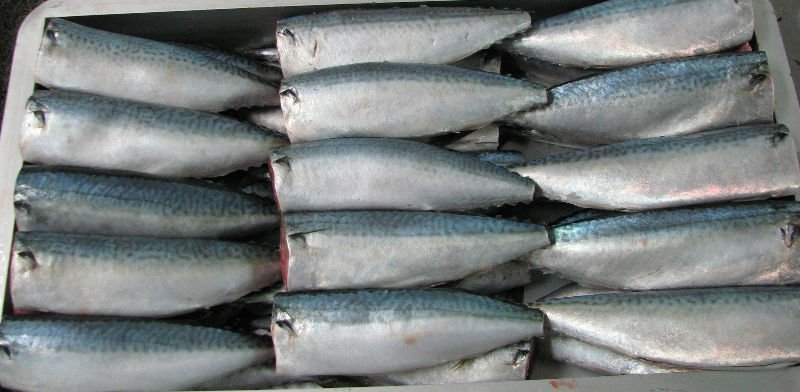
How to Calculate Frozen Mackerel Container Loading
Calculating frozen mackerel container loading correctly is essential for seafood importers, wholesalers, distributors, processors, foodservice companies and international buyers planning full-container shipments.
When purchasing frozen mackerel by the container, knowing the product price per kilogram is only part of the calculation.
Buyers also need to determine:
- Carton weight
- Net and gross weight
- Cartons per pallet
- Pallets per container
- Total pallets
- Total cartons
- Total net weight
- Total gross weight
- Container payload
- Available container volume
- Reefer specifications
- Product dimensions
- Destination transport restrictions
A professionally prepared loading calculation can help prevent overloading, underutilized container space, unexpected freight costs and discrepancies between ordered and shipped quantities.
This guide explains how to calculate frozen mackerel container loading and how international seafood buyers can prepare a practical loading plan.
Why Frozen Mackerel Container Loading Matters
Frozen mackerel is commonly transported internationally using refrigerated containers, commonly known as reefers.
For wholesale buyers, container utilization directly affects logistics economics.
If a container is loaded below its practical capacity, the buyer may pay freight for unused capacity.
If it is overloaded, the shipment may exceed:
- Container payload limits
- Road weight restrictions
- Port requirements
- Shipping-line requirements
- Reefer equipment limitations
Therefore, the objective is not simply:
“Put as much mackerel as possible into the container.”
The objective is:
Load the maximum commercially practical quantity while remaining within applicable weight, volume, pallet and transport limits.
What Information Do You Need Before Calculating the Loading?
Before preparing a frozen mackerel loading calculation, obtain the following information from the supplier.
Product Information
- Product name
- Species
- Product form
- Size grade
- Freezing method
- Glazing percentage
- Net weight per carton
- Gross weight per carton
Packaging Information
- Carton dimensions
- Cartons per pallet
- Pallet dimensions
- Pallet height
- Pallet gross weight
- Pallet stacking configuration
Container Information
- Container type
- Internal dimensions
- Maximum payload
- Door dimensions
- Refrigeration requirements
- Shipping-line restrictions
Logistics Information
- Loading port
- Destination port
- Road transport restrictions
- Pallet requirements
- Required temperature
- Shipping route
Without these details, any container-loading calculation is only an estimate.
Step 1: Determine the Carton Net Weight
Start with the carton specification.
For example:
Frozen mackerel carton: 20 kg net
This means each carton contains 20 kg of actual product.
If you have:
500 cartons
then:
500 × 20 kg = 10,000 kg net
Therefore:
10,000 kg = 10 MT net product
Step 2: Determine the Carton Gross Weight
Gross carton weight includes the product and applicable packaging.
For example:
Net weight: 20 kg
Packaging: 0.8 kg
Approximate gross weight:
20.8 kg/carton
If 500 cartons are loaded:
500 × 20.8 = 10,400 kg gross
This distinction is important because the container’s transport weight is based on the actual loaded weight, not simply the net seafood weight.
Step 3: Calculate Cartons Per Pallet
Suppose the supplier confirms:
50 cartons per pallet
and each carton contains:
20 kg net
Then:
50 × 20 kg = 1,000 kg net per pallet
If each carton weighs approximately 20.8 kg gross:
50 × 20.8 = 1,040 kg gross per pallet
Therefore:
| Pallet Information | Quantity |
|---|---|
| Cartons per pallet | 50 |
| Net weight/carton | 20 kg |
| Net weight/pallet | 1,000 kg |
| Gross weight/carton | 20.8 kg |
| Gross weight/pallet | 1,040 kg |
Step 4: Calculate Total Product Weight
Once the number of pallets is known, calculate the total quantity.
For example:
20 pallets × 1,000 kg net/pallet
=
20,000 kg net
or:
20 MT net
If the gross pallet weight is 1,040 kg:
20 × 1,040 = 20,800 kg gross
Therefore:
Net cargo: 20 MT
Gross cargo: 20.8 MT
Step 5: Calculate Container Loading by Cartons
Another useful method is to calculate container capacity by cartons.
Suppose:
- 20 kg net/carton
- 50 cartons/pallet
- 20 pallets/container
Then:
50 × 20 = 1,000 cartons
Total net weight:
1,000 × 20 kg = 20,000 kg
Therefore:
20 MT net
This method is particularly useful when the buyer purchases by carton rather than metric ton.
Step 6: Calculate Container Loading by Metric Tons
If the buyer knows the desired shipment quantity, reverse the calculation.
Suppose the buyer wants:
18 MT
and each carton contains:
20 kg
Convert metric tons to kilograms:
18 MT × 1,000 = 18,000 kg
Then:
18,000 ÷ 20 = 900 cartons
Therefore:
18 MT = 900 cartons
If there are 50 cartons per pallet:
900 ÷ 50 = 18 pallets
So the shipment would contain:
18 pallets + 900 cartons + 18 MT net product
assuming the specified pallet configuration is practical.
Step 7: Calculate a 20ft Reefer Loading
A 20ft reefer should never be assigned a fixed universal mackerel tonnage.
The practical loading quantity depends on:
- Container payload
- Product packaging
- Palletization
- Carton dimensions
- Loading method
- Shipping-line restrictions
- Road-weight restrictions
- Destination regulations
For illustration, assume:
20 kg net/carton
50 cartons/pallet
1,000 kg net/pallet
If the agreed loading plan is:
18 pallets
then:
18 × 1,000 = 18,000 kg
or:
18 MT net
If gross weight is approximately 1,040 kg per pallet:
18 × 1,040 = 18,720 kg gross
This is an illustrative calculation, not a guaranteed 20ft reefer capacity.
The actual maximum must be checked against the selected container’s payload and transport requirements.
Step 8: Calculate a 40ft Reefer Loading
A 40ft reefer has substantially more capacity than a 20ft reefer, but the exact maximum cargo quantity still depends on the actual product and logistics configuration.
For example, using the same illustrative packing:
20 kg net/carton
50 cartons/pallet
1,000 kg net/pallet
If the loading plan contains:
22 pallets
then:
22 × 1,000 = 22,000 kg
or:
22 MT net
If the gross pallet weight is 1,040 kg:
22 × 1,040 = 22,880 kg gross
Again, this is an example rather than a universal 40ft reefer loading capacity.
Net Weight vs Gross Weight
This is one of the most important concepts in container loading.
Net Weight
The weight of the actual frozen mackerel product.
Gross Weight
The product plus packaging and other applicable shipping materials.
For example:
Net: 20 kg
Gross: 20.8 kg
The buyer may purchase:
20 MT net
but the actual transport weight could be approximately:
20.8 MT gross
depending on packaging.
Always request both numbers.
Why Gross Weight Matters for Container Loading
A common mistake is calculating container capacity using only net seafood weight.
Suppose you want:
22 MT net mackerel
and the packaging adds 4%.
Approximate gross cargo:
22 MT × 1.04 = 22.88 MT
The container therefore needs to accommodate approximately:
22.88 MT gross cargo
before considering pallets and other loading materials.
This difference can become important when the shipment approaches the allowable payload.
Pallet Weight Calculation
If:
- 50 cartons/pallet
- 20 kg net/carton
- 20.8 kg gross/carton
then:
Net pallet weight:
50 × 20 = 1,000 kg
Gross product + carton weight:
50 × 20.8 = 1,040 kg
If a wooden or plastic pallet weighs another 20–30 kg, the complete loaded pallet may weigh approximately:
1,060–1,070 kg
The actual pallet weight should be confirmed by the supplier.
Container Loading Example
Consider this hypothetical frozen mackerel specification:
| Item | Specification |
|---|---|
| Product | Frozen Mackerel |
| Product form | HGT |
| Carton net weight | 20 kg |
| Cartons per pallet | 50 |
| Net weight per pallet | 1,000 kg |
| Approx. gross carton weight | 20.8 kg |
| Approx. gross product weight/pallet | 1,040 kg |
| Pallet weight | 25 kg |
| Approx. gross pallet weight | 1,065 kg |
If loading:
20 pallets
then:
Net product = 20 × 1,000 = 20,000 kg
or:
20 MT net
Approximate gross shipment:
20 × 1,065 = 21,300 kg
Therefore:
20 MT net ≈ 21.3 MT gross
based on these illustrative assumptions.
Container Loading Calculation Formula
The basic formula is:
Net Product Weight
Number of cartons × Net weight per carton
Number of Cartons
Required net kilograms ÷ Net weight per carton
Number of Pallets
Number of cartons ÷ Cartons per pallet
Total Gross Weight
Number of cartons × Gross weight per carton + pallet/other loading materials
These simple calculations form the foundation of a frozen mackerel loading plan.
Example: Buyer Orders 18 MT
Suppose the buyer orders:
18 MT frozen mackerel
Carton specification:
20 kg net
Convert MT to kilograms
18 × 1,000 = 18,000 kg
Calculate cartons
18,000 ÷ 20 = 900 cartons
Calculate pallets
If:
50 cartons/pallet
then:
900 ÷ 50 = 18 pallets
Result
| Item | Quantity |
|---|---|
| Net product | 18 MT |
| Cartons | 900 |
| Net/carton | 20 kg |
| Cartons/pallet | 50 |
| Pallets | 18 |
| Net/pallet | 1,000 kg |
Example: Buyer Orders 20 MT
20 MT = 20,000 kg
At 20 kg per carton:
20,000 ÷ 20 = 1,000 cartons
At 50 cartons per pallet:
1,000 ÷ 50 = 20 pallets
Therefore:
20 MT = 1,000 cartons = 20 pallets
under this hypothetical specification.
Example: Buyer Orders 22 MT
22 MT = 22,000 kg
At 20 kg per carton:
22,000 ÷ 20 = 1,100 cartons
At 50 cartons per pallet:
1,100 ÷ 50 = 22 pallets
Therefore:
22 MT = 1,100 cartons = 22 pallets
assuming the pallet configuration is exactly 50 cartons per pallet.
What If the Carton Is 10 kg?
The calculation changes.
For:
20 MT
you have:
20,000 ÷ 10 = 2,000 cartons
If there are:
60 cartons/pallet
then:
2,000 ÷ 60 = 33.33 pallets
You cannot load one-third of a standard pallet under a fixed pallet configuration without adjusting the packing plan.
Therefore, the supplier may need to create:
- 33 full pallets
- 1 partial pallet
or use another packing configuration.
This demonstrates why carton and pallet specifications should be confirmed before calculating container capacity.
Container Loading by CBM
Weight is not the only limitation.
Volume can also matter.
The basic formula is:
CBM per carton = Length × Width × Height
All dimensions should be converted into meters.
For example:
Carton:
0.60 m × 0.40 m × 0.25 m
CBM:
0.60 × 0.40 × 0.25 = 0.06 m³
If there are:
1,000 cartons
then:
1,000 × 0.06 = 60 m³
The cargo volume is therefore approximately:
60 CBM
before considering pallet dimensions and loading configuration.
Why CBM Is Important
A container may reach a practical volume limit before reaching its maximum payload.
Alternatively, heavy frozen seafood may reach the payload limit before using all available cubic capacity.
Therefore, container planning requires checking both:
Weight + Volume
Palletized vs Floor-Loaded Mackerel
Frozen mackerel can potentially be loaded in different ways depending on:
- Customer requirements
- Warehouse handling
- Port requirements
- Packaging
- Pallet availability
- Container configuration
Palletized Loading
Advantages can include:
- Easier warehouse handling
- Faster unloading
- Better inventory organization
- Easier distribution
- Better traceability
However, pallets consume additional space and add weight.
Floor Loading
Floor loading can potentially maximize cargo utilization because pallet structures are eliminated.
However, unloading and warehouse handling can be more labor-intensive.
The appropriate method should be agreed between buyer and supplier.
How Pallets Affect Container Capacity
Suppose a product can theoretically fit 24,000 kg of mackerel into a container based on weight.
If palletized loading adds approximately 25 kg per pallet and requires 24 pallets, the pallets add:
24 × 25 = 600 kg
That reduces the remaining available cargo weight.
This is why the maximum net seafood weight is not necessarily equal to the container’s published payload.
Container Payload vs Product Weight
The container’s maximum payload should not be confused with the amount of seafood you can sell or load.
A container’s allowable cargo weight can be affected by:
- Container tare weight
- Maximum gross mass
- Shipping-line rules
- Port regulations
- Road regulations
- Chassis limitations
- Country-specific transport rules
Always confirm the applicable limits for the actual shipping route.
Reefer Temperature
Frozen mackerel requires a controlled frozen cold chain.
The product specification should state the required storage and transportation temperature.
For many commercially frozen seafood programs, buyers may specify storage at approximately:
−18°C or colder
where appropriate to the product specification.
However, the exact transport temperature should follow the supplier’s validated product requirements and applicable regulations.
How Loading Should Be Planned
A professional loading plan should consider:
1. Product
Species and specification.
2. Cartons
Dimensions and weight.
3. Pallets
Size, weight and stacking.
4. Container
Type, internal dimensions and payload.
5. Temperature
Required frozen temperature.
6. Weight Distribution
Cargo should be distributed appropriately to avoid unsafe concentration of weight.
7. Door Clearance
The cargo must physically pass through the reefer door opening.
8. Airflow
Loading should follow appropriate reefer loading practices so that refrigerated air can circulate around the cargo.
Frozen Mackerel Container Loading Checklist
Before shipment, confirm:
☐ Species
☐ Product form
☐ Size
☐ Net weight/carton
☐ Gross weight/carton
☐ Carton dimensions
☐ Cartons/pallet
☐ Pallet dimensions
☐ Pallet weight
☐ Total pallets
☐ Total cartons
☐ Total net weight
☐ Total gross weight
☐ Total CBM
☐ Container type
☐ Container payload
☐ Reefer temperature
☐ Loading method
☐ Destination requirements
☐ Shipping-line restrictions
☐ Road weight restrictions
☐ Loading photos
☐ Final packing list
Example Commercial Loading Plan
A supplier quotation could present the loading plan as follows:
| Item | Specification |
|---|---|
| Product | Frozen Mackerel HGT |
| Size | 300–500 g |
| Carton | 20 kg net |
| Cartons/pallet | 50 |
| Net/pallet | 1,000 kg |
| Pallets | 20 |
| Total cartons | 1,000 |
| Total net | 20 MT |
| Gross weight | To be confirmed |
| Container | Reefer |
| Temperature | According to specification |
| Loading port | To be confirmed |
| Destination | Buyer’s nominated port |
This format makes it easier for the buyer to understand exactly what is being offered.
How to Calculate Mackerel Container Loading Before Ordering
Use this five-step process:
Step 1
Ask the supplier:
How many kilograms net per carton?
Step 2
Ask:
How many cartons per pallet?
Step 3
Calculate:
Net kg per pallet
Step 4
Determine:
Maximum practical pallets based on container payload and loading configuration
Step 5
Calculate:
Total cartons × net kg/carton = total net mackerel
Then verify the resulting gross weight and volume.
Example: 20ft vs 40ft Reefer
Using the same hypothetical specification:
20 kg/carton
50 cartons/pallet
1 MT net/pallet
A buyer could model different loading scenarios:
| Loading Plan | Pallets | Cartons | Net Product |
|---|---|---|---|
| Example A | 18 | 900 | 18 MT |
| Example B | 20 | 1,000 | 20 MT |
| Example C | 22 | 1,100 | 22 MT |
| Example D | 24 | 1,200 | 24 MT |
These figures are mathematical examples, not guaranteed container capacities.
The actual number that can be shipped must be confirmed against the container’s maximum gross weight, actual packing dimensions, pallet configuration and applicable transport regulations.
Should You Load 18 MT, 20 MT, 22 MT or More?
There is no universal answer.
The correct quantity depends on:
Container + product + packaging + palletization + route + regulations.
For example, a 20 MT shipment may be ideal under one packing configuration but impractical under another if the gross cargo weight becomes too high.
Similarly, 22 MT may be possible in one configuration but not another.
Therefore, buyers should request a supplier-confirmed loading plan before making payment or booking freight.
How to Avoid Underloading a Reefer
Underloading can increase the effective freight cost per kilogram.
For example:
Freight:
€3,000/container
At:
20 MT
Freight cost per kg:
€3,000 ÷ 20,000 = €0.15/kg
At:
15 MT
€3,000 ÷ 15,000 = €0.20/kg
Therefore, the same container freight produces a higher freight cost per kilogram when the container is underutilized.
How to Avoid Overloading
Overloading can cause serious logistical problems.
Potential issues include:
- Carrier rejection
- Port problems
- Road transport violations
- Additional charges
- Cargo reworking
- Delayed shipment
- Safety concerns
Never assume that because the physical space exists, the container can legally carry additional weight.
Frozen Mackerel Container Loading and Landed Cost
Loading quantity also affects the final cost per kilogram.
Suppose:
Container freight = €3,000
If you load:
20 MT
freight:
€0.15/kg
If you load:
22 MT
freight:
€0.136/kg
approximately.
This illustrates why efficient container utilization can improve logistics economics.
However, the higher quantity is only beneficial if it remains within the applicable weight, volume and transport limits.
How Suppliers Should Provide a Container Loading Quote
A professional supplier quotation should ideally include:
Product
Species
Size
Processing format
Carton weight
Cartons per pallet
Pallet dimensions
Total cartons
Total pallets
Total net weight
Total gross weight
Container type
Loading port
Destination
Incoterm
This provides the buyer with enough information to calculate the actual commercial value of the shipment.
Professional Frozen Mackerel RFQ Template
Product: Frozen Atlantic Mackerel
Scientific name: Scomber scombrus
Format: HGT / Whole / Fillet
Size: 300–500 g
Freezing: IQF / Block
Glazing: [Required %]
Packing: [Required carton size]
Net weight/carton: [Required]
Cartons/pallet: [Required]
Pallet dimensions: [Required]
Quantity: 1 × 20ft / 40ft reefer
Target net weight: [MT]
Origin: [Required]
Loading port: [Port]
Destination: [Port]
Incoterm: FOB / CIF
Shelf life: [Required]
Documents: [Required documents]
Ask the supplier to return the quotation with a complete container loading calculation.
Common Frozen Mackerel Loading Mistakes
1. Calculating Only Net Weight
Gross weight is also important.
2. Ignoring Pallet Weight
Pallets add both weight and volume.
3. Assuming Every Reefer Has the Same Capacity
Container specifications and transport restrictions differ.
4. Ignoring Carton Dimensions
Volume can become a limiting factor.
5. Ignoring Door Dimensions
The cargo must physically enter the container.
6. Not Checking Weight Distribution
Cargo should be loaded safely and appropriately.
7. Comparing Different Packing Formats
A 10 kg carton and a 20 kg carton can produce very different pallet and container configurations.
8. Assuming 20 MT Is Always the Maximum
The actual limit depends on the complete logistics configuration.
9. Forgetting Destination Road Limits
A container may be accepted at the port but create problems during inland transport if road-weight limits are exceeded.
10. Not Requesting a Final Packing List
The final packing list should confirm the actual shipment quantities.
Final Frozen Mackerel Container Loading Formula
For a simple commercial calculation:
Total Cartons
Total Net Weight ÷ Net Weight per Carton
Total Pallets
Total Cartons ÷ Cartons per Pallet
Total Net Weight
Total Cartons × Net Weight per Carton
Approximate Gross Weight
Total Cartons × Gross Weight per Carton + Pallet Weight
Total Volume
Total Cartons × Carton CBM
These calculations provide the basic loading model.
But the final loading quantity must always be checked against:
Container payload + container dimensions + pallet configuration + shipping-line restrictions + applicable road/transport limits.
Final Conclusion
Calculating frozen mackerel container loading correctly can make a significant difference to the profitability and efficiency of an international seafood shipment.
The calculation starts with the product specification:
Species → size → processing → carton weight → carton dimensions → pallet configuration.
From there, the buyer calculates:
Cartons → pallets → net weight → gross weight → CBM → container utilization.
For example, under an illustrative specification of 20 kg net per carton and 50 cartons per pallet, each pallet contains 1,000 kg net product.
Therefore:
18 pallets = 18 MT
20 pallets = 20 MT
22 pallets = 22 MT
provided the actual container and transport configuration allows those quantities.
The important point is that these figures are examples rather than fixed reefer capacities.
A professional seafood buyer should always request the supplier’s final loading plan showing:
- Total cartons
- Total pallets
- Net weight
- Gross weight
- Carton dimensions
- Pallet dimensions
- CBM
- Container type
- Loading method
This prevents misunderstandings and allows the buyer to accurately calculate the product cost, freight cost per kilogram and total landed cost.
Wholesale Frozen Mackerel from Villena Seafood
Villena Seafood supplies frozen seafood for international B2B buyers, including importers, wholesalers, distributors, restaurants, hotels, foodservice companies and processors.
When requesting a frozen mackerel quotation, buyers should provide:
- Product form
- Species
- Size
- Origin
- Packing
- Quantity
- Destination port
- Preferred Incoterm
A professional quotation can then be structured around the required carton configuration, palletization, container type and target shipment quantity.
For an accurate container-loading calculation, buyers should request the supplier’s confirmed net weight, gross weight, carton dimensions, pallet configuration and final loading plan before shipment.
Villena Seafood — Wholesale Frozen Seafood Supplier for Global Buyers.