
How to Import Frozen Seafood: Complete Guide for Importers
Importing frozen seafood can be a profitable opportunity for seafood distributors, wholesalers, supermarket suppliers, restaurants, hotels, foodservice companies and food manufacturers. However, successful international seafood sourcing requires much more than finding a competitive price.
Importers must consider product specifications, country of origin, approved suppliers, food-safety requirements, certificates, cold-chain management, packaging, shelf life, shipping, customs clearance, import duties, Incoterms and final landed cost.
This complete guide explains how to import frozen seafood internationally, from selecting the right products and supplier to arranging a reefer shipment and receiving the cargo at the destination.
Whether you are importing frozen shrimp, mackerel, tuna, lobster, crab, squid, octopus, cod, salmon, tilapia, pangasius, mussels, scallops or other frozen seafood, the same fundamental purchasing and logistics principles apply.
What Is Frozen Seafood Importing?
Frozen seafood importing is the process of purchasing seafood from an international supplier and transporting it across borders under controlled frozen conditions.
The process typically involves:
Product selection → supplier sourcing → quotation → specification confirmation → order → production → inspection/documentation → reefer loading → ocean freight → customs clearance → destination delivery → cold storage → distribution
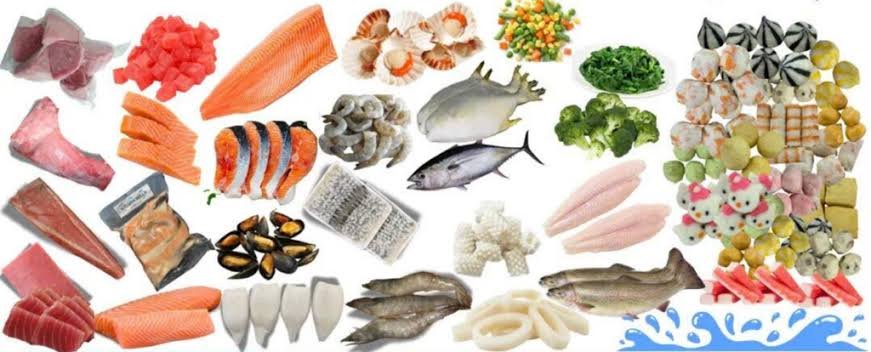
Frozen seafood can be imported in many different forms, including:
- Whole frozen fish
- HGT fish
- Frozen fish fillets
- Frozen shrimp
- Frozen prawns
- Frozen lobster
- Lobster tails
- Frozen crab
- Crab clusters
- Frozen squid
- Frozen cuttlefish
- Frozen octopus
- Frozen scallops
- Frozen mussels
- Frozen oysters
- Frozen clams
- Frozen tuna
- Frozen mackerel
- Frozen cod
- Frozen salmon
- Frozen whitefish
- Processed frozen seafood
The exact import requirements depend on the product, origin and destination country.
Why Import Frozen Seafood?
International sourcing allows professional buyers to access a broader range of seafood products, specifications and origins.
Competitive Wholesale Purchasing
Importing directly or through an experienced seafood trading partner can allow buyers to purchase commercial quantities at competitive prices.
Larger Product Selection
International suppliers can offer different:
- Species
- Sizes
- Grades
- Cuts
- Processing formats
- Packaging formats
- Origins
Consistent Supply
Importers can establish recurring supply programs instead of relying entirely on local spot-market availability.
Containerized Logistics
Frozen seafood can be transported internationally in temperature-controlled reefer containers.
Private Label Opportunities
Some suppliers can offer private-label or customized packaging programs for qualified buyers.
Step 1: Identify the Frozen Seafood You Need
Before contacting a supplier, define your exact product requirement.
For example:
Product: Frozen Atlantic Mackerel
Format: HGT
Size: Specific size range
Origin: Norway
Packaging: Bulk carton
Quantity: 1 × 40ft reefer
Destination: Named port
Incoterm: CIF
A vague request such as:
“I need frozen fish.”
makes it difficult for a supplier to provide an accurate quotation.
Instead, specify:
- Species
- Product form
- Size
- Grade
- Origin
- Packaging
- Quantity
- Certification
- Destination
- Incoterm
The more precise the specification, the easier it is to compare suppliers.
Step 2: Choose the Right Seafood Product Format
The same species may be available in several different forms.
For example, mackerel can be supplied as:
- Whole
- HGT
- Fillets
- Portions
Shrimp may be supplied as:
- HOSO
- HLSO
- PUD
- P&D
- PDTO
- Cooked
- Raw
- IQF
- Block frozen
Choosing the correct format can significantly affect:
- Price
- Yield
- Processing requirements
- Labor cost
- Storage
- Consumer appeal
- Transportation efficiency
Step 3: Select the Country of Origin
Origin is an important factor when importing seafood.
Different countries specialize in different species and product forms.
For example, Norway is internationally recognized for seafood production and exports, while other producing countries may specialize in shrimp, tuna, squid, tilapia, pangasius or other species.
When selecting an origin, consider:
- Product availability
- Quality
- Price
- Sustainability
- Export eligibility
- Processing standards
- Logistics
- Trade restrictions
- Destination-market requirements
Do not select an origin solely because the quoted price is low.
Step 4: Find a Reliable Frozen Seafood Supplier
Supplier selection is one of the most important steps in the entire import process.
A reliable supplier should be able to provide clear information about:
- Company identity
- Product origin
- Processing facility
- Product specifications
- Packaging
- Certifications
- Production
- Shelf life
- Export documentation
- Shipping
- Minimum order quantity
Ask potential suppliers for a detailed quotation rather than accepting a basic price list.
How to Verify a Frozen Seafood Supplier
Before placing a significant order, perform appropriate due diligence.
Verify the Company
Request:
- Registered company name
- Business registration information
- Physical business address
- Export experience
- Contact details
Verify the Product
Ask for:
- Product specification
- Product photographs
- Packaging information
- Size specifications
- Technical data
Verify the Origin
Confirm the actual country of origin and relevant establishment information.
Verify Certifications
Ask for applicable certificates and ensure that they are current and relevant to the product and market.
Verify Export Eligibility
The product and establishment may need to satisfy destination-country requirements.
For example, seafood entering the European Union is subject to official controls and specific food-safety and import requirements. The European Commission provides guidance on official controls for food and feed imported into the EU.
Step 5: Request a Professional Frozen Seafood Quotation
A proper RFQ should contain enough information for the supplier to calculate the correct price.
Example RFQ
Product: Frozen Vannamei Shrimp
Specification: HLSO, raw, IQF
Size: 16/20
Origin: Required origin
Packing: 10 × 1 kg/carton
Quantity: 1 × 40ft reefer
Destination: Port of Rotterdam
Incoterm: CIF
Required shelf life: Minimum agreed remaining shelf life
Documents: COA, health certificate, certificate of origin, packing list and commercial invoice
The supplier can then quote against a clearly defined specification.
Step 6: Compare Supplier Quotations
Never compare prices without comparing specifications.
For example:
| Supplier | Product | Origin | Packing | Price | Incoterm |
|---|---|---|---|---|---|
| Supplier A | Mackerel HGT | Norway | Bulk | €X/kg | FOB |
| Supplier B | Mackerel HGT | Norway | Bulk | €Y/kg | CIF |
| Supplier C | Mackerel HGT | Other | Bulk | €Z/kg | CIF |
Supplier C may appear cheaper, but the product may have a different origin or specification.
Similarly, FOB and CIF prices are not directly comparable without accounting for freight, insurance and other costs.
Step 7: Understand Incoterms
Incoterms determine important responsibilities between the buyer and seller.
Common terms used in seafood trade include:
EXW
The buyer takes responsibility for much of the transportation process from the seller’s premises.
FCA
The seller delivers the goods to the agreed carrier or location according to the agreed FCA rule.
FOB
The seller fulfills the agreed obligations through loading on board at the named port; the buyer generally arranges the main carriage.
CFR
The seller arranges carriage to the named destination port, without the seller being required to provide insurance under the Incoterms rule.
CIF
The seller arranges carriage and insurance to the named destination port according to the applicable CIF rule.
For frozen seafood, FOB and CIF are commonly considered by international buyers.
Always identify the named place/port and confirm exactly which costs and responsibilities are included.
Step 8: Confirm Product Specifications
Before production or shipment, make sure the final product specification is documented.
Important details can include:
- Scientific/common species name
- Product form
- Size
- Grade
- Glazing
- Net weight
- Gross weight
- Packaging
- Pieces per carton
- Cartons per pallet
- Pallet configuration
- Production date
- Best-before date
- Storage temperature
- Country of origin
- Processing method
- Certification
This specification becomes the reference point for purchasing and quality control.
What Is Seafood Glazing?
Glazing is a layer of ice applied to some frozen seafood products.
It can help protect the product from dehydration and freezer burn during frozen storage.
However, buyers should clearly understand whether quoted weight refers to:
Gross weight or net product weight.
If glazing is applicable, request the agreed glazing percentage and make sure the commercial documentation clearly defines the net weight.
This is particularly important when comparing frozen shrimp, fish fillets and other glazed seafood products.
Step 9: Check Shelf Life
Shelf life is extremely important for imported frozen seafood.
Ask the supplier for:
- Production date
- Packing date
- Best-before date
- Total shelf life
- Minimum remaining shelf life at shipment
International shipping can involve:
Factory → inland transport → port → vessel → destination port → customs → warehouse
Therefore, a shipment with a long total shelf life may still have significantly less remaining shelf life when it reaches the buyer.
For recurring supply programs, establish a minimum acceptable remaining shelf life in the purchasing agreement.
Step 10: Understand Frozen Seafood Cold Chain
Maintaining the cold chain is essential.
Frozen seafood should remain within the temperature requirements applicable to the product, supplier specification and destination regulations.
The cold chain can include:
- Processing facility
- Frozen storage
- Factory loading
- Inland transportation
- Port terminal
- Reefer container
- Ocean transportation
- Destination port
- Customs clearance
- Cold storage
- Final delivery
A temperature deviation can affect product quality.
Importers should therefore work with suppliers and logistics providers that understand reefer cargo handling.
What Is a Reefer Container?
A reefer container is a refrigerated shipping container designed to transport temperature-sensitive cargo.
Frozen seafood is commonly transported internationally in reefer containers.
Common considerations include:
- Container size
- Temperature setting
- Cargo weight
- Carton configuration
- Airflow
- Palletization
- Ventilation requirements
- Reefer power supply
- Shipping schedule
The exact reefer settings should be based on the product specification and carrier requirements.
20ft vs 40ft Reefer for Frozen Seafood
Importers may consider:
20ft Reefer
Potentially suitable for:
- Smaller commercial shipments
- Trial orders
- Lower-volume programs
40ft Reefer
Potentially suitable for:
- Larger wholesale orders
- Established distribution programs
- Multiple product lines
- Higher-volume importing
The maximum cargo weight depends on the product, packaging, container specification, road regulations, port requirements and shipping-line limitations.
Do not assume that a 40ft reefer can simply carry twice the cargo of a 20ft reefer.
Always request a container loading plan.
How Many Tons of Frozen Seafood Fit in a Reefer?
There is no universal answer.
The practical loading capacity depends on:
- Product density
- Carton dimensions
- Packaging
- Palletization
- Container payload
- Local transport restrictions
- Shipping-line restrictions
- Product airflow requirements
For this reason, professional buyers should request:
Cartons + pallets + net weight + gross weight + container type
from the supplier.
Step 11: Confirm Export and Import Documents
Documentation requirements vary by destination.
Common commercial documents may include:
- Commercial invoice
- Packing list
- Bill of lading
- Certificate of origin
- Health/veterinary certificate where applicable
- Certificate of analysis
- Product specification
- Catch documentation where applicable
- Traceability information
- Customs documentation
- Import permits where applicable
The precise documentation depends on the species, origin, processing method and destination.
Seafood Health Certificates
Health or veterinary certification can be an important requirement for international seafood shipments.
The certificate may provide information about the establishment, product, origin and compliance with applicable health requirements.
Importers should confirm the required certificate format before shipment.
Do not wait until the cargo reaches the port to discover that a required document is missing.
Seafood Traceability
Traceability is a critical component of modern seafood supply chains.
Buyers should be able to identify relevant information such as:
- Supplier
- Processing establishment
- Production lot
- Batch
- Species
- Origin
- Shipment
- Documentation
For EU imports, traceability and official controls form an important part of the food-safety framework.
Step 12: Check Import Regulations Before Ordering
This is one of the most important rules for new seafood importers.
Do not order first and investigate import requirements later.
Before placing an order, check:
- Is the species permitted?
- Is the origin approved?
- Is the processing establishment eligible?
- Is an import permit required?
- What health certificate is required?
- What labeling rules apply?
- What customs classification applies?
- Are there quotas or trade restrictions?
- Are there sustainability or catch-documentation requirements?
- What duties and taxes apply?
Requirements differ significantly between countries.
Importing Frozen Seafood Into the European Union
For EU-bound seafood, importers must comply with the relevant EU food-safety, animal-health, official-control, customs and labeling requirements.
The EU applies official controls to food and animal products entering the Union, and certain products require checks at designated border control posts.
Depending on the seafood product and origin, requirements may involve:
- Approved establishments
- Health certificates
- Official controls
- Border control procedures
- Traceability
- Catch documentation
- IUU-related requirements
- Food information and labeling
- Customs procedures
Importers should verify current requirements before every new trade lane or product introduction.
Step 13: Calculate the Complete Landed Cost
Never judge a seafood purchase by the supplier’s product price alone.
A simplified formula is:
Landed Cost = Product Cost + Inland Freight + Export Charges + Ocean Freight + Insurance + Port Charges + Customs Duties + Taxes + Customs Clearance + Inland Delivery + Other Applicable Costs
For example:
If:
Product cost = €40,000
and:
Freight + insurance + import-related costs = €10,000
then:
Total landed cost = €50,000
If the shipment contains:
20,000 kg
then:
Landed cost = €2.50/kg
This figure is much more useful for comparing suppliers than the initial product price alone.
Step 14: Calculate Your Wholesale Margin
Importers should calculate their expected selling price before purchasing.
A simplified calculation is:
Wholesale Selling Price – Landed Cost = Gross Margin
For example:
Selling price: €3.20/kg
Landed cost: €2.50/kg
Gross margin: €0.70/kg
The actual business margin must also consider:
- Warehousing
- Financing
- Staff
- Insurance
- Local transportation
- Spoilage or losses
- Sales commissions
- Marketing
- Administrative costs
- Taxes
Step 15: Arrange Payment Terms
Payment terms should be agreed before the purchase contract or pro forma invoice is finalized.
Potential commercial arrangements can include:
- Advance payment
- Deposit and balance
- Letter of credit
- Documentary collection
- Other agreed trade-finance structures
For new supplier relationships, buyers should conduct appropriate due diligence and ensure that the payment instructions are verified through trusted communication channels.
Step 16: Production and Pre-Shipment Preparation
Once the order is confirmed, the supplier prepares the shipment according to the agreed specification.
Depending on the product, this can involve:
Processing → freezing → packing → labeling → quality checks → documentation → cold storage → container loading
The buyer should ensure that the final product matches the agreed specification.
For larger or higher-value transactions, buyers may consider appropriate third-party inspection or pre-shipment quality-control arrangements.
Step 17: Reefer Container Loading
Frozen seafood must be loaded correctly.
Important considerations include:
- Correct product temperature
- Correct container temperature setting
- Proper carton arrangement
- Airflow
- Weight distribution
- Pallet configuration
- Door clearance
- Container cleanliness
- Reefer functionality
- Seal number
The container seal number should be recorded in the shipment documentation.
Step 18: Ocean Freight
After loading, the reefer container is transported to the port and loaded onto the vessel.
During international transportation, the shipment may pass through:
Factory → Export terminal → Port → Vessel → Transshipment hub where applicable → Destination port
Transit time depends on the route and shipping line.
Buyers should plan for:
- Transit time
- Port congestion
- Customs clearance
- Seasonal disruptions
- Transshipment
- Destination delivery
Step 19: Customs Clearance
When the container reaches the destination country, the importer or customs broker handles the necessary clearance procedures.
This may involve:
- Customs declaration
- Commercial invoice
- Packing list
- Bill of lading
- Origin documents
- Health certificates
- Import permits
- Customs classification
- Duty payment
- Tax payment
- Official inspection
The exact procedure depends on the destination country.
Step 20: Receive the Frozen Seafood
After customs clearance, the cargo should be moved to appropriate frozen storage as quickly as practical.
The receiving team should check:
- Container seal
- Temperature records where available
- Carton condition
- Quantity
- Product labeling
- Batch/lot information
- Visible damage
- Product temperature where appropriate
- Documentation
Any discrepancy should be documented immediately.
How to Import Frozen Seafood Successfully
A successful seafood import program is built around five principles:
1. Clear Specifications
Know exactly what you are buying.
2. Reliable Suppliers
Verify suppliers before committing substantial capital.
3. Correct Documentation
Confirm import and export requirements before shipment.
4. Strong Cold-Chain Management
Protect the product from factory to final warehouse.
5. Accurate Landed-Cost Calculation
Know your actual cost before agreeing to the purchase.
Most Popular Frozen Seafood Products for Importers
International buyers commonly source products such as:
Shrimp & Prawns
- Vannamei shrimp
- Black Tiger shrimp
- Giant freshwater prawns
Fish
- Atlantic mackerel
- Cod
- Salmon
- Tuna
- Herring
- Sardines
- Mahi-Mahi
- Red mullet
- Tilapia
- Pangasius
Cephalopods
- Squid
- Cuttlefish
- Octopus
- Baby octopus
Premium Seafood
- Lobster
- Lobster tails
- King crab
- Snow crab
- Crab claws
Shellfish
- Mussels
- Oysters
- Scallops
- Clams
- Abalone
- Sea cucumber
The best product depends on the destination market and customer demand.
How to Choose Seafood Products for Your Market
Before importing a new seafood product, analyze:
Demand → competition → wholesale price → landed cost → margin → shelf life → storage → regulations → sales channels
For example, a seafood product may have strong demand but still be unsuitable if:
- Import duties are too high.
- Freight costs are excessive.
- The remaining shelf life is insufficient.
- The product is difficult to store.
- The supplier cannot provide required documentation.
- The final landed cost is uncompetitive.
Seafood Importing by Business Type
Seafood Distributors
Distributors generally prioritize:
- Reliable supply
- Consistent specifications
- Competitive landed costs
- Multiple product lines
- Recurring shipments
Supermarket Suppliers
Retail-oriented importers may prioritize:
- Retail packaging
- Labeling
- Barcode requirements
- Consistent sizing
- Traceability
- Shelf life
Restaurants
Restaurants generally prioritize:
- Portion consistency
- Product quality
- Reliable availability
- Packaging
- Competitive cost
Food Manufacturers
Manufacturers may prioritize:
- Technical specifications
- Yield
- Consistency
- Processing format
- Volume
- Long-term contracts
Private Label Frozen Seafood
Importers can sometimes purchase frozen seafood under their own brand.
Private-label seafood may include:
- Custom packaging
- Custom labels
- Retail cartons
- Brand-specific specifications
- Market-specific labeling
Before beginning a private-label program, confirm:
- MOQ
- Artwork requirements
- Packaging cost
- Production lead time
- Label requirements
- Product specification
- Shelf life
- Shipping schedule
Private-label programs normally require more planning than standard stock purchases.
Sustainable Seafood and Responsible Sourcing
Sustainability is increasingly important to seafood buyers, retailers and consumers.
Depending on the product, buyers may evaluate:
- Fishing method
- Aquaculture practices
- Certification
- Traceability
- Country of origin
- Fishery management
- Chain of custody
- Environmental requirements
Potential certifications or standards can include programs such as MSC, ASC, BAP and other applicable schemes, depending on the species and supply chain.
Importers should only advertise a certification when the specific product and supply chain are actually covered by that certification.
Common Mistakes New Seafood Importers Make
1. Choosing the Cheapest Supplier
The cheapest quotation may not represent the lowest landed cost.
2. Not Defining Product Specifications
Different sizes, grades and formats can have significantly different prices.
3. Ignoring Glazing
Buyers should distinguish net product weight from gross weight where glazing applies.
4. Not Checking Import Eligibility
Always verify that the product and establishment are eligible for the destination market.
5. Ignoring Shelf Life
International transport consumes time.
6. Not Planning Cold Storage
A container should not arrive before the importer has suitable frozen storage available.
7. Comparing FOB and CIF Prices Directly
These prices include different responsibilities and costs.
8. Not Checking Documentation Before Shipment
Missing documentation can cause delays.
9. Ordering Too Much
Bulk purchasing only works when the importer has adequate demand and storage.
10. Failing to Calculate Landed Cost
The supplier’s price is only one part of the final cost.
Frozen Seafood Import Checklist
Before confirming an international order, review the following:
☐ Product identified
☐ Species confirmed
☐ Product form confirmed
☐ Size specification confirmed
☐ Grade confirmed
☐ Origin confirmed
☐ Supplier verified
☐ Processing establishment verified
☐ Technical specification received
☐ Glazing specification confirmed
☐ Packaging confirmed
☐ Carton weight confirmed
☐ Pallet configuration confirmed
☐ Container loading plan received
☐ Production date confirmed
☐ Shelf life confirmed
☐ Storage conditions confirmed
☐ Required certifications checked
☐ Import eligibility confirmed
☐ Health certificate requirements confirmed
☐ Catch/IUU documentation checked where applicable
☐ Customs requirements confirmed
☐ Incoterm confirmed
☐ Freight quotation received
☐ Landed cost calculated
☐ Payment terms agreed
☐ Shipping schedule confirmed
☐ Cold storage arranged
☐ Customs broker arranged
☐ Receiving inspection planned
Frequently Asked Questions About Importing Frozen Seafood
Can I import frozen seafood internationally?
Yes, frozen seafood is widely traded internationally. However, import requirements depend on the species, processing method, origin and destination country.
What is the most important thing when importing frozen seafood?
The most important considerations include supplier reliability, exact product specifications, regulatory compliance, documentation, cold-chain management and total landed cost.
What documents do I need to import frozen seafood?
Depending on the trade lane, documents may include a commercial invoice, packing list, bill of lading, certificate of origin, health certificate, product specification, certificate of analysis and other regulatory documents.
Do I need a reefer container for frozen seafood?
International frozen seafood shipments generally require temperature-controlled transportation, and reefer containers are commonly used for containerized ocean shipments.
How much frozen seafood can I import in one container?
The amount depends on the product, packaging, container type, payload limitations and applicable transport restrictions. A supplier should provide a loading plan based on the actual product.
What is the best Incoterm for frozen seafood?
There is no universally best Incoterm. FOB may suit experienced importers arranging their own freight, while CIF may be convenient for buyers seeking a supplier-arranged ocean freight solution.
How do I calculate the price of imported seafood?
Calculate:
Product price + freight + insurance + duties + taxes + port charges + customs clearance + inland transport + other applicable costs.
This gives you the estimated landed cost.
How can I verify a seafood supplier?
Verify the company, processing establishment, product origin, specifications, certifications, export eligibility, documentation and commercial history. For larger transactions, consider appropriate third-party due diligence or inspection.
How long does frozen seafood take to import?
Transit time varies according to origin, destination, shipping route, vessel schedule and transshipment requirements. Buyers should also allow time for customs clearance and inland delivery.
Can I import seafood under my own brand?
Depending on the supplier and order volume, private-label frozen seafood may be possible. Packaging, labeling, MOQ and production requirements should be agreed before production.
Why Choose Villena Seafood for Frozen Seafood Sourcing?
Villena Seafood is focused on supplying frozen seafood to international B2B buyers, including importers, distributors, wholesalers, foodservice companies and other commercial customers.
Our seafood sourcing approach is based on clearly defined product specifications, commercial quantities, export documentation and international logistics.
Depending on the product and supply program, buyers can source products such as:
- Frozen shrimp
- Frozen mackerel
- Frozen tuna
- Frozen cod
- Frozen squid
- Frozen octopus
- Frozen cuttlefish
- Frozen lobster
- Frozen crab
- Frozen scallops
- Frozen mussels
- Frozen oysters
- Frozen fish fillets
- Other frozen seafood products
For buyers seeking Norwegian-origin seafood, Villena Seafood also provides access to seafood supply programs connected with Norway and international seafood markets.
How to Request a Frozen Seafood Quote from Villena Seafood
To receive a more accurate wholesale quotation, provide:
Product:
Species:
Size:
Product form:
Origin:
Packaging:
Quantity:
Destination port:
Incoterm:
Required certifications:
Required shelf life:
Target shipment date:
For example:
Frozen Atlantic Mackerel HGT, specific size range, Norway origin, bulk carton packing, 1 × 40ft reefer, CIF [destination port].
A detailed requirement allows Villena Seafood to assess the sourcing and logistics requirements more accurately.
Final Thoughts: How to Import Frozen Seafood Successfully
Importing frozen seafood can provide significant opportunities for wholesalers, distributors, restaurants, supermarkets and food manufacturers, but successful importing requires careful planning.
The process begins with selecting the right product and defining a precise specification. From there, buyers should verify the supplier and processing establishment, confirm country-of-origin requirements, review food-safety documentation, establish the correct Incoterm and calculate the complete landed cost.
The physical logistics are equally important.
Frozen seafood requires an effective cold chain from processing and storage through reefer transportation, ocean freight, customs clearance and final delivery. Importers should also have appropriate frozen storage arranged before the container arrives.
Ultimately, successful seafood importing is built around quality, compliance, reliable supply, accurate documentation, controlled logistics and transparent commercial terms.
For international buyers searching for a wholesale frozen seafood supplier, working with an experienced seafood sourcing partner can simplify the process and help create a more reliable long-term supply chain.
Villena Seafood — Frozen Seafood Supply for Global Buyers.