
Whole Lobster vs Lobster Tails: Which Format Is Better for Restaurants?
For restaurants, choosing the right lobster format is an important purchasing decision. Whole lobster and lobster tails can both deliver a premium seafood experience, but they serve different culinary, operational and commercial purposes.
A fine-dining restaurant may want the visual impact of a whole lobster on the plate, while a busy hotel kitchen may prefer lobster tails because they offer easier preparation and more consistent portions.
For foodservice operators, the decision should therefore go beyond the purchase price. Restaurants should consider portion control, preparation time, presentation, menu application, storage, labor, yield and customer expectations.
Villena Seafood supplies wholesale frozen lobster products in several formats, including whole frozen lobster, frozen lobster tails, lobster portions and IQF lobster, providing foodservice businesses with options based on their operational requirements.
So, which is better?
Whole lobster is generally better for premium presentation and complete seafood experiences, while lobster tails are generally better for convenience, portion control and efficient restaurant preparation.
What Is Whole Lobster?
Whole lobster is supplied as an intact lobster, including the shell and the various edible sections of the animal.
Depending on the species and product specification, whole lobster can provide:
- Tail meat
- Claw meat where applicable
- Knuckle meat
- Body meat
- Premium shell-on presentation
Whole lobster is particularly attractive for restaurants where the appearance of the seafood is an important part of the dining experience.
It can be used for:
- Fine dining
- Seafood restaurants
- Luxury hotel restaurants
- Seafood platters
- Seafood buffets
- Lobster specials
- Premium banquet menus
- Traditional lobster dishes
Whole lobster is often chosen when the restaurant wants the seafood itself to become a centerpiece of the meal. Restaurant-focused comparisons likewise note that whole lobster creates a more dramatic presentation, while tails offer easier preparation.
What Are Lobster Tails?
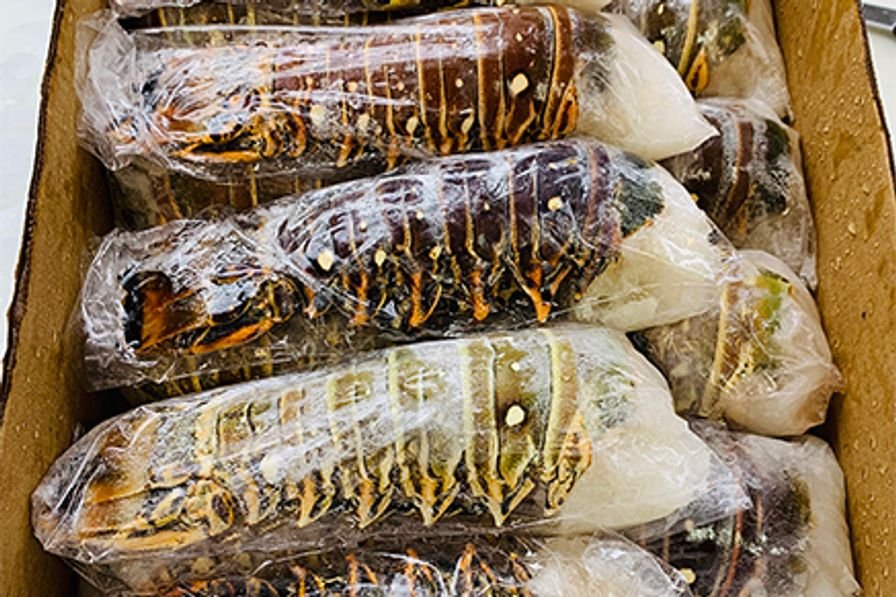
Lobster tails are the tail portion of the lobster, generally supplied in the shell and prepared for cooking.
The format is popular in foodservice because the restaurant receives a more standardized portion that can be prepared directly for the menu.
Frozen lobster tails can be particularly suitable for:
- Grilled lobster
- Baked lobster
- Broiled lobster
- Butter-poached lobster
- Surf and turf
- Seafood platters
- Pasta
- Premium appetizers
- Restaurant main courses
Lobster tails provide a clean, premium presentation while reducing some of the preparation associated with handling a whole lobster.
Villena Seafood specifically lists frozen lobster tails as a foodservice product and highlights their easy preparation, consistent portion sizes and premium menu presentation.
Whole Lobster vs Lobster Tails: Quick Comparison
| Feature | Whole Lobster | Lobster Tails |
|---|---|---|
| Product Format | Complete lobster | Tail section |
| Presentation | Exceptional | Premium |
| Preparation | More involved | Easier |
| Portion Control | Moderate | Excellent |
| Menu Flexibility | Very high | High |
| Labor Requirement | Higher | Lower |
| Storage | Requires more space per serving | Easier to organize |
| Cooking | More involved | Straightforward |
| Premium Appearance | Excellent | Excellent |
| Best For | Signature presentations | Consistent restaurant portions |
| Seafood Platters | Excellent | Excellent |
| Surf & Turf | Good | Excellent |
| Fine Dining | Excellent | Excellent |
| High-Volume Foodservice | Moderate | Excellent |
| Inventory Management | More complex | Easier |
1. Presentation: Whole Lobster Has the Advantage
If your restaurant is focused on visual presentation, whole lobster has a major advantage.
A complete lobster creates a dramatic centerpiece that immediately communicates premium seafood.
It can be particularly effective for:
- Luxury dining
- Seafood restaurants
- Hotel restaurants
- Special events
- Seafood towers
- Celebration menus
- Premium seafood platters
Whole lobster is not simply another ingredient. It can become part of the customer’s dining experience.
This is why whole lobster is frequently associated with traditional and premium restaurant presentations.
Best choice for presentation:
Whole Lobster ✓
2. Preparation: Lobster Tails Are Easier
From an operational perspective, lobster tails can be more convenient.
With whole lobster, restaurant staff may need to deal with:
- Shell handling
- Claws
- Body sections
- Portioning
- Additional preparation
- More complicated plating
Lobster tails provide a more straightforward portion.
For busy kitchens, reducing preparation can help streamline service.
This is particularly important when a restaurant serves large numbers of customers during:
- Lunch service
- Dinner service
- Events
- Banquets
- Hotel buffets
- Weekend promotions
Best choice for convenience:
Lobster Tails ✓
3. Portion Control
Portion consistency is critical for restaurant profitability.
Lobster tails can provide a relatively standardized unit for menu planning.
For example, restaurants can build menu specifications around:
One lobster tail per serving
or
One specified tail size per entrée
This makes it easier to establish:
- Food cost
- Portion size
- Menu pricing
- Inventory requirements
- Kitchen procedures
Whole lobster can be more variable because the complete animal may contain different proportions of tail, claw, knuckle and body meat.
Best choice for portion control:
Lobster Tails ✓
4. Labor Costs
Restaurant labor is an important part of foodservice economics.
Whole lobster generally requires more handling and preparation.
Lobster tails can simplify the workflow because the product is already separated into the desired primary portion.
For restaurants operating with a lean kitchen team, this can be a significant advantage.
The actual labor savings depend on the product specification and preparation method, but the basic principle is straightforward:
The more preparation performed before the product reaches the kitchen, the less primary processing the kitchen needs to perform.
Best choice for lower preparation requirements:
Lobster Tails ✓
5. Menu Applications
Both formats can support premium menus, but they work particularly well in different applications.
Whole Lobster
Ideal for:
- Whole lobster dinners
- Seafood towers
- Lobster platters
- Luxury buffet presentations
- Traditional lobster dishes
- Signature restaurant specials
Lobster Tails
Ideal for:
- Surf and turf
- Grilled lobster
- Broiled lobster
- Lobster with butter
- Pasta
- Seafood platters
- Premium individual entrées
Restaurant seafood guidance similarly identifies lobster tails as particularly suitable for grilling, baking, broiling and surf-and-turf presentations.
6. Whole Lobster and the Customer Experience
Whole lobster can provide an experience that goes beyond the food itself.
The customer sees the complete seafood product and can associate it with:
- Luxury
- Freshness
- Authenticity
- Celebration
- Premium dining
For restaurants that market themselves around seafood experiences, this can be commercially valuable.
A whole lobster presentation can also make a strong visual element for restaurant photography and menu presentation.
7. Lobster Tails and Customer Convenience
While whole lobster can create a memorable experience, not every customer wants to deal with a complete shellfish.
Lobster tails offer a simpler dining experience.
The customer receives:
- A defined portion
- A large piece of lobster meat
- Easier handling
- Less shell to manage
This makes lobster tails particularly attractive for modern restaurant menus where convenience and elegant presentation are both important.
8. Yield and Food Cost
Restaurants should carefully evaluate edible yield, not simply purchase price.
A whole lobster includes shell and non-tail components, although some additional meat may be available from claws, knuckles and body depending on the species and preparation.
A lobster tail contains less of the animal but concentrates the product around the main tail meat.
Therefore, restaurant buyers should calculate:
Purchase cost ÷ usable meat yield = effective meat cost
This is more meaningful than simply comparing the price per kilogram of whole lobster against the price per kilogram of lobster tails.
The exact economics depend on species, size, product form, processing method and market price.
9. Storage and Inventory Management
Restaurant kitchens need efficient freezer management.
Whole lobster can require more physical space per serving because the complete shell structure remains intact.
Lobster tails can be easier to organize according to:
- Weight
- Size
- Portions
- Menu requirements
- Daily usage
For restaurants with limited freezer capacity, this can make lobster tails particularly attractive.
Villena Seafood also offers IQF frozen lobster options, which can allow foodservice operators to take only the quantity required while keeping the remaining product frozen.
10. IQF Lobster for Restaurants
IQF — Individually Quick Frozen — can be particularly useful for restaurant operations.
The major operational benefit is portion flexibility.
Instead of having to handle an entire case of a single product at once, restaurants can use the required quantity while maintaining the remainder in frozen storage.
Villena Seafood’s frozen lobster range includes IQF options designed around portion control, reduced waste and flexible foodservice handling.
This can be valuable for restaurants with unpredictable daily demand.
11. Whole Lobster for Fine Dining
For fine-dining establishments, whole lobster can be the preferred choice when presentation is central to the menu.
A chef may use whole lobster for:
- Signature dishes
- Seasonal specials
- Luxury tasting menus
- Celebration menus
- Premium seafood platters
The intact shell can be incorporated into the visual presentation of the dish.
Recommended format:
Whole Lobster
when the restaurant wants maximum visual impact.
12. Lobster Tails for High-Volume Restaurants
High-volume foodservice operations often prioritize consistency and speed.
Examples include:
- Hotel restaurants
- Resort restaurants
- Large catering operations
- Banquet facilities
- Restaurant groups
- Steakhouse chains
For these businesses, lobster tails can simplify:
- Portioning
- Inventory
- Preparation
- Cooking
- Plating
- Menu costing
Recommended format:
Lobster Tails
when operational efficiency is the priority.
13. Which Is Better for Surf and Turf?
For surf and turf, lobster tails are generally an excellent choice.
A standard restaurant plate can combine:
Steak + Lobster Tail + Side Dishes
The tail creates an attractive premium presentation while providing a defined seafood portion.
This makes lobster tails particularly useful for steakhouses and restaurants offering premium combination dishes.
14. Which Is Better for Seafood Buffets?
The answer depends on the style of buffet.
For a premium seafood display, whole lobster can create stronger visual impact.
For a buffet where customers need easy portioning and efficient service, lobster tails may be easier to manage.
Premium visual buffet:
Whole Lobster
High-volume practical buffet:
Lobster Tails
15. Frozen Lobster for Restaurants
Frozen lobster can provide restaurants with a practical way to maintain supply throughout the year.
A professionally managed frozen seafood supply chain can support:
- Consistent availability
- Inventory planning
- Portion control
- International sourcing
- Menu continuity
- Bulk purchasing
Villena Seafood supplies frozen lobster products for restaurants, hotels, foodservice distributors, supermarkets and international seafood buyers, with product formats including whole lobster, tails, portions and IQF products.
Restaurant Buying Checklist
Before ordering wholesale frozen lobster, restaurants should confirm:
| Specification | What to Confirm |
|---|---|
| Species | Exact lobster species |
| Origin | Country/region of origin |
| Format | Whole or tail |
| Product State | Raw or cooked |
| Freezing | IQF or blast frozen |
| Size | Agreed weight range |
| Glazing | Percentage where applicable |
| Net Weight | Confirmed commercial weight |
| Packaging | Retail or foodservice |
| Shelf Life | Confirmed product specification |
| Storage | Frozen storage requirements |
| Quantity | Case/pallet/container quantity |
| Labeling | Destination-market requirements |
| Certifications | Applicable certificates |
| Delivery | Reefer logistics |
| Incoterm | FOB/CIF/etc. |
Whole Lobster vs Lobster Tails: Restaurant Decision Matrix
| Restaurant Type | Recommended Format | Why |
|---|---|---|
| Fine Dining | Whole Lobster | Maximum presentation |
| Seafood Restaurant | Whole / Tails | Depends on menu |
| Steakhouse | Lobster Tails | Excellent for surf & turf |
| Hotel Restaurant | Lobster Tails | Portion consistency |
| Luxury Resort | Whole / Tails | Premium menu flexibility |
| Seafood Buffet | Whole / Tails | Depends on service style |
| Catering Company | Lobster Tails | Easier portion management |
| Restaurant Chain | Lobster Tails | Consistent specifications |
| Specialty Seafood Restaurant | Whole Lobster | Authentic presentation |
| High-Volume Foodservice | Lobster Tails | Faster preparation |
Why Restaurants Choose Villena Seafood
Villena Seafood supplies premium frozen lobster products for restaurants, hotels, foodservice distributors, supermarkets and international seafood importers.
Our wholesale lobster portfolio includes:
- Frozen whole lobster
- Frozen lobster tails
- Frozen lobster portions
- IQF frozen lobster
- Bulk frozen lobster
- Premium foodservice lobster
- Private-label lobster products
Villena Seafood states that its lobster products are supplied through qualified seafood processing partners with quality control, freezing, packaging, cold-chain management and export logistics.
Flexible packaging options can also support different restaurant and distribution requirements, including foodservice cartons and bulk export formats.
For international buyers, product availability, species, size, origin, packaging and commercial specifications should always be confirmed for the individual order.