
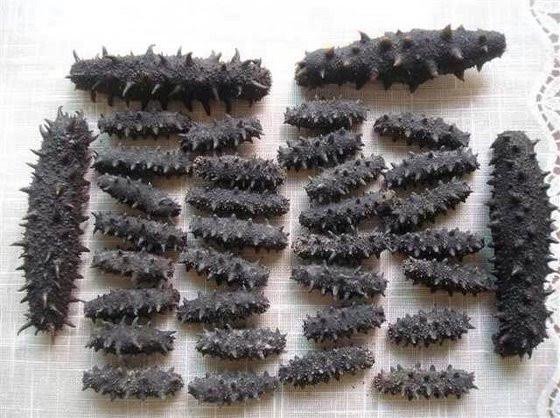
Wholesale Dried Sea Cucumber for Sale – Premium Dried Sea Cucumber Supplier & Exporter
Villena Seafood supplies wholesale dried sea cucumber for international seafood importers, wholesalers, distributors, specialty seafood businesses, restaurants, hotels, foodservice operators and commercial buyers seeking export-ready dried seafood products.
Dried sea cucumber, commonly known in international trade as bêche-de-mer or trepang, is a traditional premium seafood product traded across international markets. Sea cucumbers belong to the class Holothuroidea and are harvested from different marine environments around the world. Numerous species are commercially utilized, and product value can vary considerably according to species, origin, size, processing quality, appearance, dryness, body-wall characteristics and market requirements. FAO’s global identification work covers dozens of commercially important species and emphasizes the importance of accurate species identification in international trade.
For professional buyers, purchasing dried sea cucumber wholesale requires more than comparing a price per kilogram. The species, scientific name, processing method, dried size, grade, moisture specification, salt content, appearance, cleanliness, packaging, traceability and destination-market requirements can all affect the commercial suitability and value of the product.
Villena Seafood focuses on B2B seafood sourcing and international wholesale supply, helping buyers identify suitable dried sea cucumber specifications according to their intended market, customer requirements and import regulations.
Whether you are searching for dried sea cucumber wholesale, dried sea cucumber for sale, bulk dried sea cucumber, bêche-de-mer wholesale, trepang supplier, dried sea cucumber exporter, or a reliable seafood supplier for international procurement, Villena Seafood can assist with product specifications, commercial enquiries and export arrangements.
What Is Dried Sea Cucumber?
Dried sea cucumber is a processed seafood product made from sea cucumbers that have been prepared and dehydrated to produce a shelf-stable form suitable for storage, transportation and subsequent rehydration.
In international seafood trade, dried sea cucumber is often called bêche-de-mer or trepang. Processing commonly involves preparation steps such as cleaning, evisceration, cooking or boiling and drying, although exact processing methods vary according to species, origin, producer and market specification. FAO identifies the dried product as the processed form encountered by traders and authorities and notes that identifying species from processed animals can be challenging.
The finished product can vary substantially in:
- Species
- Scientific name
- Geographic origin
- Size
- Shape
- Colour
- Body-wall thickness
- Dryness
- Salt content
- Processing method
- Surface appearance
- Rehydration characteristics
- Packaging
This is why professional importers should specify the exact product requirements before purchasing.
Wholesale Dried Sea Cucumber Supplier
Villena Seafood serves the needs of international B2B seafood buyers seeking commercial quantities of seafood products.
Potential customers for wholesale dried sea cucumber include:
- Seafood importers
- Seafood wholesalers
- Seafood distributors
- Specialty seafood retailers
- Asian food distributors
- Restaurants
- Hotels
- Banquet kitchens
- Catering companies
- Foodservice distributors
- Food manufacturers
- Seafood processors
- International trading companies
The appropriate dried sea cucumber specification depends heavily on the target market.
For example, one buyer may require large whole dried sea cucumbers with a particular species and origin, while another may prioritize a medium-size product suitable for foodservice distribution.
For this reason, a professional RFQ should specify the product as precisely as possible.
Dried Sea Cucumber Product Specification
The following table provides a practical framework for wholesale enquiries. Exact species, sizes, grades, moisture levels and packaging must be confirmed against the actual available lot.
| Specification | Wholesale Dried Sea Cucumber |
|---|---|
| Product name | Dried Sea Cucumber |
| International trade names | Bêche-de-mer / Trepang |
| Scientific classification | Class Holothuroidea |
| Product form | Whole dried sea cucumber |
| Alternative form | Species-dependent processed dried product |
| Species | Buyer-specified/available species |
| Common commercial species | Holothuria, Actinopyga, Stichopus, Thelenota, Apostichopus, Isostichopus and others, subject to origin and legality |
| Product condition | Dried |
| Processing | Cleaned, prepared and dried according to agreed specification |
| Processing route | Species- and origin-dependent |
| Size | Small, medium, large, extra-large or buyer-specified |
| Size measurement | Length, weight, pieces/kg or agreed commercial grading |
| Grade | Commercial grade according to agreed specification |
| Appearance | Species-dependent natural dried appearance |
| Colour | Species and processing dependent |
| Body wall | Thickness and firmness according to species and grade |
| Moisture | Buyer/specification dependent |
| Salt content | Buyer/specification dependent |
| Foreign matter | Must meet agreed food-safety specification |
| Packaging | Bulk food-grade bags, cartons or agreed packaging |
| Inner packaging | Food-grade liner/vacuum packaging where applicable |
| Storage | Cool, dry and hygienic conditions according to product specification |
| Shelf life | Confirmed according to production lot and packaging |
| Origin | Confirmed per product lot |
| Traceability | Lot/batch information where applicable |
| Health documentation | According to product and destination |
| Certificate of Origin | Where applicable |
| Packing List | Commercial shipment documentation |
| Certificate of Analysis | Where applicable |
| MOQ | Commercial wholesale quantity; confirm current requirement |
| Shipping | Air freight, sea freight or other suitable arrangement |
| Incoterms | FOB, CIF or other agreed term |
| Destination | International markets subject to import regulations |
| Main buyers | Importers, wholesalers, distributors, foodservice and specialty seafood businesses |
Important: Dried sea cucumber is not a single standardized species or grade. The final commercial specification should identify the scientific species, product form, origin, size and processing specification wherever possible.
Types of Dried Sea Cucumber for Wholesale
There are many commercially important sea cucumber species. FAO’s current global identification guide covers 84 commonly or opportunistically exploited species and emphasizes the need for reliable identification of both live and processed products.
Commonly encountered commercial genera include:
1. Holothuria Species
The genus Holothuria contains multiple commercially traded sea cucumber species.
Depending on the species and market, products can vary considerably in size, appearance, body-wall thickness and commercial value.
Buyers should request the exact scientific species rather than relying solely on local or common names.
2. Actinopyga Species
Actinopyga species are also represented in the international dried sea cucumber trade.
The precise commercial value depends on species, size, origin, processing quality and destination-market demand.
3. Stichopus Species
Stichopus includes commercially traded sea cucumbers used in dried seafood markets.
The final dried appearance can differ considerably according to species and processing route.
4. Thelenota Species
Thelenota species include several commercially significant sea cucumbers.
These products may be marketed under different local names depending on the country and region.
5. Apostichopus Species
Apostichopus species are also commercially important in certain markets. Product specifications should identify the scientific species and origin.
6. Isostichopus Species
Certain Isostichopus species are traded internationally, but buyers must pay particular attention to legal harvesting, documentation and destination-market requirements because conservation and trade restrictions can apply to particular species or populations.
Why Scientific Species Identification Matters
One of the most important considerations when purchasing dried sea cucumber wholesale is species identification.
A dried sea cucumber can look substantially different from the live animal, and different species can have similar processed appearances.
FAO specifically developed identification resources because fishery officers, scientists and trade professionals can face difficulty identifying sea cucumber species after processing.
For international buyers, the product specification should therefore preferably state:
- Scientific name
- Common name
- Country of origin
- Harvest area where applicable
- Processing form
- Size
- Grade
- Documentation
- Traceability information
This helps reduce ambiguity during quotation, customs clearance and import inspection.
Dried Sea Cucumber Size Grades
Size is one of the major commercial characteristics of dried sea cucumber.
Depending on the supplier and market, size may be described by:
- Dried length
- Individual dried weight
- Pieces per kilogram
- Pieces per carton
- Small/medium/large grading
- Species-specific size grades
There is no single universal size classification that applies to every species and market.
A professional buyer should therefore request the actual size specification rather than relying solely on terms such as “Grade A” or “large.”
Example Wholesale Size Framework
| Size Category | Commercial Description | Typical Buyer Requirement |
|---|---|---|
| Small | Smaller dried specimens | Foodservice and value-oriented markets |
| Medium | Mid-size dried specimens | General wholesale distribution |
| Large | Larger whole specimens | Premium seafood markets |
| Extra Large | Large individual specimens | Specialty and premium markets |
| Custom | Buyer-defined specification | Contract procurement |
Exact size ranges should be confirmed for the specific species.
Dried Sea Cucumber Grading
Grade is another important consideration when buying dried sea cucumber.
However, “Grade A,” “Premium,” “Large” and similar descriptions are not universal global standards unless defined by a particular supplier, market or contract.
A reliable commercial specification should instead describe measurable characteristics such as:
- Species
- Dried size
- Weight
- Moisture
- Salt content
- Appearance
- Cleanliness
- Body-wall thickness
- Processing method
- Defects
- Foreign matter
- Packaging
- Traceability
This approach gives buyers a more objective basis for comparing suppliers.
What Determines the Value of Dried Sea Cucumber?
The wholesale value of dried sea cucumber can vary substantially.
FAO literature identifies factors such as species, dried size, degree of dryness and season as important influences on price.
Additional commercial considerations may include:
Species
Different species command different market values.
Size
Large, well-processed specimens can command higher prices in markets where size is important.
Body-Wall Thickness
The physical characteristics of the dried product can influence buyer preferences.
Dryness
The degree of drying affects product weight, storage characteristics and commercial value.
Appearance
Clean, intact specimens with desirable appearance can be preferred by premium buyers.
Processing Quality
Consistent preparation and drying can influence product acceptance.
Origin
Origin can influence market perception, legality, documentation and commercial value.
Season and Supply
Availability and market conditions can influence wholesale prices.
Dried Sea Cucumber Processing
The processing route depends on the species, fishing operation, producer and market.
Commercial dried sea cucumber may undergo several preparation stages, which can include:
- Harvesting
- Sorting
- Cleaning
- Evisceration
- Washing
- Cooking or boiling
- Drying
- Grading
- Inspection
- Packaging
- Storage
- Export preparation
The exact processing method should be confirmed for each product.
The proposed ISO working draft for dried sea cucumber addresses requirements involving pretreatment, boiling, drying and other processes, as well as packaging, marking, storage and transportation. Importantly, this is currently a working draft under development, not a final universal standard.
Wholesale Dried Sea Cucumber for International Export
Dried sea cucumber has an important international trade history.
FAO reports that sea cucumbers are harvested and traded in more than 90 countries, with the processed dried product commonly entering Asian markets.
International trade requires careful attention to:
- Species identification
- Legal harvesting
- Conservation regulations
- Export permits
- Import requirements
- Health documentation
- Traceability
- Packaging
- Labelling
- Customs classification
- Destination-country requirements
Requirements can differ substantially by species and country.
A buyer should therefore verify import eligibility before placing a commercial order.
Sustainable and Responsible Sea Cucumber Sourcing
Responsible sourcing is particularly important for sea cucumber because many fisheries have experienced significant harvesting pressure.
FAO’s global review has documented conservation and management concerns across sea cucumber fisheries and emphasizes the importance of sustainable management.
Villena Seafood’s approach to responsible sourcing should therefore focus on documented and legally compliant supply.
Buyers should request, where applicable:
- Scientific species name
- Country of origin
- Harvest information
- Legal sourcing documentation
- Export permits
- Traceability information
- Health documentation
- Applicable sustainability documentation
- Destination-country import authorization
A product should not be marketed as “sustainable,” “certified,” or “legal” without appropriate evidence for the specific product and supply chain.
Dried Sea Cucumber Packaging
Packaging protects dried seafood from moisture, contamination and physical damage.
Potential commercial packaging formats include:
- Food-grade inner bags
- Vacuum-sealed bags
- Polyethylene liners
- Cartons
- Bulk export cartons
- Retail-ready packaging
- Custom commercial packaging
Packaging should be selected according to:
- Product moisture
- Storage duration
- Shipping method
- Destination climate
- Buyer requirements
- Retail or wholesale application
- Food-contact regulations
A buyer should confirm the final packaging specification before shipment.
Storage of Dried Sea Cucumber
Unlike frozen seafood, dried sea cucumber does not normally require frozen cold-chain transportation.
However, proper storage remains essential.
The product should be protected from:
- Excess moisture
- Water exposure
- Condensation
- Direct sunlight
- Contamination
- Pests
- Excessive heat
- Poorly ventilated storage
A clean, cool and dry storage environment is generally appropriate, subject to the supplier’s specific product instructions.
The exact shelf life should be established from the production lot and packaging specification.
Dried Sea Cucumber for Restaurants and Foodservice
Dried sea cucumber is traditionally used in a variety of Asian culinary applications.
Potential foodservice applications include:
- Braised seafood dishes
- Premium soups
- Seafood broths
- Banquet cuisine
- Chinese cuisine
- Asian specialty dishes
- Hospitality menus
- Specialty seafood preparations
For restaurants and banquet kitchens, product size and rehydration characteristics can be particularly important.
A chef or foodservice buyer may prefer consistent-sized specimens to simplify preparation and portion planning.
Rehydration and Culinary Preparation
Dried sea cucumber normally requires preparation before culinary use.
Depending on species and processing method, preparation can involve:
- Washing
- Soaking
- Rehydration
- Cleaning
- Removal of any remaining unwanted material
- Cooking
- Final preparation
The exact preparation time and method vary according to the species, size, processing route and degree of dryness.
Therefore, buyers should follow the supplier’s preparation instructions for the specific product rather than applying one universal rehydration procedure.
Dried Sea Cucumber vs Fresh Sea Cucumber
| Feature | Dried Sea Cucumber | Fresh Sea Cucumber |
|---|---|---|
| Condition | Dehydrated | Fresh |
| Storage | Dry storage according to specification | Temperature-controlled |
| Transport | Generally easier to transport | Requires rapid cold-chain logistics |
| Shelf stability | Generally longer than fresh | Shorter |
| Preparation | Requires rehydration | Requires fresh preparation |
| Weight | Significantly reduced through drying | Natural fresh weight |
| International trade | Well established | More logistics-sensitive |
| Commercial use | Premium seafood, foodservice and specialty markets | Fresh seafood applications |
For long-distance international trade, dried product can be attractive because dehydration reduces the need for refrigerated transportation, provided the product remains properly protected from moisture and contamination.
How to Buy Dried Sea Cucumber Wholesale
A professional buyer should provide as much information as possible when requesting a quotation.
Step 1 – Identify the Species
Specify the required scientific species whenever possible.
Step 2 – Define the Size
Specify:
- Dried length
- Individual weight
- Pieces per kilogram
- Size grade
Step 3 – Define the Grade
Explain the quality characteristics required rather than relying solely on a generic “premium” description.
Step 4 – Confirm Processing
Specify whether you require:
- Whole dried
- Cleaned
- Gutted
- Boiled and dried
- Other agreed processing
Step 5 – Confirm Packaging
State your preferred carton weight, inner packaging and retail/wholesale format.
Step 6 – Confirm Quantity
Provide the required kilograms, metric tonnes, cartons or pallets.
Step 7 – Provide Destination
State the destination country and port.
Step 8 – Confirm Trade Terms
Specify FOB, CIF or another agreed Incoterm.
Step 9 – Check Import Requirements
Confirm that the particular species and product form are legally importable into the destination country.
Dried Sea Cucumber Wholesale for Asian Markets
Asian markets have historically been central to the international trade of dried sea cucumber.
FAO identifies Asian markets as major destinations for processed sea cucumber products and describes bêche-de-mer as a premium food product in many markets.
Market preferences can differ according to:
- Species
- Size
- Appearance
- Body-wall thickness
- Processing quality
- Dryness
- Origin
- Culinary tradition
Buyers should therefore define the intended market before sourcing.
Dried Sea Cucumber for European Importers
European importers should pay particular attention to:
- Species legality
- Import authorization
- Health requirements
- Food safety
- Labelling
- Traceability
- Customs requirements
- Conservation measures
- CITES requirements where applicable
Some sea cucumber species may be subject to conservation or international trade controls. Buyers should verify the status of the exact species and origin before entering into a transaction.
Dried Sea Cucumber for Global Seafood Buyers
Villena Seafood can work with professional buyers seeking commercial dried seafood supply for international markets.
Potential customers include:
- Importers
- Wholesalers
- Distributors
- Specialty seafood retailers
- Asian food distributors
- Restaurants
- Hotels
- Banquet operators
- Foodservice companies
- Seafood processors
The product specification should be matched to the buyer’s target market rather than using a generic dried sea cucumber description.
Quality Control for Wholesale Dried Sea Cucumber
Professional buyers should evaluate several factors before purchasing.
Species Identity
Confirm the scientific name.
Size
Confirm individual size or pieces-per-kilogram grading.
Dryness
Confirm the agreed moisture specification.
Appearance
Inspect colour, surface condition and overall presentation.
Body-Wall Characteristics
Where commercially relevant, confirm body-wall thickness and firmness.
Cleanliness
Ensure the product meets agreed standards for foreign matter and processing cleanliness.
Processing
Confirm the processing route.
Packaging
Ensure the product is adequately protected from moisture and contamination.
Traceability
Request lot or batch information where applicable.
Documentation
Confirm all documents required for the destination market.
Why Choose Villena Seafood for Wholesale Dried Sea Cucumber?
Villena Seafood takes an export-oriented approach to international seafood sourcing.
For professional dried sea cucumber buyers, our focus is on providing clear information regarding:
Product specifications – Species, format, size and grade.
Commercial quantities – Suitable for wholesale procurement.
International supply – Supporting professional buyers across global markets, subject to destination requirements.
Documentation – Product and shipment documentation according to the applicable supply chain.
Packaging – Commercial packaging according to agreed requirements.
Buyer communication – Clear information concerning quantity, destination, specifications and shipping.
The objective is to make dried sea cucumber sourcing more transparent and practical for professional seafood buyers.
Frequently Asked Questions About Wholesale Dried Sea Cucumber
What is dried sea cucumber?
Dried sea cucumber is a processed sea cucumber product that has been prepared and dehydrated for storage, transportation and later rehydration. It is commonly known as bêche-de-mer or trepang in international trade.
What species are used to produce dried sea cucumber?
Many species are commercially traded. Examples of commercially important genera include Holothuria, Actinopyga, Stichopus, Thelenota, Apostichopus and Isostichopus. The exact species should always be confirmed for a commercial shipment.
What is bêche-de-mer?
Bêche-de-mer is a common international trade term for processed dried sea cucumber. Trepang is another widely used term.
What sizes of dried sea cucumber are available?
Sizes vary by species and supplier. Products can be graded by dried length, individual weight, pieces per kilogram or market-specific size categories.
What is the best grade of dried sea cucumber?
There is no universal global definition of “Grade A” or “Premium.” Buyers should request measurable specifications covering species, size, moisture, processing, appearance and other quality characteristics.
Can I buy dried sea cucumber wholesale by kilogram?
Commercial orders can be quoted by kilogram, carton, pallet or other agreed unit depending on the product and supplier specification.
How should dried sea cucumber be stored?
Dried sea cucumber should be protected from moisture, contamination, pests and excessive heat and stored according to the supplier’s product specification in a clean, dry environment.
Does dried sea cucumber need refrigeration?
Dried sea cucumber generally does not require frozen transportation when properly dried and packaged, but exact storage requirements depend on the product specification.
Can dried sea cucumber be exported internationally?
International trade is possible for legally sourced products, but requirements vary according to species, origin and destination. Buyers should verify applicable import and conservation requirements before ordering.
What documents may be required?
Depending on the product and destination, documentation can include commercial invoices, packing lists, certificates of origin, health documentation, traceability information and permits or certificates required for particular species.
Is species identification important?
Yes. Processed sea cucumbers can be difficult to identify visually, making accurate scientific identification and documentation particularly important in international trade. FAO has developed identification resources specifically for this issue.
Can restaurants purchase dried sea cucumber wholesale?
Yes. Restaurants, hotels, banquet kitchens and foodservice businesses can source dried sea cucumber according to their required species, size, grade and quantity.
How to Request a Wholesale Dried Sea Cucumber Quote
For an accurate commercial quotation, send Villena Seafood the following information:
Product: Dried Sea Cucumber/Bêche-de-mer
Scientific species: Required species
Origin: Preferred origin, if applicable
Size: Dried length, weight or pieces/kg
Grade: Required commercial grade/specification
Processing: Whole/cleaned/gutted/other
Moisture: Required specification, if applicable
Packaging: Preferred carton or bag size
Quantity: Required kilograms or metric tonnes
Destination: Country and port
Incoterm: FOB / CIF / other
Required delivery period: Preferred shipment timeframe
The more precise the requirement, the more accurately the available product can be matched to the buyer’s needs.
Request a Wholesale Quote for Dried Sea Cucumber
If you are searching for dried sea cucumber for sale, wholesale dried sea cucumber, bulk dried sea cucumber, bêche-de-mer wholesale, trepang supplier, or a reliable dried sea cucumber exporter, contact Villena Seafood with your purchasing requirements.
We can review the requested product specification and confirm available species, sizes, grades, packaging, quantities and export options, subject to legal availability and destination-market requirements.
Villena Seafood – International Wholesale Seafood Supplier
Product: Dried Sea Cucumber
Trade names: Bêche-de-mer / Trepang
Product form: Whole dried sea cucumber and agreed commercial formats
Species: Buyer-specified / availability dependent
Market: International B2B
Customers: Importers, wholesalers, distributors, retailers, restaurants, hotels and foodservice businesses
Supply: Commercial wholesale quantities
Packaging: Bulk or agreed commercial packaging
Shipping: International export arrangements subject to destination and product requirements
Documentation: According to product, origin, shipment and destination requirements
For professional buyers seeking wholesale dried sea cucumber, Villena Seafood provides a practical route to product sourcing, specification review and international seafood supply.
Send your preferred species, size, grade, quantity and destination port to request current availability and a wholesale quotation.
Reviews
There are no reviews yet.