
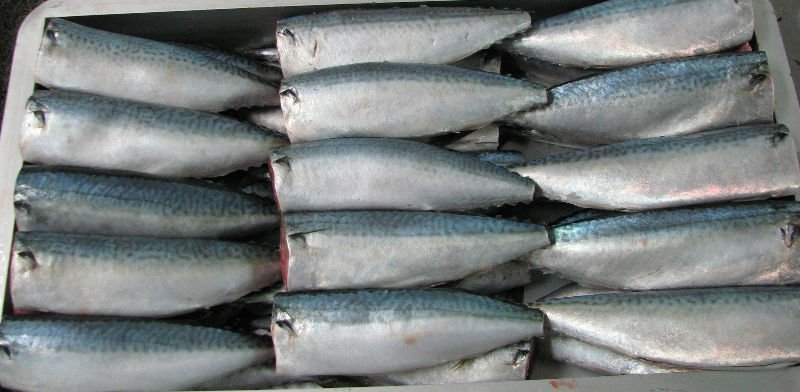
How to Choose HGT Mackerel Size and Specification for Your Import Market
Choosing the right HGT mackerel size and specification is essential for importers, seafood wholesalers, distributors, foodservice companies, processors, retailers and restaurants purchasing frozen mackerel in commercial quantities.
HGT stands for Headed, Gutted and Tailed. This specification provides a cleaned mackerel product with the head, viscera and tail removed, making it particularly useful for buyers who want to reduce preparation requirements before further processing, cooking or distribution.
However, selecting HGT mackerel is about much more than simply asking for a price per kilogram.
Importers need to consider:
- Mackerel species
- Country of origin
- Fish size
- Weight range
- Product form
- Freezing method
- Glazing
- Fat content
- Packaging
- Net weight
- Shelf life
- Certifications
- Destination-market requirements
- Container loading
- Intended end use
- Total landed cost
The correct specification can vary considerably between a buyer supplying restaurants, a fish processor, a supermarket distributor and an industrial food manufacturer.
This guide explains how to choose the right frozen HGT mackerel specification for your import market.
What Is HGT Mackerel?
HGT means:
Headed + Gutted + Tailed
The head, internal organs and tail are removed according to the agreed processing specification.
This gives the buyer a more prepared product than whole-round mackerel while retaining much of the fish structure for further processing or cooking.
HGT can be particularly attractive for buyers that want to reduce processing work at their own facility.
The exact HGT specification should always be confirmed with the supplier because terminology and processing details can differ between markets and processors.
Why HGT Mackerel Is Popular With Importers
HGT mackerel can provide several commercial advantages.
Reduced Preparation
The head and viscera have already been removed.
Easier Processing
The product can be sent directly into further processing operations depending on the buyer’s requirements.
Convenient Foodservice Format
Restaurants and foodservice operators may prefer a product that requires less initial preparation.
Efficient Wholesale Distribution
HGT mackerel can be offered in standardized weight grades.
Flexible Applications
Depending on size and quality, HGT mackerel can be used for:
- Cooking
- Smoking
- Filleting
- Portioning
- Retail
- Foodservice
- Further processing
Step 1: Identify the Mackerel Species
Before discussing size, confirm the species.
The term “mackerel” can refer to several species in international trade.
For Atlantic mackerel, the scientific name is:
Scomber scombrus
FAO identifies Atlantic mackerel as Scomber scombrus and notes that other species may also be marketed under the broader mackerel name.
This is why an international buyer should not simply write:
Frozen mackerel
on an RFQ.
Instead, specify:
Frozen Atlantic Mackerel — Scomber scombrus — HGT
if Atlantic mackerel is what you require.
Species identification helps avoid confusion when comparing quotations from different suppliers.
Step 2: Choose the Correct HGT Size
Size is one of the most important purchasing specifications.
Mackerel can be graded according to individual fish weight, size range or other commercial grading systems.
FAO reference material describes mackerel grades based on individual weight and length, including fish above 0.5 kg, 0.2–0.5 kg, 0.1–0.2 kg and below 0.1 kg.
Commercial exporters may use different weight brackets, such as:
- 200–300 g
- 300–400 g
- 300–500 g
- 400–600 g
- 500–700 g
- 600–800 g
- 700 g+
- Other customer-specific grades
These are examples rather than universal international standards.
Always request the supplier’s exact size definition and tolerance.
HGT Mackerel Size and Application
| Approximate Size Range | General Market Positioning | Potential Applications |
|---|---|---|
| 200–300 g | Smaller commercial grade | Processing, selected retail markets |
| 300–400 g | Medium | Retail, foodservice, processing |
| 300–500 g | Popular commercial range | Wholesale, foodservice, processing |
| 400–600 g | Medium-large | Foodservice, filleting, smoking |
| 500–700 g | Large | Premium foodservice, filleting |
| 600–800 g | Larger grade | Premium processing and foodservice |
| 700 g+ | Large/premium | Specialty markets and premium applications |
The appropriate range depends on your target customers, processing line and destination market.
Step 3: Match Fish Size to Your Import Market
There is no universally “best” HGT mackerel size.
The best size is the one that produces the right combination of:
customer demand + usable yield + selling price + processing efficiency + landed cost.
HGT Mackerel for Restaurants
Restaurants often care about:
- Portion size
- Appearance
- Consistency
- Cooking performance
- Preparation time
- Cost per serving
Medium and larger HGT mackerel may be suitable where customers expect substantial portions.
For restaurants, the buyer should calculate:
Cost per fish → usable portion → cost per serving → menu selling price
rather than focusing exclusively on the purchase price per kilogram.
HGT Mackerel for Foodservice Distributors
Foodservice distributors generally need consistent specifications that can be supplied to multiple customers.
Important considerations include:
- Consistent size
- Consistent packing
- Stable supply
- Easy storage
- Competitive landed cost
- Customer demand
A distributor may choose more than one size grade to serve different restaurant segments.
HGT Mackerel for Processing Plants
Processors may have very specific requirements.
For example, a processor purchasing HGT mackerel for filleting may prioritize:
- Fish size
- Body condition
- Flesh quality
- Fat content
- Uniformity
- Processing yield
- Freezing method
- Consistent supply
In this situation, the cheapest fish is not necessarily the most economical.
A larger or more consistent grade may produce better processing economics.
HGT Mackerel for Retail
Retail buyers may prioritize:
- Attractive appearance
- Uniform sizing
- Portion size
- Packaging
- Labeling
- Shelf life
- Country of origin
- Consumer demand
The correct size depends heavily on how the product will be presented.
HGT Mackerel for Smoking
Mackerel is widely used in smoked products.
For smoking operations, buyers may place particular emphasis on:
- Size uniformity
- Fat content
- Flesh quality
- Freshness before freezing
- Processing suitability
- Consistent supply
Mackerel is a fatty fish, and its fat content can vary with season and other biological factors. FAO notes that mackerel requires rapid chilling and freezing because fatty fish can deteriorate relatively quickly if inadequately handled.
Step 4: Consider Fat Content
Fat content is an important quality consideration for mackerel.
Many buyers seeking premium eating quality or smoking characteristics pay close attention to the fat profile of the fish.
Fat content can vary according to:
- Season
- Fishing area
- Size
- Biological condition
- Feed availability
- Catch period
Therefore, if fat content is important to your business, make it part of the product discussion with the supplier.
Do not assume that every HGT mackerel shipment has identical fat content.
Step 5: Specify the Processing Method
A professional HGT specification should clearly state what processing is included.
Confirm:
Head removed?
Gutted completely?
Tail removed?
Washed and cleaned?
Any additional trimming?
Any skin treatment?
Different buyers may have different expectations of what “HGT” means.
The processing specification should therefore be written clearly into the purchase agreement or product specification.
Step 6: Choose IQF or Block Frozen
Frozen HGT mackerel may be supplied using different freezing formats.
IQF HGT Mackerel
IQF means individually quick frozen.
Individual fish remain separated after freezing.
Potential advantages include:
- Easier handling
- Easier portioning
- Flexible inventory use
- Convenient processing
- Reduced need to thaw an entire block
Block Frozen HGT Mackerel
Fish are frozen together in a block or according to the specified block-packing format.
Potential advantages include:
- Bulk handling
- Certain processing applications
- Efficient packing for particular markets
The best format depends on the buyer’s downstream operation.
IQF vs Block Frozen HGT Mackerel
| Factor | IQF | Block Frozen |
|---|---|---|
| Individual fish | Separated | Frozen together |
| Portion control | Excellent | More limited |
| Handling | Flexible | Bulk-oriented |
| Foodservice | Often convenient | Application dependent |
| Processing | Convenient | Application dependent |
| Inventory flexibility | High | Moderate |
| Cost | May differ by specification | May differ by specification |
Step 7: Understand Glazing
Some frozen seafood products are glazed with ice to help protect the product during frozen storage.
When purchasing HGT mackerel, clarify:
- Glazing percentage
- Net weight
- Gross weight
- Weight tolerance
- Whether the quoted price is based on net product weight
This is particularly important when comparing suppliers.
For example, if two suppliers quote the same gross carton weight but apply different glazing percentages, the actual quantity of fish may differ.
Therefore:
Compare net product cost, not just gross carton price.
Step 8: Confirm Net and Gross Weight
A professional quotation should identify:
Net weight: Actual fish/product weight.
Gross weight: Product plus packaging and applicable additional weight.
For container purchasing, request:
- Net weight per carton
- Gross weight per carton
- Carton dimensions
- Cartons per pallet
- Pallets per container
- Total net weight
- Total gross weight
This information helps the importer calculate the actual logistics cost.
Step 9: Choose the Right Packaging
HGT mackerel can be packed according to the target market.
Possible formats include:
- Bulk cartons
- Poly bags
- Export cartons
- Retail packs
- Foodservice packs
- Custom private-label packaging
For wholesale importing, the buyer should define:
Fish per carton + carton net weight + packaging format + pallet configuration.
Step 10: Consider Shelf Life
Shelf life is important for international seafood importing.
The buyer should request:
- Production date
- Freezing date where applicable
- Packing date
- Best-before date
- Total shelf life
- Minimum remaining shelf life at shipment
Mackerel quality can be strongly affected by handling and temperature management.
FAO guidance emphasizes rapid chilling and freezing of mackerel after capture and appropriate frozen storage to maintain quality.
For international buyers, this makes cold-chain management particularly important.
Step 11: Check Storage Requirements
The importer should understand the supplier’s recommended frozen storage conditions.
A commercial buyer should have suitable cold storage available before the shipment arrives.
Important considerations include:
- Warehouse temperature
- Temperature monitoring
- Stock rotation
- Pallet configuration
- Product traceability
- Frozen storage capacity
Never purchase a full reefer shipment without planning where the product will be stored after customs clearance.
Step 12: Consider Country of Origin
Origin is an important factor when purchasing HGT mackerel.
For buyers sourcing Atlantic mackerel, possible origins may include countries around the North Atlantic supply chain, subject to current availability and market eligibility.
For Norwegian-origin programs, buyers should understand that availability and pricing can change with fishing conditions, quotas and market demand.
FAO reported in May 2026 that Atlantic mackerel prices had been affected by quota reductions and reduced Norwegian availability, while Norway’s whole frozen mackerel exports remained commercially significant.
Therefore, buyers should request current availability and current pricing rather than relying on old price indications.
Step 13: Verify Import-Market Requirements
Before ordering HGT mackerel, confirm the regulatory requirements of the destination country.
These can include:
- Approved establishments
- Health certificates
- Catch documentation
- IUU-related requirements where applicable
- Traceability
- Labeling
- Customs classification
- Import permits
- Official controls
- Sustainability documentation
The exact requirements depend on:
species + origin + processing + destination country.
Do not assume that a product approved for one market is automatically eligible for another.
Step 14: Consider Sustainability and Catch Documentation
For wild-caught mackerel, buyers should understand the applicable traceability and fisheries documentation requirements.
Depending on the destination market and supply chain, documentation can include information concerning:
- Fishing vessel
- Catch area
- Catch date
- Species
- Quantity
- Processing establishment
- Supply-chain traceability
For EU-bound imports, applicable fisheries-control and IUU requirements should be checked before shipment.
Step 15: Calculate Yield
HGT can reduce some of the preparation required compared with whole-round mackerel.
However, the buyer should still understand the expected yield for the intended application.
If the product will be further processed into fillets, steaks or portions, calculate:
Purchased weight → processing yield → finished product weight
For example:
10,000 kg HGT mackerel
might produce a different finished yield depending on:
- Fish size
- Trimming
- Filleting method
- Fat content
- Processing equipment
- Operator technique
Use actual trial-production data whenever possible.
Step 16: Calculate Landed Cost
The quoted HGT mackerel price is only the starting point.
A useful calculation is:
Landed Cost = Product Cost + Freight + Insurance + Port Charges + Customs Duties + Taxes + Clearance + Inland Transport + Other Applicable Costs
For example:
Product: €2.80/kg
Freight: €0.25/kg
Port/import costs: €0.20/kg
Other costs: €0.15/kg
Estimated landed cost:
€3.40/kg
The actual costs will vary by destination and shipment.
Step 17: Calculate Cost Per Usable Kilogram
For processors, cost per usable kilogram may be more important than purchase price.
A simplified calculation is:
Usable Cost = Landed Cost ÷ Processing Yield
For example:
Landed cost: €3.40/kg
Processing yield: 65%
Then:
€3.40 ÷ 0.65 = €5.23/kg usable product
This is an illustrative calculation only.
Actual yield must be established for the specific product and processing method.
Step 18: Choose the Correct Size Based on Your Selling Price
The largest fish is not automatically the most profitable.
Consider:
Purchase price → yield → portion size → customer selling price → margin
A smaller HGT grade might provide an attractive price for a mass-market product.
A larger grade might command a premium selling price in foodservice.
The best size is the one that produces the strongest commercial result in your market.
Recommended HGT Mackerel Selection by Buyer Type
| Buyer Type | Important Specifications |
|---|---|
| Restaurant | Size consistency, portion size, quality, packaging |
| Hotel | Consistency, foodservice size, supply reliability |
| Seafood distributor | Multiple sizes, competitive landed cost, availability |
| Supermarket supplier | Uniform size, packaging, labeling, shelf life |
| Processor | Yield, size, fat content, consistency |
| Smoker | Fat content, size uniformity, flesh quality |
| Wholesaler | Demand, price, availability, packaging |
| Food manufacturer | Technical specification, yield, volume, consistency |
How to Write a Professional HGT Mackerel RFQ
Instead of writing:
“Please send your best price for mackerel.”
use a detailed request.
Example:
Product: Frozen Atlantic Mackerel
Scientific name: Scomber scombrus
Format: HGT — Headed, Gutted and Tailed
Size: 300–500 g or buyer-required grade
State: Frozen
Freezing: IQF or agreed format
Glazing: As agreed
Packing: Export carton
Quantity: 1 × 20ft / 40ft reefer
Origin: Norway or other approved origin
Destination: Buyer’s nominated port
Incoterm: FOB/CIF
Shelf life: As specified
Documents: Commercial and regulatory documents required for destination market
This allows suppliers to provide a much more accurate quotation.
HGT Mackerel Specification Example
| Specification | Buyer Requirement |
|---|---|
| Product | Frozen Atlantic Mackerel |
| Scientific name | Scomber scombrus |
| Format | HGT |
| Size | 300–500 g |
| State | Frozen |
| Freezing | IQF |
| Glazing | Agreed specification |
| Packing | Export carton |
| Net weight | As agreed |
| Gross weight | As agreed |
| Origin | Norway / approved origin |
| Storage | According to product specification |
| Shelf life | As agreed |
| MOQ | As agreed |
| Container | 20ft / 40ft reefer |
| Incoterm | FOB / CIF |
| Documentation | As required by destination |
This is a commercial example rather than a universal specification. Final specifications should be confirmed with the supplier before contracting.
How Many HGT Mackerel Fit in a Reefer Container?
Container capacity depends on:
- Fish size
- Carton dimensions
- Carton weight
- Palletization
- Net-to-gross ratio
- Container payload
- Transport restrictions
- Shipping-line requirements
A 20ft and 40ft reefer should not be assigned a fixed tonnage without considering the actual packing configuration.
Before confirming the order, request:
Cartons per container + pallets + net weight + gross weight + loading plan.
How to Compare HGT Mackerel Suppliers
Always compare like-for-like specifications.
| Specification | Supplier A | Supplier B |
|---|---|---|
| Species | Atlantic Mackerel | Atlantic Mackerel |
| Scientific name | Scomber scombrus | Scomber scombrus |
| Format | HGT | HGT |
| Size | 300–500 g | 300–500 g |
| Freezing | IQF | IQF |
| Glazing | Agreed | Agreed |
| Packing | 10 kg | 10 kg |
| Origin | Norway | Norway |
| Incoterm | CIF | CIF |
| Price | €X/kg | €Y/kg |
This makes the comparison meaningful.
Comparing:
200–300 g HGT FOB
against:
500–700 g HGT CIF
does not provide an accurate commercial comparison.
Common HGT Mackerel Buying Mistakes
1. Buying Based Only on Price
The lowest price may not provide the lowest landed or usable cost.
2. Not Confirming Species
“Mackerel” can refer to different species.
3. Not Defining Size
A supplier needs an exact size range.
4. Ignoring Glazing
Net and gross weight can produce different economics.
5. Not Confirming What HGT Means
Processing details should be documented.
6. Ignoring Fat Content
This can matter for certain premium and smoking applications.
7. Comparing Different Incoterms
FOB and CIF prices should not be compared without adjusting for included costs.
8. Not Checking Import Requirements
Regulatory eligibility should be confirmed before shipment.
9. Ignoring Remaining Shelf Life
International transport and customs clearance take time.
10. Not Calculating Processing Yield
Processors should evaluate the cost of finished product, not simply the raw purchase price.
HGT Mackerel Quality Checklist
Before confirming an order, verify:
☐ Species
☐ Scientific name
☐ Origin
☐ HGT processing definition
☐ Size range
☐ Size tolerance
☐ Fish condition
☐ Fat specification if required
☐ Freezing method
☐ Glazing percentage
☐ Net weight
☐ Gross weight
☐ Carton dimensions
☐ Packaging
☐ Pallet configuration
☐ Production date
☐ Shelf life
☐ Storage requirements
☐ Certifications
☐ Health documentation
☐ Catch documentation where applicable
☐ Import eligibility
☐ MOQ
☐ Container loading plan
☐ Incoterm
☐ Freight
☐ Landed cost
Why Buy HGT Mackerel from Villena Seafood?
Villena Seafood supplies frozen seafood to international B2B buyers, including:
- Seafood importers
- Wholesalers
- Distributors
- Restaurants
- Hotels
- Foodservice companies
- Supermarket suppliers
- Food processors
For buyers sourcing HGT mackerel, product requirements can be discussed according to:
- Species
- Size
- Origin
- HGT specification
- Freezing format
- Glazing
- Packaging
- Quantity
- Destination
- Documentation
- Incoterm
Villena Seafood can work with buyers seeking commercially suitable frozen seafood specifications for international markets.
How to Request a Wholesale HGT Mackerel Quote
For a professional quotation, provide:
Product: Frozen Atlantic Mackerel
Format: HGT
Size:
Origin:
Freezing:
Glazing:
Packing:
Quantity:
Destination Port:
Incoterm:
Required Shelf Life:
Required Documents:
For example:
We are looking to purchase frozen Atlantic mackerel Scomber scombrus, HGT, size 300–500 g, IQF, with agreed glazing, export carton packing, quantity 1 × 40ft reefer, CIF [destination port]. Please provide your best wholesale price, product specification, packing details, shelf life, available documentation and estimated loading schedule.
A detailed RFQ helps suppliers quote against the same requirements and makes supplier comparison much easier.
Frequently Asked Questions
What does HGT mean in mackerel?
HGT generally means Headed, Gutted and Tailed, meaning the head, internal organs and tail have been removed according to the agreed processing specification.
What is the best HGT mackerel size?
There is no single best size. The appropriate size depends on the destination market, customer requirements, processing application, selling price and expected yield.
Is larger mackerel better?
Not necessarily. Larger fish can be desirable for certain foodservice, smoking or processing applications, but smaller grades may be more commercially appropriate for other markets.
What is Atlantic mackerel’s scientific name?
Atlantic mackerel is Scomber scombrus.
What sizes of HGT mackerel are available?
Commercial availability varies by origin, season and processor. Buyers may encounter grades such as 200–300 g, 300–500 g, 400–600 g, 500–700 g and larger grades, but the exact specifications should be confirmed with the supplier.
Should I buy IQF or block frozen HGT mackerel?
IQF can provide greater handling and portioning flexibility, while block formats can suit certain bulk processing applications. The choice depends on your operation.
How should I compare HGT mackerel prices?
Compare the same species, size, processing format, glazing, packaging, origin, Incoterm and destination. Then calculate the complete landed cost.
What documents are required to import HGT mackerel?
Requirements vary by destination and origin but can include commercial documents, health documentation, catch documentation and other regulatory records. Confirm the requirements before shipment.
Final Conclusion
Choosing the right HGT mackerel size and specification is a strategic purchasing decision for international seafood buyers.
The best specification is not necessarily the largest fish or the lowest-priced product.
Instead, buyers should evaluate:
Species + size + HGT processing + freezing method + glazing + fat content + packaging + origin + yield + landed cost + destination-market demand.
For restaurants, consistency and portion size may be the most important factors.
For processors, yield, size and fat content may be more important.
For supermarkets, packaging, labeling, uniformity and shelf life may dominate the purchasing decision.
For wholesalers and distributors, availability, landed cost and market demand may be the primary considerations.
The key is to define your market first and then select the HGT mackerel specification that best fits that market.
For international buyers, a detailed specification also makes supplier comparison easier and reduces misunderstandings over size, processing, weight and pricing.
Villena Seafood — Wholesale Frozen Seafood Supply for Global Buyers.