
Dry Stockfish Wholesale Supply: A Complete Guide for Importers, Distributors and Bulk Buyers
Dry stockfish is an established product in international seafood trade, supplying importers, wholesalers, food distributors, retailers, and food-service businesses. For commercial buyers, purchasing stockfish in bulk requires careful consideration of product specifications, commercial grades, packaging, storage, shipping costs, and import documentation.
Norwegian stockfish is particularly recognised for its traditional air-drying process and established grading system. However, different buyers may require different fish sizes, grades, and product formats depending on their destination markets and customer preferences.
At Villena Seafood, we welcome enquiries from businesses exploring wholesale stockfish supply. This guide explains how to evaluate dry stockfish, select appropriate packaging, plan international shipments, and prepare a clear request for quotation.
1. What Is Dry Stockfish?
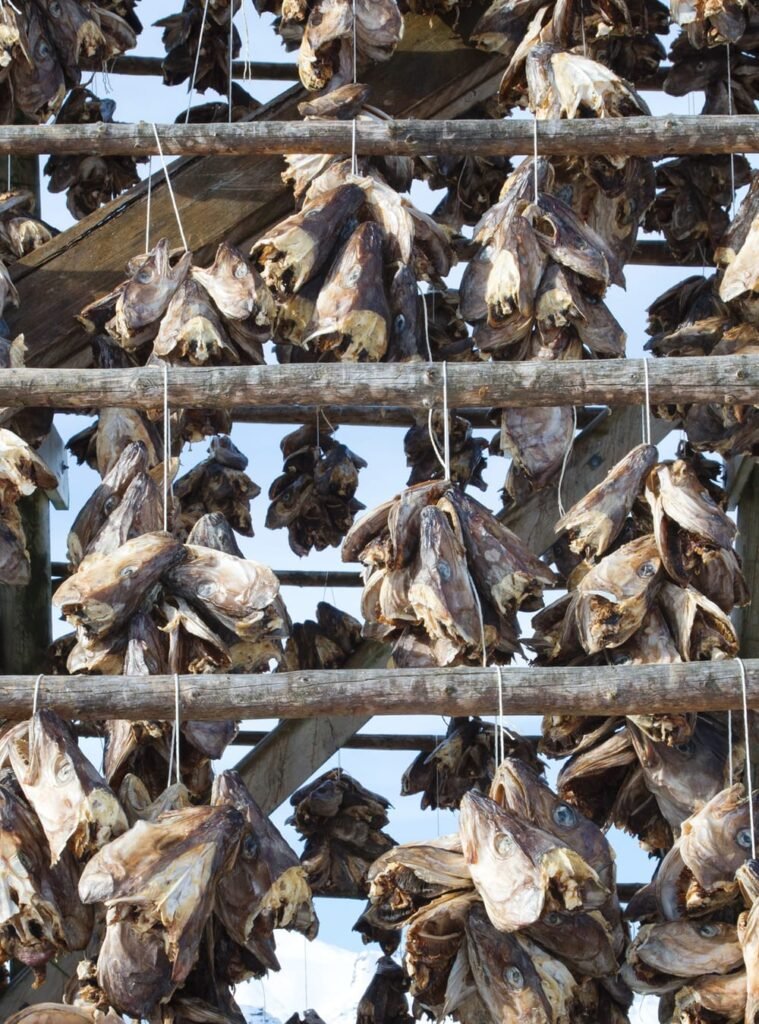
Stockfish is traditionally produced by air-drying unsalted fish under suitable natural conditions. Norwegian stockfish is commonly made from Atlantic cod (Gadus morhua), although other species can also be processed into dried fish products.
Traditional Norwegian stockfish is associated with coastal drying practices, particularly in northern Norway. After drying, the fish is assessed and sorted into commercial classes based on characteristics such as appearance, size, physical condition, and drying quality. The trade uses numerous recognised commercial classes, making precise product identification important for wholesale buyers. <Cite refs={[“turn984820search0″,”turn984820search4”]}/>
Stockfish should be distinguished from salted dried fish, smoked fish, and other dried seafood products because processing methods and product specifications differ.
For importers, the first step is to confirm the scientific species name, country of origin, processing method, and exact product form being offered.
2. Why Buy Dry Stockfish Wholesale?
Bulk stockfish purchasing can help businesses manage supply to established customers and organise their distribution operations.
Wholesale distribution
Importers can supply stockfish to local wholesalers, specialist food shops, supermarkets, traditional markets, and food-service businesses.
Inventory planning
Purchasing quantities based on expected demand helps businesses organise stock levels, warehouse space, and delivery schedules.
Flexible product selection
Depending on supplier availability, buyers may be able to request different sizes, grades, whole fish, split fish, or other specified formats.
Established culinary applications
Stockfish is used in traditional dishes across several markets, including parts of West Africa. In Nigeria and other countries, dried fish products are used in soups, stews, and regional recipes.
Long-distance distribution
Properly dried and packaged stockfish can be transported without frozen storage under suitable dry-storage and transport conditions. Protection from moisture, contamination, and pests remains essential.
The most suitable product depends on the intended market, customer preferences, purchasing budget, and distribution capacity.
3. Understanding Stockfish Grades and Sizes
Stockfish grading is an important part of commercial procurement. Buyers should not rely solely on broad descriptions such as “premium,” “high quality,” or “standard” when requesting a quotation.
Norwegian stockfish uses recognised commercial classes, including names such as Ragno, Westre, Bremer, and Hollender. These classes have specific grading conventions, and the appropriate selection depends on the buyer’s requirements and destination market. <Cite refs={[“turn984820search0″,”turn984820search4”]}/>
Commercial class
Ask for the exact grade and any applicable subdivision. Confirm the grading criteria and acceptable tolerances with the supplier.
Fish size
Stockfish may be sold using length categories, such as 30–40 cm, 40–50 cm, 50–60 cm, or 60–80 cm, depending on the product and supplier. These are examples of possible size bands, not a guarantee of current availability. <Cite refs={[“turn984820search0″,”turn984820search2”]}/>
Product form
Specify whether you require whole dried fish, split fish, pieces, or dried fish heads. These are different commercial products and should be quoted separately.
Drying and physical condition
Confirm the product’s moisture specification where relevant, together with the acceptable condition, appearance, and damage tolerances.
Destination-market requirements
Some customers prefer specific sizes or traditional commercial grades. Check customer preferences before committing to a large order.
Example purchasing specification
| Specification | Information to confirm |
|---|---|
| Species | Scientific and commercial name |
| Origin | Country of origin and supporting records |
| Grade | Exact commercial class or agreed quality criteria |
| Size | Required length or size range |
| Product form | Whole, split, pieces, or heads |
| Moisture | Applicable specification, where agreed |
| Quantity | Kilograms or metric tonnes |
| Packaging | Cartons, bales, or another agreed format |
| Destination | Country and port |
| Documentation | Applicable health, origin, and traceability records |
A detailed specification helps suppliers prepare comparable quotations and reduces the risk of receiving an unsuitable product.
4. Dry Stockfish Packaging Options
Packaging protects stockfish during handling, storage, and international transportation. The most suitable format depends on the product, shipment size, destination, and buyer’s distribution arrangements.
Carton packaging
Cartons may be suitable for wholesale distribution and warehouse handling. Buyers should confirm the carton weight, dimensions, material, labelling, and moisture protection.
Export bales
Larger bales may suit importers purchasing substantial quantities. Confirm the bale weight, packaging material, product arrangement, and handling requirements before ordering.
Palletised shipments
Palletisation can help organise cargo handling where compatible with the packaging and transport arrangements.
Custom packaging
Some suppliers may offer customised package weights, labels, or other formats, subject to availability and agreement.
Commercial stockfish suppliers list packaging options such as 25 kg cartons and 45–50 kg bales, but actual options vary by supplier and product. Always request the current packing specification. <Cite refs={[“turn984820search1″,”turn984820search2”]}/>
Before confirming an order, establish:
- Net weight per package or bale.
- Gross weight and package dimensions.
- Number of packages per pallet, where applicable.
- Packaging protection against moisture and physical damage.
- Labelling and lot identification.
- Pallet dimensions and container-loading arrangements.
- Any destination-market packaging requirements.
Do not assume that all suppliers use identical package sizes or loading configurations.
5. Quality Checks Before Buying in Bulk
Quality assessment helps buyers establish whether the offered stockfish matches their commercial requirements.
Appearance: Request representative photographs and assess visible damage, discolouration, and product consistency.
Odour: Confirm that the product has the expected characteristics of properly dried fish. Unusual odours should be investigated.
Drying condition: Request applicable moisture specifications and agree on the method of assessment if moisture is part of the purchasing contract.
Physical integrity: Define acceptable levels of breakage or other damage before shipment.
Packaging: Check that packaging is appropriate for the product and protects it during storage and transportation.
Traceability: Request relevant lot identification, species information, origin records, and supporting documentation.
Inspection arrangements: Agree on how the goods will be inspected and how any discrepancies will be handled.
Photographs can help with preliminary evaluation, but they do not replace appropriate inspection and food-safety documentation.
6. How to Compare Wholesale Stockfish Prices
Price comparisons should be based on equivalent products and delivery terms.
Two quotations may differ because of species, grade, size, moisture characteristics, packaging, order volume, or destination. A lower quoted price is not necessarily better value if the product does not match the buyer’s specification.
When comparing offers, consider the following factors.
Product specification
Confirm that both quotations cover the same species, grade, size range, and product form.
Weight basis
Establish whether the price applies to net product weight or another stated weight basis.
Packaging costs
Check whether packaging, palletisation, and export preparation are included in the price.
Delivery terms
Compare quotations using the same Incoterm and named location or port. For example, FOB and CIF offers allocate shipping-related costs and responsibilities differently.
Landed cost
Calculate the estimated cost after relevant freight, insurance, handling, customs duties, taxes, clearance, and inland transport.
Payment and lead time
Review payment terms, quotation validity, inspection conditions, and the expected shipment schedule.
A written quotation should clearly identify the product, quantity, price basis, delivery terms, and conditions affecting the offer.
7. Shipping Dry Stockfish Internationally
Dry stockfish does not normally require frozen transport, but the shipment must be protected against moisture, condensation, contamination, pests, and physical damage.
Sea freight
Sea freight may be appropriate for larger wholesale orders, depending on shipment volume, destination, transit time, and commercial arrangements.
Container preparation
Before loading, the container or transport unit should be checked for cleanliness, dryness, leaks, and undesirable odours.
Cargo loading
The loading plan should account for package dimensions, cargo weight, container capacity, and the protection needed during transportation.
Transit planning
Request an estimated transit time and allow for potential port congestion, inspections, customs clearance, and onward delivery.
Destination arrangements
Confirm that the receiving port, customs broker, and warehouse are prepared to handle the shipment.
Incoterms and cost allocation
Clearly establish who is responsible for export clearance, international freight, insurance where applicable, import clearance, and other costs.
A suitable logistics plan helps buyers estimate the total purchasing cost and organise their stock distribution after arrival.
8. Export Documentation and Import Requirements
Stockfish shipments may be subject to customs, food-safety, traceability, and fishery-product regulations. Requirements depend on the origin, species, processing establishment, product form, and destination country.
Documents or approvals may include:
- Commercial invoice.
- Packing list.
- Bill of lading or other relevant transport document.
- Certificate of origin, where required.
- Applicable health certificate or official fishery-product documentation.
- Lot and traceability information.
- Import permits or establishment approvals, where applicable.
- Additional documentation required by the destination authorities.
Importers should confirm the actual requirements with the competent authorities or a qualified customs broker before placing an order.
Businesses importing into Nigeria, Ghana, Cameroon, Côte d’Ivoire, the European Union, or other markets should verify the rules that apply to their specific destination. Requirements can differ between countries, and Norwegian origin alone does not guarantee import eligibility.
9. Storage and Inventory Management
Appropriate storage helps maintain stockfish quality after arrival.
Protect against moisture
Store the product in a clean, dry environment protected from rain, leaks, and condensation. Follow the supplier’s storage instructions.
Maintain warehouse hygiene
Use suitable pest-control and cleaning procedures. Keep stockfish protected from chemicals, strong odours, and other potential sources of contamination.
Inspect incoming cargo
Check delivered quantities, packaging integrity, labelling, and product condition. Document any discrepancies promptly.
Track stock and lot information
Maintain records of delivery dates, supplier information, lot identification, and declared shelf life.
Plan inventory turnover
Estimate expected sales before ordering large quantities. Appropriate stock rotation can help reduce avoidable losses and excess inventory.
Importers should arrange suitable storage before the shipment arrives, especially when purchasing container quantities.
10. Who Buys Dry Stockfish Wholesale?
Bulk stockfish may be suitable for several commercial customer groups, depending on local demand and available specifications.
- Seafood importers supplying domestic distribution networks.
- Wholesale distributors serving retailers and market traders.
- African food wholesalers serving customers who use dried fish in traditional dishes.
- Supermarkets and specialist food shops sourcing products for resale.
- Restaurants and food-service businesses requiring specified product formats.
- Processors and repackers purchasing suitable dried fish for further processing.
Each buyer should select a product specification that reflects customer demand, purchasing capacity, warehouse conditions, and expected sales.
11. How to Request a Wholesale Stockfish Quotation
A complete enquiry helps the supplier assess product availability and prepare an appropriate commercial offer.
When contacting Villena Seafood, include:
- Required quantity: Kilograms or metric tonnes.
- Species: Cod or another specifically requested species.
- Grade and size: Commercial class and required size range.
- Product form: Whole, split, pieces, or heads.
- Packaging: Preferred carton, bale, or other format.
- Destination: Country and destination port.
- Delivery terms: Preferred Incoterm and named location or port.
- Documentation: Applicable requirements for the destination market.
- Delivery schedule: Target purchasing and shipment dates.
These details help establish whether the requested product and shipping arrangement can be offered.
12. Source Dry Stockfish with Villena Seafood
Villena Seafood welcomes enquiries from seafood importers, wholesalers, distributors, and commercial buyers interested in dry stockfish supply.
If your business is sourcing stockfish in bulk, provide your required grade, size range, quantity, packaging preference, and destination port so that the request can be assessed against available specifications and commercial terms.
Visit our product page to learn more about our dry stockfish offering:
Dry Norwegian Stockfish — Villena Seafood
Contact Villena Seafood to discuss your sourcing requirements and request a wholesale quotation.
Villena Seafood — Premium Seafood from Our Oceans to Your Table.
Product availability, origin, grades, specifications, certifications, minimum order quantities, prices, and shipping arrangements must be confirmed for each enquiry. This guide is for general commercial information and does not guarantee stock availability or eligibility for import into a particular market.