
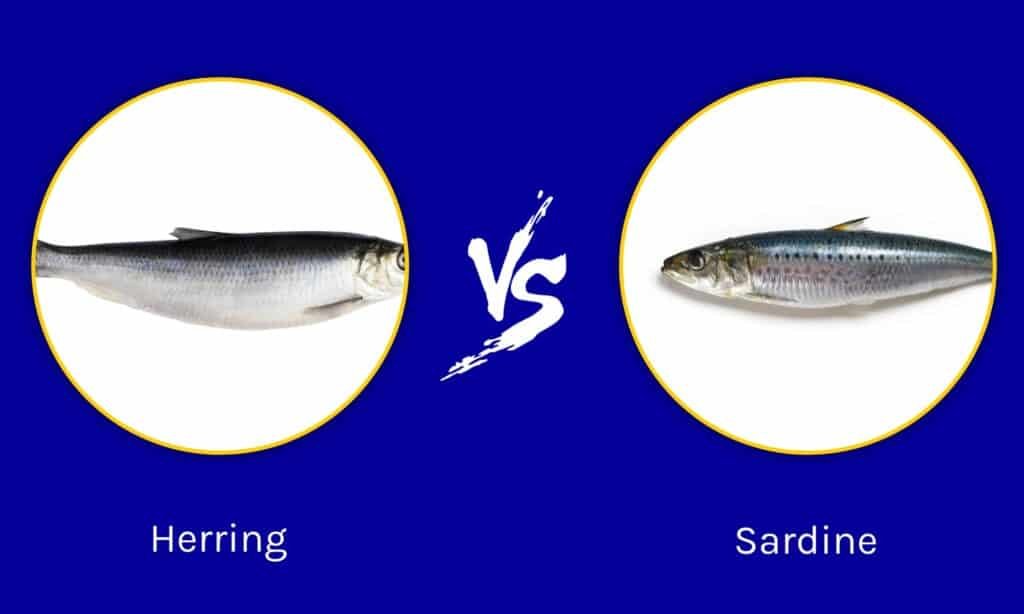
Atlantic Herring vs Sardines: What’s the Difference?
Atlantic herring vs sardines is a common comparison for seafood buyers, importers, wholesalers, processors, restaurants, foodservice distributors and consumers looking to understand the differences between these two popular small pelagic fish.
Although Atlantic herring and sardines can sometimes appear similar in size and are both widely used in commercial seafood markets, they are different fish with different species classifications, physical characteristics, processing applications, flavor profiles, market positioning and purchasing considerations.
For international seafood buyers, understanding these differences is important when selecting the right product for a particular market.
The two products should not be treated as interchangeable simply because both are small, oily fish.
This guide compares Atlantic herring and sardines across species, appearance, size, taste, nutrition, processing, freezing, foodservice applications, wholesale purchasing and international importing.
Atlantic Herring vs Sardines: Quick Comparison
| Feature | Atlantic Herring | Sardines |
|---|---|---|
| Main scientific name | Clupea harengus | Several species are marketed as sardines |
| Fish family | Clupeidae | Primarily Clupeidae |
| Typical market category | Herring | Sardines |
| Body | Slender, streamlined | Generally smaller and cylindrical |
| Flavor | Rich, oily and distinctive | Oily, rich and often milder |
| Texture | Firm and oily | Tender to moderately firm |
| Common processing | Whole, H&G, fillets, smoked, frozen | Whole, H&G, fillets, canned, frozen |
| Major applications | Smoking, pickling, foodservice, processing | Canning, foodservice, retail, processing |
| Commercial market | Strong international demand | Strong global demand |
| Wholesale format | Frozen, fresh, processed | Frozen, canned, processed |
| Best choice | Depends on application | Depends on application |
The biggest distinction is that Atlantic herring is a specific species, while “sardines” is a broader commercial term covering several related small pelagic fish species.
What Is Atlantic Herring?
Atlantic herring is a marine fish scientifically known as:
Clupea harengus
It is a member of the herring family, Clupeidae, and is an important commercial species in the North Atlantic.
Atlantic herring is widely traded for:
- Human consumption
- Smoking
- Pickling
- Freezing
- Filleting
- Foodservice
- Retail
- Further processing
It is an oily fish with a characteristic flavor and relatively high fat content.
For international wholesale buyers, it is important to specify the scientific name when purchasing because the word “herring” can refer to different species depending on the market.
What Are Sardines?
“Sardines” is a commercial term used for several species of small oily fish.
One commonly known sardine species is the European pilchard, Sardina pilchardus.
Other species can also be sold or marketed under sardine-related names depending on local regulations and markets.
This is one of the most important differences between the two categories:
Atlantic herring refers specifically to Clupea harengus.
Sardines can refer to several species within the broader small-pelagic seafood market.
Therefore, a professional seafood buyer should always confirm:
- Scientific name
- Species
- Origin
- Fishing area
- Product form
before comparing quotations.
Atlantic Herring vs Sardines: Are They the Same Fish?
No.
Atlantic herring and sardines are related fish, but they are not the same species.
Both belong to the broader group of small pelagic fish and can have similar characteristics, including:
- Oily flesh
- Silver-colored bodies
- Schooling behavior
- Strong commercial importance
- High demand in processed seafood markets
However, their species, size, market applications and commercial specifications differ.
Physical Differences Between Herring and Sardines
Atlantic Herring
Atlantic herring generally has:
- A streamlined body
- Silver-colored sides
- A darker bluish or greenish back
- A relatively slender profile
- A deeply forked tail
The fish can reach substantially larger sizes than many species commonly marketed as sardines.
Sardines
Sardines generally have:
- A smaller body
- Silver coloration
- A relatively cylindrical shape
- Distinctive scales
- A forked tail
The exact appearance and size depend on the sardine species.
Because “sardine” covers several species, physical characteristics are not completely uniform across all sardine products.
Atlantic Herring vs Sardines: Size
Size is an important commercial difference.
Atlantic herring can be available in different commercial size grades depending on:
- Fishing area
- Season
- Age
- Stock
- Processing specification
- Market
Sardines are generally associated with smaller fish, although exact sizes vary considerably by species and market.
For wholesale buyers, avoid purchasing based solely on the generic terms:
“large herring”
or
“large sardines.”
Instead, request an exact:
fish count/kg or individual weight range.
Why Fish Size Matters for Wholesale Buyers
Size affects:
- Yield
- Portion size
- Processing efficiency
- Smoking
- Filleting
- Packaging
- Consumer presentation
- Selling price
For example, a processor purchasing fish for filleting may require a different size specification from a cannery or restaurant distributor.
A professional RFQ should therefore specify the required size.
Atlantic Herring vs Sardines: Taste
Both Atlantic herring and sardines are oily fish with distinctive flavors.
However, the taste can differ according to:
- Species
- Fat content
- Season
- Fishing area
- Freshness
- Handling
- Freezing
- Processing method
- Cooking method
Atlantic Herring Flavor
Atlantic herring generally has a:
- Rich flavor
- Distinctive oily character
- Firm texture
- Pronounced seafood taste
This makes it particularly suitable for traditional smoked, pickled and prepared herring products.
Sardine Flavor
Sardines generally have:
- Rich oily flavor
- Distinctive marine taste
- Tender flesh
- Strong flavor when canned or cooked
The exact taste varies between sardine species and processing methods.
Atlantic Herring vs Sardines: Texture
Texture is another important difference.
Atlantic herring generally has relatively firm, oily flesh.
Sardines can have a somewhat softer or more tender texture, particularly after cooking or canning.
However, processing has a major influence.
For example:
Frozen raw fish
and
canned sardines
should not be expected to have the same texture.
Atlantic Herring vs Sardines: Fat Content
Both herring and sardines are considered oily fish.
Their fat content can vary significantly based on:
- Season
- Location
- Age
- Food availability
- Reproductive cycle
- Water temperature
- Species
For processors and foodservice buyers, this can be an important specification.
If fat content is critical to your application, request product-specific technical information rather than relying on a generic average.
Atlantic Herring vs Sardines: Nutrition
Both fish can provide valuable nutrients associated with oily seafood.
They can provide:
- High-quality protein
- Omega-3 fatty acids
- Vitamin B12
- Selenium
- Other essential nutrients
The precise nutritional composition varies by species, season, preparation and processing method.
For commercial buyers, nutritional claims should be based on the specific product and applicable regulatory requirements.
Which Has More Omega-3?
Both Atlantic herring and sardines can be significant sources of long-chain omega-3 fatty acids.
However, the exact amount varies according to:
- Species
- Season
- Fat content
- Processing
- Cooking method
Therefore, there is no single universal number that applies to every herring or sardine product.
If nutritional values are important for your retail or foodservice program, request a product specification or laboratory analysis from the supplier.
Atlantic Herring vs Sardines: Processing Formats
Both species categories can be processed into different commercial formats.
Atlantic Herring
Common formats can include:
- Whole frozen
- Headed and gutted
- Fillets
- Smoked
- Pickled
- Salted
- Marinated
- Other processed formats
Sardines
Common formats can include:
- Whole frozen
- Headed and gutted
- Fillets
- Canned
- Frozen portions
- Smoked
- Other processed products
The most commercially important format depends on the market.
Why Sardines Are Commonly Associated With Canning
Sardines have a strong association with the canned seafood industry.
Canned sardines are popular because they can offer:
- Long shelf life
- Convenience
- Easy storage
- Portion control
- Retail-friendly packaging
- Broad distribution
Atlantic herring is also processed and preserved in numerous ways, but herring has a particularly strong historical association with:
- Smoking
- Pickling
- Salting
- Marination
Atlantic Herring vs Sardines for Restaurants
Restaurants should select based on the menu.
Choose Atlantic Herring when:
- You want a stronger traditional herring flavor.
- You are serving smoked or pickled preparations.
- You need a larger oily fish.
- Herring is familiar to your target market.
Choose Sardines when:
- You want a smaller fish portion.
- Sardines are popular in your target market.
- You are creating Mediterranean-style dishes.
- You want a product suited to grilling or frying.
Atlantic Herring vs Sardines for Seafood Wholesalers
Wholesalers should consider customer demand.
A seafood distributor may carry both products because they serve different markets.
Herring customers may include:
- Traditional seafood retailers
- Smoked-fish processors
- Foodservice companies
- Restaurants
- Pickled seafood producers
- Fish processors
Sardine customers may include:
- Canneries
- Restaurants
- Retailers
- Foodservice distributors
- Seafood processors
- Mediterranean food distributors
Atlantic Herring vs Sardines for Food Processing
Processors should consider:
- Fish size
- Flesh yield
- Fat content
- Uniformity
- Processing line requirements
- Freezing method
- Supply consistency
- Price
- Finished-product yield
A processor should conduct a production trial before committing to a large-volume specification when the product is intended for a new application.
Frozen Atlantic Herring vs Frozen Sardines
For frozen seafood importers, both products can be supplied in frozen form.
The buyer should compare:
- Species
- Origin
- Fishing area
- Size
- Freezing method
- Glazing
- Packaging
- Net weight
- Shelf life
- Storage conditions
- Certifications
- Documentation
- MOQ
- Incoterm
This ensures a genuine like-for-like comparison.
IQF vs Block Frozen Herring and Sardines
Frozen herring and sardines can be available in different freezing formats.
IQF
Individually quick frozen fish are separated after freezing.
Advantages may include:
- Easier portioning
- Flexible inventory
- Convenient handling
- Reduced need to thaw an entire block
Block Frozen
Fish are frozen together according to the specified block format.
This can be suitable for:
- Industrial processing
- Bulk production
- Certain canning or processing applications
The best option depends on your production requirements.
Understanding Glazing
When purchasing frozen herring or sardines, always confirm the glazing percentage.
Glazing is an ice layer applied to frozen seafood to help protect the product during frozen storage and transportation.
Buyers should request:
- Glazing percentage
- Net weight
- Gross weight
- Carton weight
- Weight tolerance
For accurate price comparison:
Compare the cost per kilogram of actual net product.
Atlantic Herring vs Sardines: Which Is Better for Smoking?
Both can be smoked, but Atlantic herring has a particularly strong traditional market for smoked products.
Herring’s:
- Oily flesh
- Flavor
- Texture
- Size
can make it highly suitable for smoking.
Sardines can also be smoked, but the commercial application and preferred specifications may differ.
For smoking operations, buyers should pay close attention to:
- Fish size
- Fat content
- Uniformity
- Freshness
- Processing history
- Freezing quality
Which Is Better for Retail?
There is no universal answer.
Atlantic Herring may be better for:
- Traditional seafood markets
- Smoked seafood
- Pickled seafood
- Specialty European markets
- Larger fish presentations
Sardines may be better for:
- Canned seafood
- Mediterranean-style retail
- Convenience products
- Smaller portions
- Value-oriented seafood categories
Market research should determine which species has stronger consumer demand in the destination market.
Which Is Better for Wholesale Import?
For importers, the answer depends on the customer base.
Choose Atlantic herring when your customers need:
- Herring-specific products
- Larger oily fish
- Smoked products
- Pickled products
- Specialty seafood
Choose sardines when customers require:
- Sardine products
- Smaller fish
- Canning applications
- Mediterranean-style seafood
- Retail portions
Atlantic Herring vs Sardines: Wholesale Buying Checklist
Before placing an order, confirm:
☐ Scientific name
☐ Species
☐ Origin
☐ Fishing area
☐ Size
☐ Fish count/kg
☐ Product form
☐ Whole/HGT/fillet
☐ Raw/cooked
☐ Freezing method
☐ Glazing
☐ Net weight
☐ Gross weight
☐ Carton dimensions
☐ Packaging
☐ Pallet configuration
☐ Shelf life
☐ Storage temperature
☐ Production date
☐ Certifications
☐ Health documentation
☐ Catch documentation where applicable
☐ Import eligibility
☐ MOQ
☐ Incoterm
☐ Destination port
☐ Total landed cost
How to Compare Wholesale Herring and Sardine Prices
Do not compare:
€X/kg herring
against:
€Y/kg sardines
without reviewing the specifications.
A professional comparison should include:
| Specification | Atlantic Herring | Sardines |
|---|---|---|
| Scientific name | Clupea harengus | Species specified |
| Origin | Confirmed | Confirmed |
| Size | Exact range | Exact range |
| Format | Whole/HGT/fillet | Whole/HGT/fillet |
| Freezing | IQF/block | IQF/block |
| Glazing | Specified | Specified |
| Packing | Specified | Specified |
| Net weight | Confirmed | Confirmed |
| Shelf life | Confirmed | Confirmed |
| Incoterm | FOB/CIF | FOB/CIF |
| Price | Quoted | Quoted |
This creates a meaningful purchasing comparison.
How to Calculate Landed Cost
International buyers should calculate the complete cost of importing the fish.
Landed Cost = Product Cost + Freight + Insurance + Port Charges + Customs Duties + Taxes + Clearance + Inland Transportation + Other Applicable Costs
For example:
Product: €2.50/kg
Freight: €0.25/kg
Port and clearance: €0.20/kg
Other costs: €0.15/kg
Estimated landed cost:
€3.10/kg
This is an illustrative calculation. Actual costs vary by destination, shipment and contract.
Why Origin Matters
Origin can influence:
- Availability
- Price
- Seasonality
- Fishing regulations
- Traceability
- Import eligibility
- Consumer perception
- Logistics
For European buyers, origin and fisheries documentation can be particularly important.
Buyers should request complete traceability and applicable regulatory documentation before confirming an international shipment.
How to Import Frozen Atlantic Herring
A professional importer should follow a structured process.
Step 1: Identify the target market
Determine customer demand.
Step 2: Choose the species
Specify Clupea harengus if Atlantic herring is required.
Step 3: Select the size
Define the exact weight or count range.
Step 4: Select the format
Whole, HGT, fillet or other format.
Step 5: Define freezing
IQF or block.
Step 6: Define packaging
Carton and net weight.
Step 7: Request quotations
Ask for FOB or CIF pricing.
Step 8: Verify documentation
Confirm destination-market requirements.
Step 9: Calculate landed cost
Include freight and import costs.
Step 10: Confirm loading
Arrange the reefer shipment and cold-chain logistics.
How to Import Frozen Sardines
The same basic process applies to sardines.
However, the importer should be especially careful to identify the exact species.
The RFQ should not simply say:
Frozen sardines.
Instead, specify:
Frozen [exact species] sardines
along with:
- Size
- Origin
- Processing
- Freezing
- Glazing
- Packing
- Quantity
- Destination
- Documentation requirements
This reduces the risk of receiving a product that does not match the intended market.
Example Wholesale RFQ for Atlantic Herring
Product: Frozen Atlantic Herring
Scientific name: Clupea harengus
Format: Whole / HGT / Fillet
Size: [Required size]
Freezing: IQF / Block
Glazing: [Required specification]
Packing: Export cartons
Quantity: 1 × 20ft / 40ft reefer
Origin: [Required origin]
Destination: [Port]
Incoterm: FOB / CIF
Shelf life: [Required]
Documentation: As required by destination market
This allows suppliers to prepare a detailed commercial offer.
Example Wholesale RFQ for Sardines
Product: Frozen Sardines
Species: [Exact scientific name]
Format: Whole / HGT / Fillet
Size: [Required size]
Freezing: IQF / Block
Glazing: [Required specification]
Packing: Export cartons
Quantity: 1 × 20ft / 40ft reefer
Origin: [Required origin]
Destination: [Port]
Incoterm: FOB / CIF
Shelf life: [Required]
Documentation: As required by destination market
Common Buying Mistakes
Mistake 1: Assuming Herring and Sardines Are the Same
They are related but different fish categories.
Mistake 2: Not Specifying the Scientific Name
This is particularly important for sardines because the commercial term can cover multiple species.
Mistake 3: Comparing Different Sizes
Always compare the same size range.
Mistake 4: Ignoring Glazing
Compare net product weight.
Mistake 5: Comparing FOB With CIF
Adjust for freight and other included costs.
Mistake 6: Ignoring Seasonal Differences
Small pelagic fish can experience significant seasonal and market variations.
Mistake 7: Not Checking Destination Requirements
Confirm import eligibility before shipment.
Why Buy Wholesale Frozen Seafood from Villena Seafood?
Villena Seafood supplies frozen seafood to international B2B customers, including:
- Seafood importers
- Wholesalers
- Distributors
- Restaurants
- Hotels
- Foodservice companies
- Supermarket suppliers
- Food processors
Our approach is focused on supplying seafood according to commercial buyer requirements, including:
- Species
- Size
- Origin
- Processing format
- Freezing method
- Packaging
- Quantity
- Destination
- Documentation
- Incoterm
For buyers looking for wholesale Atlantic herring, frozen herring and other frozen seafood products, detailed product specifications can be discussed according to the requirements of the destination market.
Final Verdict: Atlantic Herring or Sardines?
Atlantic herring and sardines are both valuable oily fish, but they serve different commercial purposes.
Atlantic herring — Clupea harengus — is a specific species with strong applications in smoking, pickling, filleting, foodservice and frozen seafood markets.
Sardines represent a broader commercial category covering several small pelagic species and are particularly well known in canned, retail, foodservice and Mediterranean seafood markets.
For wholesale buyers, the right choice depends on:
Species + size + processing format + fat content + freezing + packaging + origin + customer demand + landed cost.
If your market specifically requires herring, purchase Atlantic herring according to an exact species and size specification.
If your market requires sardines, identify the exact sardine species before requesting quotations.
The most important purchasing principle is simple:
Do not compare seafood products by name alone. Compare the exact species, specification, size, net weight, origin, processing method and total landed cost.
For international importers, a detailed specification is the foundation of a successful frozen seafood purchasing program.
Villena Seafood — Wholesale Frozen Seafood Supply for Global Buyers.